


 download PDF
Introduction
Activities related to life-style have long been regarded as an important component of instruments for the functional assessment of older patients, as well as an outcome measure to monitor a patient's clinical course or response to healthcare interventions1. Unfortunately, several characteristics of assessment instruments can affect their sensitivity to change. In this respect, many that assesses a patient's ability to perform activities of daily living (ADL) address a very limited range of human performance2. In such cases, patients who function outside this narrow range can have clinically meaningful changes that go undetected. A frequent criticism is that ADL indices are of limited value in quantifying disability in individuals in the community, who inevitably score close to the upper limit of such scales3,4. Because ADL scales typically evaluate a patient's ability for self-care, other indices that more comprehensively embrace daily living activities or 'life-style' have been developed, among others the Functional Life Scale (FLS)5 for the quantification of overall life function in the disabled, and the Frenchay Activities Index (FAI) for use with stroke patients6,7. In the Adelaide Activities Profile (AAP)8, four clusters of variables (domestic chores, household maintenance, service to others, and social activities), were chosen in order to provide a more comprehensive profile of the life-style activities of elderly people. Notably, the AAP taps a behavioural dimension not covered by other measures, and is appropriate for use with individuals in the community at large.
In the present study we compared elderly residents in urban areas with those who lived in rural areas in order to establish possible differences between environments.
A cross-sectional study was conducted with two purposes:
- To determine patterns of activity associated with life-style in a population-based sample of people aged 65 years and older without intellectual impairment from the province of Guadalajara (Spain).
- To assess the relationship between life-style activities in AAP scales and self-perception of overall daily activity, according to the home environment (urban or rural).
Methods
Non-institutionalised people aged 65 years or older, resident in the province of Guadalajara, without intellectual impairment were eligible to participate in a cross-sectional population-based study, which was conducted in the primary-care setting. Intellectual impairment was assessed using the 10-item Short Portable Mental Status Questionnaire described by Pfeiffer9 and final scoring was corrected by education level. The study was performed in Guadalajara, a province of central Spain, whose territory coincides geographically with one of the administrative areas of the national public health service. At the time of the study the population was notably aged and largely spread through the countryside. Of a total 413 population nuclei in the province, 52% was concentrated in two cities: Guadalajara and Azuqueca de Henares. In the stratum of persons aged 65 years or over, 45.7% were men and 54.2% were women; 30.4% lived in urban areas and 69.6% in rural areas.
The sample size was calculated according to the formula for finite proportions with p = q = 0.5 (the most unfavourable case with maximal variance) and α and β levels of 5%. The size of the sample was increased by 26% according to the percentage of loss found in a previous survey among the urban population aged 65 years or over from Cuenca10. A total of 950 subjects were invited to participate in the study.
A random stratified-cluster probability sample by age, sex and population nuclei was drawn from the sample frame of households using 1991 census data. At the rural level, municipalities were classified into five strata according to the number of inhabitants. The final sample included 473 persons (228 men, 245 women) from rural areas (53 municipalities were represented) and 477 (210 men, 267 women) from urban areas. For the purpose of the study, losses included subjects who met the exclusion criteria, no responses (unwillingness to take part in the study or absence after repeated attempts at contact) and ineligibility (change of residence, inaccessibility to the research team or death)11.
Eligible subjects received a letter stating the purpose of the study, inviting them to participate. Subjects were then recruited by telephone. They were interviewed at home or at the primary care centre according to their preference. Questionnaires were administered by trained interviewers and included questions on daily activities of the AAP8, self-assessment of overall daily activity and demographic information (age, sex, civil status, family situation, educational and socioeconomic level, occupation and work status). The whole questionnaire was performed by these interviewers.
The set of activities of the AAP scale included 19 items distributed among four categories:
- Domestic chores (preparing meals, washing clothes, light housework, washing dishes, household shopping, heavy housework, making telephone calls).
- Household maintenance (heavy gardening, light gardening, house/car maintenance, driving car, daily walking, hobbies).
- Sevice to others (attending religious services, paid employment, caring for other family members).
- Social activities (outdoor recreation, outdoor sport, social activities).
Each item was rated either 0 = absent or 1 = present. Total scores ranged from 0 to 19. Self-assessment of overall daily activity was measured on a four-point scale ranging from 'very intense', 'intense' and 'moderate' to 'none'.
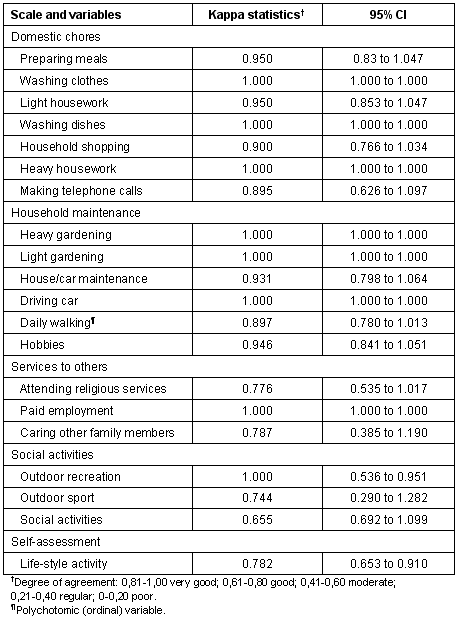
Reliability of the questionnaire was analyzed in a subgroup of 40 subjects aged 65 years or over (20 men, 20 women) from semirural and urban areas, stratified by age and sex, and included in the study population, who were selected according to logistic criteria of proximity to the primary-care centre. Questionnaires were administered by the same person and repeated (re-test) at least 30 days after the initial administration. Table 1 shows the kappa statistics for items in the four AAP scales12.
Table 1: Activities related to the life-style and self-assessment of overall daily activity: scale of the Adelaide Activities Profile (AAP)
Statistical analysis
Data were analyzed using the SPSS (SPSS Inc; Chicago, IL, USA). Quantitative variables are expressed as mean and standard deviation (SD) and qualitative variables as percentages with the 95% confidence intervals (CI). Categorical variables were compared using the χ2 test (with Yates' correction when necesary) or Fisher's exact test, and quantitative variables with the StudentŽs test or WelchŽs t-test for non-homogeneous variances. One-way ponderated analysis of variance (ANOVA) was used for the comparison of more than two means. The strength of association was assessed by the η2 coefficient. A logistic regression analysis with progressive elimination of independent variables (age, sex, educational level, socioeconomic level, civil status and place of residence) was carried out. Statistical significance was set atp <0.05.
Results
A total of 160 (17%) of the 950 subjects were not included in the study, mostly because of refusal to participate (9%), change of residence (3%) or failure to contact the person (5%). The number of losses was similar for rural and urban settings and in both cases was greater among women than men (60% vs. 46%). The study population included 388 persons (192 men, 196 women) from rural areas and 392 persons (172 men, 220 women) from urban areas (response rate of 83%).
The distribution of AAP total score in the study population according to sex, years of age and place of residence is shown (Table 2). Women scored significantly higher than men in the rural and urban settings and in all age groups (ANOVA, p <0.05) except for the very old (≥85 years) stratum from rural areas. In the age group 80-84 years, men from urban areas showed significantly higher mean (SD) scores than men from rural areas (6.75 [3.38] vs. 4.10 [2.21]). As expected, an age-dependent decrease in life-style activities was observed in both men and women. The distribution of AAP scores by percentile as a qualitative approximation of life-style activity in men and women is shown (Figure 1).
Table 2: Mean total scores of the Adelaide Activities profile (AAP) according to sex, groups of age and place of residence
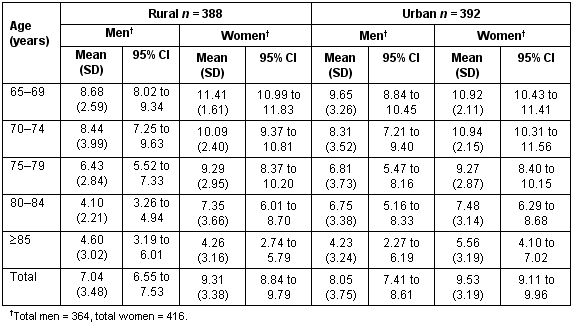
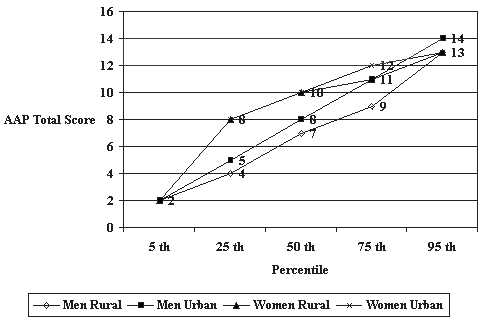
Figure 1: Distribution of the Adelaide Activities Profile (AAP) total scores by percentile, according to sex and place of residence.
Mean scores of the AAP scales of domestic chores, household maintenance, service to others and social activities according to place of residence are shown (Tables 3,4). In the category of domestic chores, mean ratings for women (4.56, 95% CI 4.30 to 4.84) were significantly higher (p <0.05) than for men (1.36, 95% CI 1.11 to 1.62) both in urban and rural areas except in he oldest age group (≥85 years). In the scale of household maintenance, also except for group of ≥85 years, men rated significantly higher (3.31, 95% CI 3.11 to 3.53) than women (2.34, 95% CI 2.21 to 2.47), independent of the place of residence. In the scale of service to others, women scored (2.01, 95% CI 1.88 to 2.14) significantly higher than men (1.68, 95% CI 1.55 to 1.81), except in those older than 80 years; whereas in the scale of social activities, mean ratings for men and women were 0.78 (95% CI 0.65 to 0.91) and 0.43 (95% CI 0.33 to 0.53), respectively. Younger men from rural areas were significantly more involved in social activities (outdoor recreation and outdoor sport) than women, while in urban areas both sexes scored similarly on the scale of social activities. Overall, there was an age-dependent significant decrease in the mean scores of all scales, with the exception of men from urban areas, in the scale of domestic chores.
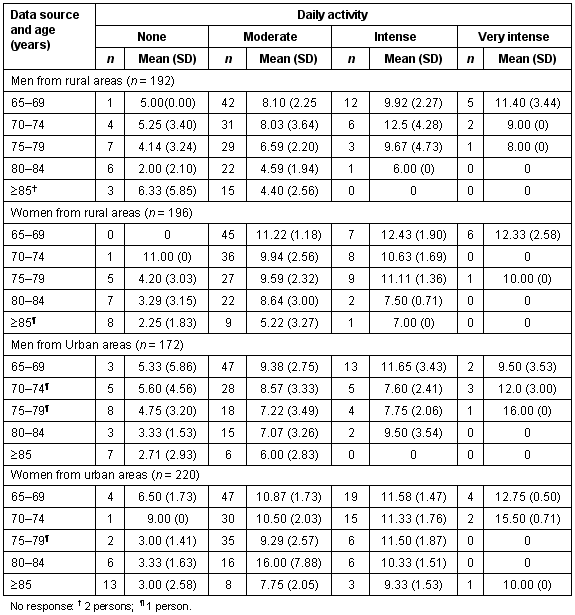
Self-assessment of overall daily activity in relation to mean scores of the AAP questionnaire showed a clear predominance of life-style activity rated as 'moderate' except for among the oldest old (Table 5).
Activities that in the multivariate analysis showed an odds ratio (OR) greater than 1.5 as explanatory variables were as follows: paid employment (sex, OR 3.72, 95% CI 2,78 to 6,67); light gardening (place of residence, OR 1.51, 95% CI, 2.09 to 1.10); heavy gardening (sex, OR 8.58, 95% CI 5.29 to 13.90); house/car maintenance (sex, OR 9.83, 95% CI 6.42 to 15.06); driving car (sex, OR 9.83, 95% CI 6.42 to 15.06); daily walking (place of residence, OR 1.58, 95% CI 1.16 to 2.16); hobbies (educational level, OR 2.28, 95% CI 1.56 to 3.33); outdoor recreation (sex, OR 3.58, 95% CI 2.58 to 5.00); and outdoor sport (sex, OR 4.16, 95% CI 2.32 to 7.48).
Table 3: Mean scores of the Adelaide Activities Profile (AAP) scales in 364 men according to groups of age and place of residence
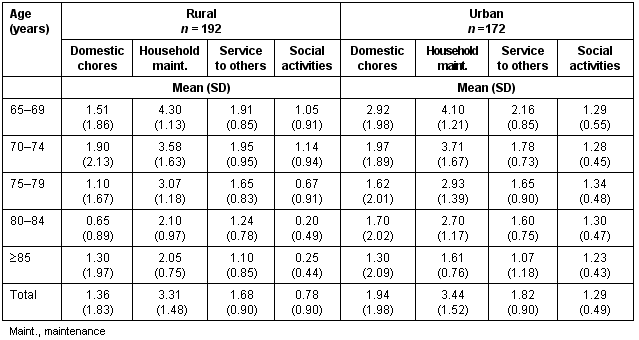
Table 4: Mean scores of the Adelaide Activities Profile (AAP) scales in 416 women according to groups of age and place of residence
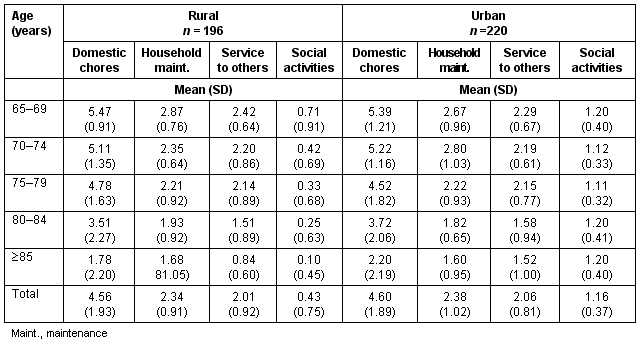
Table 5: Self-assessment of overall daily activity and relation to mean scores of the Adelaide Activities Profile (AAP) according to sex, age and place of residence
Discussion
The present study used the AAP for assessing activities related to the life-style of older people. However, two items of the original 21-item questionnaire were excluded. The question of 'personal shopping' was considered redundant in respect to the item 'household shopping'; and the question of 'entertaining at home' was not compatible with the customs of the elderly persons living in the study environment for whom inviting people to their homes was unusual. On the other hand, all items were dichotomized into 'no' (absent) or 'yes' (present) responses instead of scoring 0,1,2 and 3 according to 'how often' the activity is performed8, and subjects were asked to provide responses which reflected their activity in a typical 15-day period. This was less likely to confuse the elderly participants than the original instrument, which considers activities in the last 3 months. Possible scores in the present study ranged from 0 to 19, which allowed the establishment of overall ratings as well as cut-off thresholds of appropriateness for each of the four AAP scales. The distribution of AAP scores by percentile may be considered a qualitative approximation of the comprehensive profile of the life-style activities of elderly people. However, most of the existing ADL indices are not satisfactory for detecting small but distinctive changes, among other reasons, because the rating scale is too coarse13. Instrumental activities of daily living are more complex scales that integrate the capacity of the subject to live without assistance at home and to be an active member of society, including domestic activities, preparing meals, use of public transport and the telephone, responsibility for the use of money, medication etc. Some of these activities are more difficult to categorise and assess because they are influenced by important sociocultural factors14.
Despite scientific evidence linking regular physical activity to a wide range of physical and mental health benefits15, the majority of older people remain essentially sedentary16. Walking appears to have a positive effect in reducing the risk of death from cancer and cardiovascular disease, in addition to its effect on overall mortality17,18.The key is to encourage patients to initiate a program of regular, moderate exercise 30 min per day, three times a week, or preferably on a daily basis19. Although counselling in the primary care setting is relevant from a public health perspective, few primary-care physicians routinely counsel patients to adopt and maintain regular physical activity20.
Older people who continue to develop activities related to indoor and outdoor domestic chores as well as outdoor social activities are more likely to maintain an adequate function level for an independent life. Moreover, attendance at cultural events, reading books or periodicals, and marking music or singing in a choir has been shown to have a positive influence on survival21. Castillo Soria et al.22 found that 30% of men and 29% of women in rural areas do not take part in any leisure activity and that 6% of older people had social relationships restricted to the family or to a nucleus of close friends. At the urban level, Colomo's study23 showed that 19% of men and 33% of women have a very limited friendship circle.
In the present study, mean ratings for the overall AAP profile as well as for each subscale were higher in women than in men, both in rural and urban environments, except for household maintenance-related activities in which men scored significantly higher. In our sample, more than 75% of people reported that they walked approximately 30 min daily. Important differences in life-style activities between older people from urban and rural areas were not detected. This may be explained by the fact that in our province most elderly people living in urban areas are rural immigrants who strongly maintain their customs and life-style. On the other hand, statistically significant differences found in the different AAP scales in relation to gender are a clear indication of the well established roles for men and women in our sociocultural context.
One of the possible limitations of this study was that those subjects with a bad memory may neglect some questions in the re-test, because this was performed 30 days after the initial administration of the test. However, only people over 65 years without cognitive impairment participated in this study, which minimized the risk of recall bias. On the other hand, the stability of responses to questionnaire was satisfactory for almost all the items analyzed, which confirms its soundness for studying life style in the elderly24.
Our findings in a population-based sample of 780 older mentally capable men and women indicate that the 19-item version of the AAP scale is a valuable survey instrument as an objective guide for studying activities related to life-style in community settings. However, transcultural adaptation and validation of the Spanish version is necessary for the use of this instrument in future studies.
Conclusion
We conclude that this measure of functional ability in daily life is suitable for showing changes over time in longitudinal studies of community-dwelling elderly people of different ages, in particular as a summary statement of the individual's health status. Furthermore, the measure can be used in intervention studies in order to identify the effect of intervention or of prevention, hopefully so that the elderly do not cross the thereshold from feeling tired to being in need of help with daily tasks.
Acknowledgements
The authors are grateful to Hoechst Marion Roussel for financial support and to Marta Pulido, MD, for editing the manuscript and editorial assistance. This study was supported by grant 97380.1988 from Consejería de Sanidad de la Junta de Comunidades de Castilla-La Mancha, Spain.
References
1. Littman AJ, White E, Cristal AR, Patterson RE, Satia-Abouta J, Potter JD. Assessment of a one-page questionnaire on long-term recreational physical activity. Epidemiology 2004; 15: 105-113.
2. Katz S, Ford AB, Moskowitz RAW, Jackson BA, Gaffe MW. Studies of illness in the aged. The Index of ADL: a standardized measure of biological and psychosocial function. JAMA 1963; 185: 914-919.
3. Applegate WB, Blass JP, Williams TF. Instruments for the functional assessment of older patients. New England Journal of Medicine 1990; 322: 1207-1214.
4. Ostir GV, Volpato S, Kasper JD, Ferrucci L, Guralnik JM. Summarizing amount of difficulty in ADLs: a refined characterization of disability. Results from the womenŽs health and aging study. Aging 2001; 13: 465-472.
5. Sarno JE, Sarno MT, Levita E. The Functional Life Scale. Archives of Physical Medicine Rehabilitation 1973; 54: 214-220.
6. Lin JH, Lo SK, Chang YY, Su CY, Liu CK. Validation of comprehensive assessment of activities of daily living in stroke survivors. Kaohsiung Journal of Medical Science 2004; 20: 287-294.
7. Hsueh IP, Wang WC, Sheu CF, Hsieh CL. Rasch analysis of combining two indices to assess comprehensive ADL function in stroke patients. Stoke 2004; 35: 721-726.
8. Clark MS, Bond MJ. The Adelaide Activities Profile: a measure of life-style activities of elderly people. Aging Clinical and Experimental Research 1995; 7: 174-184.
9. Pfeiffer E. A short portable mental status questionnaire for the assessment of organic brain deficit in elderly patients. Journal of the American Geriatric Society 1975; 23: 433-441.
10. Oyarzábal M, Cebrián C, Escós C, López R. Un sistema de citación eficaz para realizar entrevistas a las personas mayores de 65 años [An effective appointment system for interviewing people over 65]. Aten Primaria 1993; 12: 224-226.
11. Armitage P. Exclusions, losses to follow-up, and withdrawals in clinical trials. In: SH Shapiro, TA Louis (Eds). Clinical trials. Issues and approaches. New York: Marcel Dekker, 1983; 99-113.
12. Landis JR, Kock GG. The measurement of observer agreement for categorical data. Biometrics 1977; 33: 159-174.
13. Feinstein AR, Josephy BR, Wells CK. Scientific and clinical problems in indexes of functional disability. Annals of Internal Medicine 1986; 105: 413-420.
14. The Royal College of Physicians of London and the British Geriatric SocietStandardized assessment scales for elderly people. London: The Royal College of Physicians of London and the British Geriatric Society, 1992.
15. Will PM, Demko TM, George DL. Prescribing exercise for health. A simple framework for primary care. American Family Physician 1996; 54: 579-585.
16. Vila Córcoles A, Pardo Fonfría C, Llor Vilá C, Espinosa Mata E, Gisbert Sellés C, Martín Vallés H. Estudio poblacional sobre el hábito de realizar ejercicio físico en las comarcas del Alt Camp y Conca de Barberá (Tarragona) [Community-based study in the countries of Alt Camp and Conca de Barberá -Tarragona, on the habit of practising physical exercise]. Aten Primaria 1995; 15: 569-572.
17. Dorn J, Vena J, Brasure J, Freudenheim J, Graham S. Lifetime physical activity and breast cancer risk in pre- and postmenopausal women. Medical Science Sports Exercise 2003; 35: 278-285.
18. Stampfer MJ, Hu FB, Mauson JE, Rimm EB, Willet WC. Primary prevention of coronary heart disease in women through diet and lifestyle. New England Journal of Medicine 2000; 343: 16-22.
19. Melzer K, Kayser B, Pichard C. Physical activity: the health benefits outweigh the risk. Current Opinion in Clinical Nutrition and Metabolism 2004; 7: 641-647.
20. Abramson S, Stein J, Schaufele M, Frates E, Rogan S. Personal exercise habits and counselling practices of primary care physicians: a national survey. Clinical Journal of Sports Medicine 2000; 10: 40-48.
21. Bygren LO, Konlaan BB, Johansson SE. Attendance at cultural levels, reading books or periodicals, and making music or singing in a choir as determinants for survival: Swedish interview survey of living conditions. BMJ 1996; 313: 1577-1580.
22. Castillo Soria O, Carrasco Asenjo M, Martínez Lázaro F, Magro Perteguer R, Sánchez Blanqué R. Epidemiología y planificación de la asistencia sanitaria en el anciano [Epidemiology and planning the health care of the elderly]. Gaceta Sanitaria 1988; 2: 30-33.
23. Colomo M. Estudio sociosanitario en las personas mayores de 65 años en la ciudad de Guadalajara [Sociosanitary study in people of over 65 year olds in the city of Guadalajara]. Doctoral Thesis, University of Alcalá, Madrid, 1998.
24. Albert Cuñat V, Maestro Castelblanque E, Martínez Pérez JA, Díaz-Maroto JL, Ramos González MJ, Monge Jodrá V. Estabilidad de las respuestas de personas mayores de 65 años a un cuestionario sobre estilos de vida [Stability of the responses of persons over 65 to a life-style questionnaire]. Rev Esp Geriatr Gerontol 1998; 33: 277-282.