

 download PDF
Introduction
Several studies have shown that when people become ill, they try to solve their problems initially by using their own resources and the informal advice of family, neighbours, friends, fellow workers and others1-3. Most of the problems are solved at this level of care of the local health system, which Kleinman4 called the popular sector.
If the resolution of the health problem is not possible in the popular sector, or if it is not satisfactory, people tend to use other resources that can include local therapists (folk sector) or health professionals (professional sector).
So, when someone becomes ill she/he can describe different therapeutic itineraries available sequentially or simultaneously at different levels of care in the local health system. The therapeutic itineraries available depend on existing resources in the local health system5 and on the ideas that exist in the local culture, about the body, health and illness.
In this study we compared the therapeutic itineraries and resources used by people in a rural area and in an urban area of the north of Portugal (Fig 1), in an attempt to evaluate existing differences and similarities. The hypothesis investigated in this study is that the differences depend on the diversity of existing therapeutic resources in the rural and urban areas, and on the existing cultural differences between the two contexts6-9.
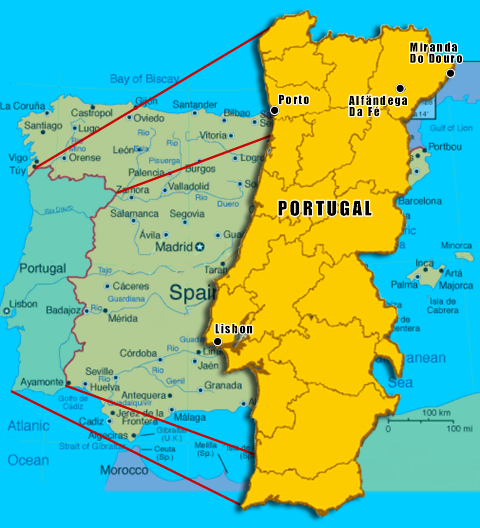
Figure 1: Map of the study area, Portugal.
Methods
Design and setting
This was a descriptive and transverse exploratory study, with interviews of a convenience sample of adults in an urban area (Health Centre of S. João in the city of Porto) and in a rural area (the localities of Alfândega da Fé and Miranda do Douro, Bragança district), Portugal.
In the urban area 160 interviews were conducted, and 105 in the rural area. Those interviewed in the rural area were a less educated and older group (6.8% of those in the urban area vs 11% of those in the rural area did not complete three years of school; 22.5% of those in the urban area vs 9.5% of those in the rural area had a high education degree; 29% of people in the urban area were more than 65 years old vs 34% of rural subjects). This is consistent with the general demographics of Portugal.
The sample included more women than men: in the urban area 115 (72%) were women, and in the rural area 69 (66%) were women. This is consistent with the fact that more women than men use the health centres' services.
The interviews were conducted by students of anthropology and medicine, who applied a questionnaire with open and closed questions to patients who came to the health center. The questionnaire was pre-tested and included questions concerning:
- the knowledge of the person about alternative treatments
- whether the person had any contact with those alternative treatments
- what treatments he/she used
- why the person used alternative treatments
- whether, if the person went to the doctor for treatment, he/she told the doctor about those alternative treatments
- whether he/she talked about alternative treatments with their family
- whether they were satisfied with the alternative treatments and why
- whether they considered the treatments expensive.
After each question the subjects were asked to make comments.
Subjects gave informed consent to participate after being informed about the content and aim of the study.
Results
Knowledge and use of traditional and alternative treatments
When we asked both groups if 'they knew treatments that normally are not practised by doctors or nurses', in the urban group 91 persons (57%) answered 'yes' and in the rural group all except two people said 'yes'. The most cited treatments by the urban group were acupuncture, followed by bonesetters, houses where one can buy teas and get advice about their medicinal use (herbanárias) and other local healers. Less frequently cited were homeopaths, iridologists, osteopaths, naturists, videntes (prophesiers), spiritualists, sorcerers, fortune-tellers, shiatsu, masseurs, narcotics and alcoholic anonymous and treatments with special foods (eg garlic, honey, seaweed). The most cited treatments in the rural group were bonesetters, followed by sorcerers, local healers and teas. Less frequently cited in the rural areas were acupuncture, homeopathics, masseurs, reflexology, iridology, clairvoyants, home remedies, prayers to saints and god, spells, priests, clairvoyants, spiritualists, fortune-tellers, wizards, naturopaths, quiropaths (similar to osteopaths), osteopaths, shiatsu and yoga.
When asked if they had contact with some of these treatments, in the rural area 86 persons (82%) said 'yes', but only 76 (72%) admitted to have personally used some of these treatments. In the urban area, 31% said they had contact with these treatments and only 25% admitted to having used them at some time.
To the question 'which of these treatments have you already used?' the men in the urban group referred to bonesetters, followed by acupuncture and teas; the rural men referred to bonesetters followed by sorcerers and teas. The urban women referred to teahouses (herbanárias), homeopaths, osteopaths and shiatsu as most used, and the women from the rural group followed a pattern similar to the rural men, referring to bonesetters, followed by sorcerers and teas as the most used.
Health problems that were treated by traditional and alternative methods
When asked about the most frequent health problems for which they had use alternative treatments, in the urban area the most frequent complaints were pain in the bones, joints and muscles (pain being the most common symptom), followed by psychological reasons (stress, depression and insomnia). In the rural area we found diagnoses related to the local culture, such as soul or leaned shade (a 'shade' has a similar meaning to soul and 'leaned' means that they lean to the body of a person and make her ill), fear of snakes, visions, 'mist in the eyes', 'coxo' (a dermatologic disease), a child who cried and did not eat as the main reasons to consult local healers.
When questioned about the reason for using alternative treatments and not consulting health professionals, in the urban area the answers were: because they were 'told by other people about those treatments', 'because professional treatments didn't succeed', 'to avoid taking remedies', and 'because these treatments where more natural and less harmful'. In the rural areas the answers were similar but they also said that, with some problems, it was not necessary to go to the doctor and that some alternative treatments were more efficient and more easy to access than medical treatments. They also said that some illnesses 'were not in the doctor's area of competence'.
When attempting to discover if the subjects used alternative treatments at the same time as consulting the family doctor, the majority of men in the urban group said 'no' and the majority of women in the same group said 'yes'. In the rural group, the majority of men and women said that they did not use the services of the family doctor simultaneously with alternative treatments (approximately 70%).
When asked if they had spoken with the family doctor about these treatments, the majority answered 'no' (approximately half in the urban area and two-thirds in the rural area). The reasons given were: 'it was useless', they 'didn't remember to tell the doctor', and 'the doctors do not believe in these medicines and they do not accept them' and 'we only tell the doctors what we believe is necessary'. However, almost all said they had discussed these treatments with their family.
Satisfaction with traditional and alternative treatments
When asked if they were satisfied with the results of the alternative treatments, approximately 80% in the urban and rural groups said they were totally or partially satisfied with the results. When invited to comment, the urban group answered that they were satisfied because the treatment had been efficient and without secondary effects, while the medical treatment tried by some did not have any effect. They also reported satisfaction with long-lasting effects, and that they learned how to react in certain situations. Those who were less satisfied said that the treatment had not been efficient, or had delayed results. One reported a serious complication, and some women reported a lack of interest of and lack of seriousness of the alternative therapists they had consulted.
When those who were satisfied in the rural group were asked for comments on the effectiveness of the treatments they said: 'it cured me', 'it cured me from one day to the next', 'if my son hadn't gone to the witch he would be dead', 'the sorcerers speaks the truth' and 'we feel more comfortable'. The minority who were not satisfied related that the treatments had not been efficient and that they 'had to go to the doctor'. A smaller minority said 'the sorcerers are tricksters'.
In relation to the question 'did you find the treatment expensive?' the majority of the men of the urban group said 'no' and half the women of the same group said 'yes'. In the rural group, approximately two-thirds of the men and the women considered that the treatment had not been expensive. Those who considered the treatments expensive said they should be subsidised by the government like other health treatments.
Discussion and Conclusions
The results show that the majority of the people in the rural area (two-thirds) used traditional or alternative treatments and only approximately one-quarter of the people in the urban area reported the use of these treatments.
The most-used alternative treatments were bonesetters, acupuncture, sorcerers and teas. There was some difference in the rural area (where people go to the sorcerer more often) and the urban area where they use more so-called alternative medicine (acupunctures, homeopaths etc). However, both groups frequently used bonesetters and teas as therapeutic alternatives. This was because they had heard about these treatments from other people, because medical treatments had not been effective, or because they believed alternative treatments were more natural and had fewer secondary effects.
The majority did not discuss these treatments with their doctors because they thought that the doctor would not accept them or that it was useless to discuss these treatments with their doctors. Almost all discussed these treatments with their family.
These facts must lead doctors to review their attitude in relation to such alternative treatments so people feel comfortable discussing these therapeutic options with them. In doing so, doctors can prevent duplication of treatment or interactions between treatments when they are used simultaneously (this is what happens in many situations).
The family is an important therapeutic resource where therapeutic choices are discussed and the results evaluated, as some anthropological works have shown10.
It is important to note that the majority of people who used alternative treatments were satisfied with the results and they confirmed that the treatments had been efficient. This contradicts current health professionals' ideas about the inefficacy of alternative treatments and the effectiveness of medical treatments. The opinion of users and health providers about the efficacy of different treatments do not coincide. A 2001 satisfaction inquiry of carried out by the Portuguese National Institute of Quality into the users of the Health Centres in Portugal, showed that only 67% of sick people interviewed said they had a rapid relief of the symptoms after medical treatment11.
The majority of users considered that alternative treatments were not expensive but a significant minority considered that they were expensive and should be subsidised by the government. The majority of those who consider it to be necessary to subsidise these treatments live in urban areas.
This study has some limitations because a convenience sample was used and mainly older people were interviewed. It is not clear if younger people in rural areas have similar behaviours.
In conclusion, this study shows that people in rural areas still use their traditional healers to help them with some health problems, and they still use traditional diagnostic categories of local culture to explain some symptoms of disease and suffering. Doctors and health professionals working in rural areas should know and respect local culture in order to have a good relationship with their patients, so patients can trust them and talk about their therapeutic choices.
References
1. Helman C. Culture, health and illness. Oxford: Butterworth Heinemann, 1994.
2. Rubel AJ, Hass MR. Ethnomedicine. In: CF Sergeant, T Jhonson (Eds). Handbook of medical anthropology. London: Greenwood Press, 1996.
3. Comelles J, Martinez MA. Enfermedad, cultura y siciedad. Madrid: Eudema, 1993.
4. Kleinman A. Patients and healers in the context of culture. Berkeley: University of California Press, 1980.
5. Nunes B. O Saber Médico do Povo. Lisboa: Editora Fim de Século, 1997.
6. Winfred FB, del Mundo MD, Sheperd WC, Marose TD. Use of alternative medicine by patients in a rural family practice clinic. Family Medicine 2002; 34: 206-212.
7. Palinkas LA, Kabongo ML and the SurfNet Group. The use of complementary and alternative medicine by primary care patients. The Journal of Family Practice 2000; 49: 1121-1130.
8. Astin JA. Why patients use alternative medicine: results of a national survey. JAMA 1998; 279: 1548-1552.
9. Vincent MB, Silenzo MD. What is the role of complementary and alternative medicine in public health. American Journal of Public Health 2002; 92: 1562-1564.
10. White KL, Williams TF, Greenberg BC. The ecology of medical care. New England Journal of Medicine 1961; 265: 265-885.
11. Ferreia P, Raposo V. A Voz dos Centros de Saúde. Coimbra: IQS, 2003.