





 download PDF
Introduction
Urolithiasis is the third most common urological disease affecting both males and females; it is predominant among males in a proportion of approximately 2:11. The recurrence rate reaches approximately 50%2, rising to 70% within 10 years3. Because recurrence is common, this condition that impacts on the economically active population represents a significant healthcare costs burden, as it is associated with restricted activity and/or hospitalization. Although new and effective therapeutic methods to treat nephrolithiasis have been introduced recently, urinary stones continue to occupy an important place in everyday urological practice. The incidence of this condition varies worldwide, affecting from 1 to 20% of the population1. In Greece, the incidence of urolithiasis is generally estimated at between 5 to 15%4; however, no national data exists and only estimates are possible.
Both genetic and environmental factors contribute to stone formation. Factors believed to predispose to sporadic urinary lithiasis include hygienic-dietetic issues, occupation, geographic and climatic aspects, as well as the special characteristics of drinking water5,6. The observation of an unusually frequent history of urolithiasis among patients from the rural area of Thebes, Viotia, Greece, prompted a study aimed at determining the prevalence of urolithiasis in the rural area of Thebes.
Thebes lies in the fields of the Viotia region of Greece. The population of the Viotia region is almost 58 300. Of those, 19 509 live in the city of Thebes and 13 204 live in the rural area of Thebes. Most of the residents of the rural area of Thebes (approximately 80%) are farmers who cultivate cotton, potatoes, onions, grapes and tomatoes. The climate is typically Mediterranean. To our knowledge, the 'hardness' of the drinking water in the rural area of Thebes is one of the highest countrywide. In addition we investigated the following factors associated with the incidence of the disease: the sex ratio, seasonal frequency, and the kind and the amount of water intake. Considering that prognosis is always better than therapy, knowledge of the prevalence of urolithiasis is of utmost importance, because assessment and intervention regarding hygienic aspects could modify the incidence of lithiasis.
Methods
Study population
We performed an epidemiological, cross-sectional study of the prevalence of urolithiasis in a representative sample of subjects, which included men and women 14 years of age and over, from the general population of the rural area of Thebes. Residents of the urban area of Thebes were excluded from the study. Data on the number, sex and age distribution of the population of the rural area of Thebes were obtained from the National Statistic Service. Assuming a 2% precision estimation and a 95% confidence level, 500 subjects were to be surveyed in order to obtain a simple random sampling. The method used to gather basic information was a self-administered questionnaire about the present or past history of urolithiasis. The questionnaire was handed to visitors to the General Hospital of Thebes between 8.30 am and 1.30 pm from 15th April to 15th June 2006. Subjects were questioned on the occurrence of urinary stones during their lifetimes, and on acute urolithiasis in 2005.
Questionnaire
The questionnaire was divided into three sections. The first section gathered information about the characteristics of the interviewee (sex, date of birth and residence), while the second section gathered information about the interviewee's history of urolithiasis. The questionnaire was introduced as follows: 'There is a disorder called urolithiasis. Calculi may occur anywhere in the urinary tract and are common causes of renal colic and bleeding'. The specific questions were: 'Do you have or did you have renal colic, or bleeding? Do you have or did you have a renal calculus passed in the urine? Do you have or did you have a renal calculus diagnosed by ultrasonographic or radiographic image or diagnosed by a physician? How often have you had this disorder prior to 2005? Did you have urinary stones for the first time in 2005? If yes, specify the season of the year. How old were you when you were first diagnosed with a urinary stone? Have other members of your family had lithiasis? How was the lithiasis treated? What are you doing to prevent new stones?'
The third section gathered information about the quantity and sources of drinking water (bottled or tap water). Because there was no intention in this survey to specify special characteristics of the disease, such as the anatomical position and the consistency of the stone, no other information was requested in the questionnaire. Subjects who were not able to read or to understand the questions were assisted to fill in the questionnaire.
Statistical analysis
After completing the necessary number of questionnaires to obtain a statistical analysis, we entered the data into an electronic database for further analysis using SPSS (SPSS Inc; Chicago, Il, USA) and STATA (STATA Corp, College Station, TX, USA) statistical programs. Percent prevalence rates and their 95% confidence intervals were presented by age; 2x2 tables with χ2 tests were used to examine differences in proportions. Odds ratios contrasting those with lithiasis with those without, by gender (males, females; categorically), age groups (nine age groups; ordered), type of water (tap, bottled; categorically) and quantity of water (up to 1 L, 1-2 L, over 2 L; categorically), and inheritance (no, yes; categorically) were estimated by modelling the data through multiple logistic regression.
Results
Of the 500 initially administered questionnaires, 21 were not returned while 57 out of the remaining 479 questionnaires were only partially responded to and so omitted from the study. Of the remaining 422 subjects, 194 (46%) were men and 228 (54%) were women. Of these, 313 (74.2%) responded that they had never suffered from urinary stones, while 109 (25.8%) stated that they had experienced an episode of a renal colic or bleeding. Ninety-six (55 males and 41 females) out the 109 had experienced an episode of a colic pain in 2005, while 74 had experienced colic in the previous years. Fifty-one out of the 74 subjects (29 males and 22 females) suffered from colic occasionally, while the remaining 23 subjects (9 males and 14 females) stated that they had suffered from possible renal colic more than three times per year. Colic was more frequent in spring and summer (especially in July and August).
Incidence and prevalence of urolithiasis in the rural population of Thebes
The diagnosis of urolithiasis was established in 62 subjects. It was either confirmed when a renal calculus was passed in the urine, or was revealed on a radiographic image, or diagnosed by symptomatology and clinical examination. More precisely, in 18 out of 109 (16.5%) subjects who reported current or past renal colic, the calculus had been seen either radiographically or ultrsonographically, and in 44 subjects (40.36%), stones were diagnosed by a physician or passed spontaneously in the urine. The remaining subjects, who had non-typical pain rather than renal colic and/or did not have an established diagnosis of urolithiasis, were considered negative. Only 19 (30.6%) of responders with a confirmed stone in the urinary tract had a family history of urolithiasis.
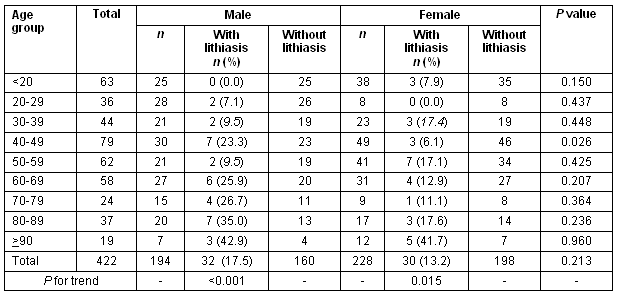
The prevalence rates of urolithiasis in the rural population of Thebes increased gradually with age in both men and women, varying from 4.8% in the younger group (<20 years) to 42.1% in the ≥90 year age group (p for trend <0.001) (Table 1). The difference in the prevalence rate of lithiasis between age groups 1-3 and 7-9 was statistically significant (p<0.001) overall, and for men (p<0.001), and marginally significant for women (p = 0.06) at a 95% level of significance (Table 2). For subjects with confirmed urolithiasis, the prevalence rate was slightly higher in men than in women in most age groups studied, but not of statistical significance, except for the group 40-49 years (p = 0.026).
Table 1: Categorisation of subjects according to age and stone disease
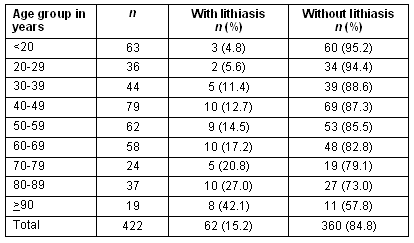
Table 2: Prevalence of lithiasis by age group and sex
In 12 cases (19.35%) lithiasis was first diagnosed in 2005. The diagnosis of urolithiasis in subjects younger than 20 years was established in 2005. Analysis of the age when urolithiasis first occurred revealed a relatively earlier onset in females at the age of 17 years, while in the case of males the earliest manifestation reported was at the age of 22 years.
Treatment and prophylactic measures
Conservative therapy was by far the most common treatment for patients with urinary stones from the rural area of Thebes. The reason for this was two-fold: first, most patients (34/54.8%) reported spontaneous expulsion of the stone; and second, there was no urological department in the regional hospital. Extracorporeal shock-wave lithotripsy was the second most popular method for the treatment οf urinary stones, while only 18 subjects reported a history of surgical therapy. As for prophylactic measures taken by patients themselves to prevent lithiasis, 50 subjects (80.6%) reported a high fluid intake; seven subjects (11.3%) reported taking a herbal therapy occasionally; and only six subjects (9.6%) reported a shift in dietary patterns. Although none of the responders reported permanent medical prophylaxis, several reported a daily intake of soda water. It is worth mentioning that few (2/62) subjects with established stone disease drank bottled water, while most (60/62) drank water from the public water supply. Most reported an average daily intake of 1 to 1.5 L, but no statistically significant difference in average daily intake of water was found between subjects with and without lithiasis (p = 0.964).
Epidemiological data
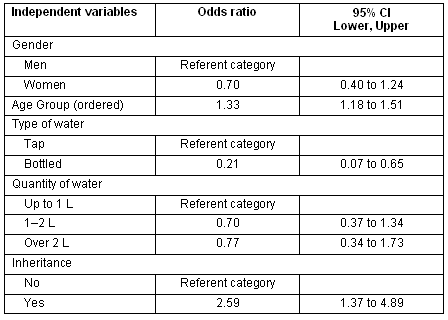
Table 3 shows multiple logistic regression-derived, mutually adjusted odds ratios (and 95% confidence intervals) contrasting individuals with lithiasis with those without lithiasis by gender, age groups, type of water and quantity of water, and inheritance. The prevalence of lithiasis appeared to increase with age and to be higher among those who had family members with lithiasis. Those drinking bottled water were less likely to have lithiasis. With respect to gender, no statistically significant differences occurred between men and women. Moreover, no statistically significant differences were observed among the different quantities of daily water intake.
Table 3: Mutually adjusted odds ratios (and 95% confidence intervals) contrasting individuals with lithiasis with those without lithiasis by gender, age group, type of water, quantity of water and inheritance
Discussion and Conclusions
Urolithiasis in its different forms is the third most common disease afflicting the urinary tract7. Although new and effective therapeutic methods have been introduced recently, urolithiasis remains a frequently encountered condition. It has been apparent for several years that the incidence rates of lithiasis vary dramatically, not only from continent to continent, but also between adjacent regions of a country, even if one allows for differences in methodology and criteria selection among epidemiology studies8,9. Because epidemiological data on the occurrence of urolithiasis ranges between 2% and 20% worldwide10,11 (being most common in south and south-eastern regions of the USA, as well as in central Europe and the Mediterranean, India and northern Pakistan, northern Australia and China12) variations in climatic zone, differences in eating and drinking habits, as well as genetic factors have been proposed as risk factors.
Comparison with other studies
According to our findings, the prevalence of urolithiasis in the rural area of Thebes found in our study is eight- to nine-fold higher than the prevalence found by other investigators13,14, and significantly higher than that reported at the Consensus Conference 415. Such a difference is possibly related to geographical distribution. Ιt is, however, noteworthy that the prevalence found in our study is higher than the median incidence (10.2%) found in coastal and island regions of Greece16. Although geography is proposed to influence the incidence of urinary calculi11, the lack of significant variations in the climate between the rural area of Thebes and other regions of southern Greece does not adequately explain the differences in lithiasis prevalence. Moreover, the fact that only 32.2% of responders with confirmed stone disease had a family history of urolithiasis cannot itself justify the differences in incidence of lithiasis among various regions.
A relationship exists between affluence and nephrolithiasis, with a close correlation between the frequency of stone disease and per capita expenditure on foodstuffs17. Despite changes in the diet of the Greek population, dietary patterns remain similar throughout the country. Accordingly, the only explanatory factor is probably the water supply. Indeed, the two factors involved in the relationship between water intake and urolithiasis, are the volume of water ingested (as opposed to that lost by perspiration and respiration) as well as the mineral or trace-element content of the drinking water. Because variations among daily water intake are similar in both groups (with and without lithiasis), the mineral content of water may contribute to the high incidence of stone disease in the rural area of Thebes.
Several authors have demonstrated that lithiasis usually occurs between the third and fourth decades of an individual's life, and that the prevalence rate varies considerably according to age, while the peak incidence of urinary calculi is from the twenties to the forties18. However, this was not found in our study. The prevalence of urolithiasis increased with age in both men and women, seeming to be more prevalent in elderly people, while rare in adolescents. This finding was in accordance with other studies19.
According to the literature, lithiasis is more common in men than in women; however, the exact rate differs between studies, with several authors reporting that approximately three males are afflicted for every female20, while other investigators found variations not very different from that found in the present survey21. Moreover, in the present study, no statistically significant differences in the prevalence of lithiasis were found between sexes in all age groups. Our finding of the relatively earlier onset of the disease in females, and the lack of significant difference in prevalence between men and women, is probably due to lifestyle changes in females (working activity, type of diet, fluid consumption etc) which have made them more prone to urolithiasis. The rate of 4.2% found by Robertson et al.22 in men ≥18 years compares well with the 4.8% seen in our study in the same age group for both sexes. In subjects between 20 and 29 years, the disease prevalence rate was 5.56%. This compares well with those found in northern Italy by Borghi et al.8, in central Germany by Vahlensieck et al.14, and in the US by Stamatelou et al.23. However the prevalence of lithiasis in the rural area of Thebes increases sharply with age, resulting in a four-fold higher mean prevalence than in the aforementioned studies.
Study implications
This epidemiological study offers better knowledge of the distribution of this condition in our population, allowing an estimation of its impact on society and also better planning of prevention programs. It remains essential to evaluate current knowledge to derive insights, guidelines and recommendations for the diagnosis. In addition, medical and interventional treatment of urinary tract calculi can be evaluated, as can ways of prevention of disease recurrence.
We consider that there is a need for a fully equipped urologic department and clinic in the area of Thebes, to manage the high prevalence of urolithiasis that increases with ageing. According to our conclusions, 60/62 subjects with confirmed stone disease consumed tap water; thus, it is reasonable to question the quality of the public water supply. Water consistency should be examined, biochemical filters used and all appropriate measures taken for better public health.
References
1. Lancina Martin JA, Rodriguez-Rivera GJ, Novas Castro S, Rodriguez Gomez I, Fernandez Rosado E, Alvarez Castelo L et al. Metabolic risk factors in calcium urolithiasis according to gender and age of the patients. Actas Urologicas Espaniolas. 2002; 26: 111-120.
2. Joual A, Rais H, Rabii R, el Mrini M, Benjelloun S. Epidemiology of urinary lithiasis. Annales d'urologie 1997; 31: 80-83.
3. Tiselius HG. Stone incidence and prevention. Clinical Urology 2000; 26: 452-462.
4. Giannakopoulos X, Evangelou A, Tsoumanis P, Papadopoulou C, Charalambopoulos C, Antoniadis G. Urinary infection in urolithiasis patients in the Epirus district (northeastern Greece). Annales d'urologie 1996; 30: 118-123.
5. Ekane S, Wildschutz T, Simon J, Schulman CC. Urinary lithiasis: epidemiology and physiopathology. Acta urologica Belgica 1997; 65: 1-8.
6. Pak CY, Resnick MI, Preminger GM. Ethnic and geographic diversity of stone disease. Urology 1997; 50: 504-507.
7. Smith LH. The medical aspects of urolithiasis: an overview. The Journal of urology 1989; 141: 707.
8. Andersen DA. Histological and geographical differences in the pattern of incidence of urinary stones in relation to possible aetiological factors. In: A Hodkinson, B Nordin (Eds). Renal stone research. Edinburgh: Churchill Livingstone, 1969; 22-29.
9. Pak CY. Kidney stone. Lancet 1998; 351: 1797-1801.
10. Hesse A, Siener R. Current aspects of epidemiology and nutrition in urinary stones. World Journal of Urology 1997; 15: 165-171.
11. Trinchieri A. Epidemiology of urolithiasis. Archivio Italiano di Urologia 1996; LXVIII: 203-249.
12. Finlayson B. Renal lithiasis in review. Urologic Clinics of North America 1974; 181: 1.
13. Serio A, Fraioli A. Epidemiology of nephrolithiasis. Nephron 1999; 81(Suppl): 26.
14. Borghi L, Ferretti PP, Elia GF, Amato F, Melloni E, Trapassi MR et al. Epidemiological study of urinary tract stones in a Northern Italian City. British Journal of Urology 1990; 65: 231.
15. Consensus Conference 4. Prevention and treatment of kidney stones. JAMA 1988; 260: 977.
16. Sifakis G, Kostakis K, Vlachonikolis I, Anezinis P. Epidemiological study of lithiasis in Crete. In: Proceedings, 16th National Congress of Urology. 25-29 September 2002, Kalamata, Greece. Athens: Mikoniatis Publishing, 2002.
17. Curhan GC, Curhan GS. Dietary factors and kidney stone formation. Comprehensive Therapy 1994; 20: 485-489.
18. Fetter TL, Zimskind PD. Statistical analysis of patients with urinary calculi. JAMA 1961; 186: 21.
19. Ljunhall S, Hedstrand H. Epidemiology of renal stones in a middle-aged male population. Acta Medica Scandinavica 1975; 197: 439.
20. Vahlensieck EW, Bach D, Hesse A. Incidence, prevalence and mortality of urolithiasis in the German federal republic. Urologic Research 1982; 10: 161.
21. Dall'era JE, Kim F, Chandhoke PS. Gender differences among Hispanics and Caucasians in symptomatic presentation of kidney and ureteral stones. Journal of Endourology 2005; 19: 283-286.
22. Robertson WG, Peacock M, Baker M, Marshal DH, Pearlman B, Speed R et al. Epidemiological studies on the prevalence of urinary stone disease in Leeds. In: RL Ryall, JG Brockis, VR Marshall et al. (Eds). Urinary stone. Melbourne: Churchill Livingston, 1984; 36.
23. Stamatelou KK, Francis ME, Jones CA, Nyberg LM, Curhan GC. Time trends in reported prevalence of kidney stones in the United States: 1976-1994. Kidney International 2003; 63: 1817.