



 download PDF
Introduction
There is a serious shortage of health professionals in rural and remote areas in Australia and world wide1-8. Because health professionals favour metropolitan areas as practice locations9 there are fewer health services available in rural and remote areas10,11, and this has been linked to the comparatively poorer health of people living in such areas9.
Strategies that have been applied to alleviate the shortage of rural and remote health professionals include favoured university enrolment of rural students, scholarships, financial incentives to undertake rural placement, community involvement, recruitment of overseas health professionals, rural bursaries, rural student clubs, and an expansion of the undergraduate rural health curriculum2,6,9,12-14.
The aim of rural health education is to increase students' familiarity with rural practice8. While undergraduate training has endeavoured to increase the recruitment and retention rates of rural and remote health professionals2,15,16, the traditional undergraduate curriculum has not actively included rural practice17. Undergraduate rural fieldwork placements have been identified as having a positive influence on students' perceptions of rural and remote practice17,18; however, the extent to which the undergraduate curriculum as a whole influences students' perceptions is not known19. and this should be determined20.
Previous studies on students' perceptions of rural and remote practice have focused mainly on medical students4,8. Although these results may be transferable to other health disciplines, discipline-specific data should also be examined8.
Aim
The purpose of this article was to add to existing information about allied health students, particularly occupational therapy students, and rural and remote practice by reviewing the literature on occupational therapy students' perceptions of rural and remote practice.
The literature review will identify a variety of influencing factors and the main characteristics of rural practice in relation to the future employment of students. The effect of the undergraduate rural training programs on students' perceptions will be examined.
Method
Search strategy
Sources were identified through aggregated data bases via the James Cook University Library catalogue. The data bases searched were CINAHL, Informit and Medline, using the key words: undergraduate, curriculum, university, student/s, recruitment, rural, remote, country, 'allied health', 'occupational therapy' and perception/s. Some resources were identified from the reference lists of published articles. Searches were limited to English-language articles available in full text from 1985 to 2008.
Study inclusion criteria
The initial study inclusion criteria were cohort or cross-sectional studies of undergraduate occupational therapy students that explored factors influencing their perceptions towards rural and remote practice, and included qualitative and quantitative designs. Seven articles were identified in the initial search. However, due to the limited number of identified articles, the inclusion criteria were extended to studies of allied health graduates and allied health professionals working in rural and remote areas, in order to obtain a more holistic view of rural and remote practice issues. A further criterion was to identify undergraduate health degree course content or curriculum in relation to rural and remote practice.
Definition of rural and remote areas
The words 'rural' and 'remote' are used frequently in the literature. However, these terminologies do not have a single definition or classification system9,21. Government departments and rural organisations have acknowledged a discrepancy in terminology for many years21. Consequently, differing classification systems and interpretations of 'rural' and 'remote' have been utilised in the literature19. For example, Devine2 used the Accessibility Remoteness Index of Australia (ARIA) to select participants, while Lee and Mackenzie3 utilised the Rural Remote and Metropolitan Area (RRMA) classification. In addition, population measures were used by Sheppard11 to determine rurality.
While resources were collected for this article no specific criterion was set for the terms of rural and remote. Therefore, the difference between each author's interpretation of 'rural' and 'remote' will not be considered. Rather, the use of the terms 'rural' or 'remote' by the authors were considered to be general terms used to describe those areas.
Results
Profile of articles
A total of 57 potential references were identified in the initial search. Of those 57 references, 13 could not be retrieved due to limited access. A further two studies were excluded because they described specific university rural programs without identifying a relationship with students' perceptions.
Identification of key articles
Key articles were identified to obtain an overview of issues relating to students' perceptions of rural and remote practice. It was intended that the identified articles would direct the literature review, and the following selection criteria were set:
- Study participants included either occupational therapy students or occupational therapists
- Students'/therapists' perceptions or attitudes towards rural and remote practice or factors influencing their perceptions were discussed
- Studies were conducted in Australia.
A total of 10 articles were identified using these criteria.
Description of key articles
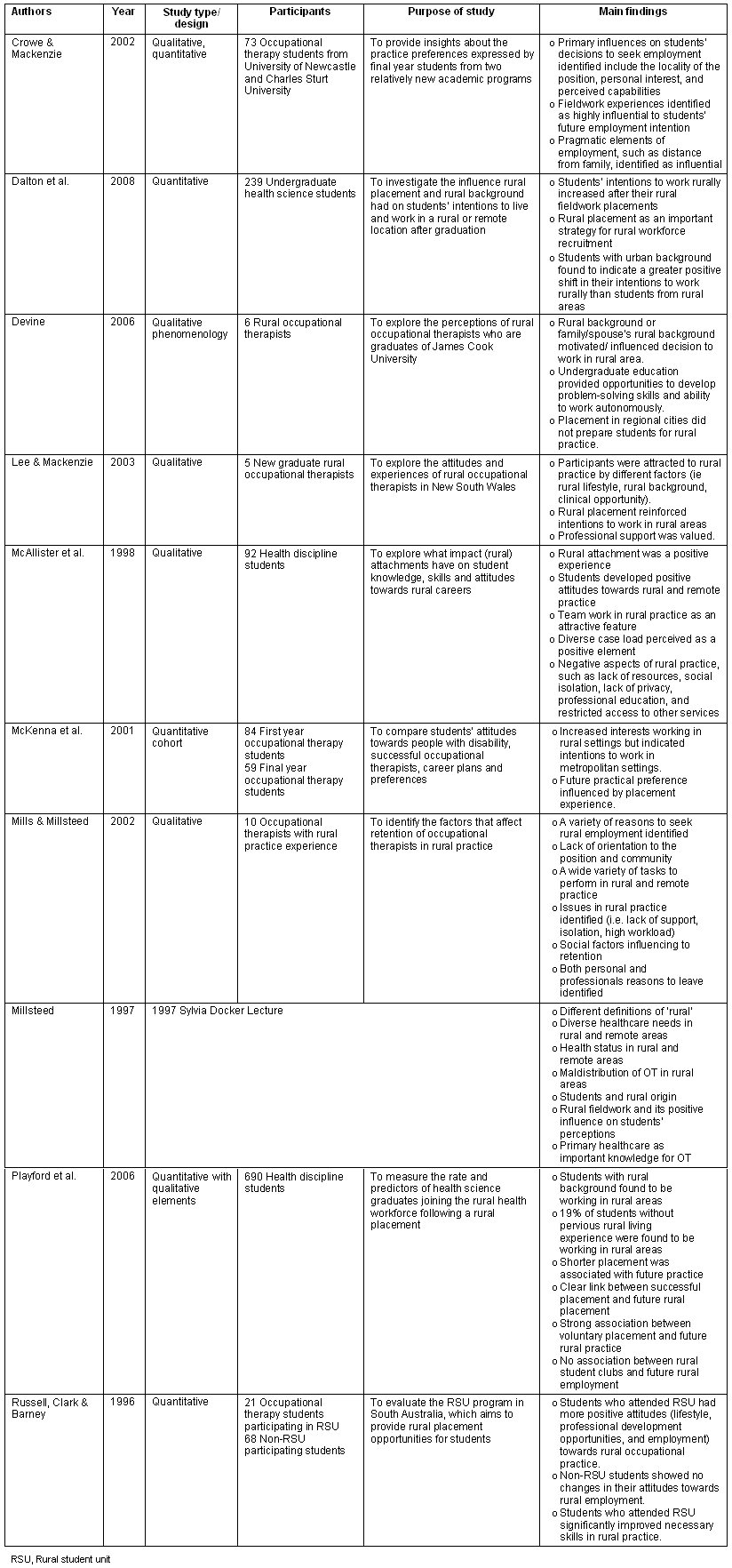
The 10 key articles identified are shown (Table 1). Dalton, Routely and Peek8 studied 239 undergraduate health science students, including occupational therapy students, who undertook a rural placement in Tasmania. It was found that a student's intentions to work rurally significantly increased after their rural fieldwork placement, with the exception of pharmacy students. The results of this study support the view that rural exposure during the undergraduate course positively influences a student's intention to work in a rural area. The authors stated that rural and remote clinical experiences during undergraduate studies lead to possible rural workforce recruitment8.
Crowe and Mackenzie14 studied 73 occupational therapy students who were in their final year at the University of Newcastle and Charles Sturt University, New South Wales (NSW). Factors influencing preferred future clinical practice areas were identified, including fieldwork experience and a feeling of comfort with the level of skill required. Fieldwork experience, including clinical supervisors, was found to largely influence a student's future clinical practice area. Other components of the university curriculum, such as the theoretical content, were not identified as influential. Distance from family was also considered important when considering future employment.
Devine2 studied six rural occupational therapists who were the first graduating cohort from the James Cook University Occupational Therapy Program, Queensland. At the time of the study, participants had been employed in rural practice for 5 to 18 months. Attraction to the type of position rather than the rural location was identified as a reason for working in their current position. A participant's rural background and family/spouse's rural background were also found to be influential. Participants recognised their undergraduate rural placements as important to their choice of rural position. However, if the placement was conducted in a regional city, the experience was not found helpful in choosing their current rural position. Rural-based theoretical subjects in the occupational therapy program were also found to be valuable. Participants believed that the rural-based subjects allowed them to develop essential skills in rural practice.
Lee and Mackenzie3 studied five new graduate occupational therapists practicing in rural areas in NSW at the time of the study. A participant's previous rural living experience and family/spouse's rural background were found to influence their decision to practice in a rural area. Additionally, interests in rural practice, the rural life-style and clinical experience opportunities were identified as factors that attract participants to rural practice. In this study, undergraduate rural fieldwork placement was not found to influence their decision about work location as they had chosen to practice in a rural area prior to their university study.
McAllister, McEwan, Williams and Frost18 conducted a longitudinal qualitative study between 1991 and 1996 with health-discipline students, including occupational therapy students, from the University of Sydney, NSW. Data were collected from 92 of 156 students. The students were asked to submit a 1000 word report following completion of their rural attachment, during which they had developed overall positive attitudes towards rural and remote practice. The identified advantages of rural practice included diverse caseloads, relaxing lifestyle and team work. The challenges of rural practice included lifestyle factors, isolation, reduced professional education opportunities and restricted access to other services.
McKenna, Scholtes, Fleming and Gilbert22 conducted a cohort study between 1994 and 1997. Eighty-four first year occupational therapy students completed the first questionnaire in February 1994, and 59 final year students completed the second questionnaire in October 1997. Twenty-two percent of students indicated an interest in working in a rural hospital in the first questionnaire. However, this interest had increased to 39% in the second questionnaire. Ninety-five percent of students identified clinical placements as influential in their career plans in the second questionnaire, while 87% of students perceived particular clinicians as influential.
Mills and Millsteed23 studied 10 occupational therapists who had worked in rural occupational therapist positions in Western Australia and had returned to the metropolitan area within the previous 24 months. Initial challenges identified by participants included the emerging role of an occupational therapist and initiating the operational side of the position. Identified rural practice issues included lack of support, isolation and workload. Although the participants had established social circles, this was found initially difficult due to the nature of small communities. Both personal and professional issues were identified as reasons to leave the position, while experiences in rural practice were valued by the participants.
Millsteed9 discussed Australian rural and remote area issues in relation to occupational therapy. A shortage of occupational therapists in rural and remote areas was identified and contributing factors were also discussed. Factors that may influence rural recruitment were found to include rural origin, undergraduate education, appropriate skills for rural practice and other lifestyle factors.
Playford, Larson and Wheatland4 conducted a longitudinal survey with allied health, including occupational therapy, and nursing students from three Western Australian universities between 2000 and 2003. Previous experience living in rural and remote areas was strongly associated with rural employment. However there was no association found between university rural student club membership and future rural employment. Compulsory placement was not found to be related to rural employment. Most participants identified their undergraduate rural placement as positive, whether they were working in rural and remote or urban areas.
Russell, Clark and Barney17 compared two groups of students. One group consisted of 21 occupational therapy students from the University of South Australia and La Trobe University in Victoria, who attended the rural student unit (RSU). The second group consisted of 68 occupational therapy students from the University of South Australia undertaking rural and metropolitan fieldwork not in the RSU. The RSU was a 16 month pilot program based in Whyalla, South Australia, which aimed to provide opportunities for students to participate in rural placement and to support students and rural therapists through their learning experience. The RSU students were found to have more positive attitudes towards rural practice (p< 0.05). Additionally, RSU students were identified as more positive about future rural employment opportunities (p < 0.05).
Table 1: Key articles included in the review
Literature review
Diversity needs in rural and remote practice
Diverse healthcare needs: McAllister et al.18 found that a variety of cases and the opportunity to gain general practical experience were common themes mentioned by participants after the completion of rural fieldwork placements. Other rural health professional studies have also identified diversity in clinical experience as a positive element2,3 that provides an opportunity to enhance future career by broadening knowledge and skills3.
Interdisciplinary approach in rural and remote practice: An interdisciplinary approach is often taken by rural health professionals in order to meet the diverse healthcare needs of rural and remote populations9. Interdisciplinary team experiences during a placement were valued by students from multiple health disciplines18, and this approach was identified by Devine2 as one reason health professionals were attracted to rural practice.
Other general skills required in rural and remote practice: Sound administrative and broader management skills have been identified as essential for rural and remote health professionals, and well established time management and organisational skills may ease their stress2. Among other important identified professional skills were problem solving and networking2,3.
Professional support in rural and remote practice: Lack of professional support has been identified as an issue2, with new graduates working in rural and remote areas reported to be reluctant to work as a sole therapist for this reason3. Because one-third of rural therapists are new graduates, sound professional support of their role may encourage others to seek rural employment3.
Factors influencing perceptions/decisions to work rurally
Students' rural background: Studies on allied health students and rural allied health practitioners have identified having a rural background as one of the strongest factors in starting a rural career2,3,4,8. A rural background includes being brought up in rural and remote areas, in addition to previous living or working experiences in those areas2,4.
Undergraduate students from rural and remote areas are under-represented in tertiary education, particularly in health courses, for a number of reasons, including geographical isolation, social and economic issues, and lack of resources and career promotion opportunities9.
Rural lifestyle: Two studies identified the rural living environment as an attractive feature of rural and remote practice3,18, with aspects such as a welcoming community, friendly people and a relaxed atmosphere identified as valued elements17,18.
Desire to work as a specialist in future employment: Being a 'specialist' is valued in metropolitan practice settings, with rural health professionals described as 'specialists' or 'specialist generalists'9. However as rural and remote practice is not yet recognised as a specialised area9 students may be discouraged from considering rural and remote practice22.
In addition, despite students developing transferable knowledge and skills, the fact that undergraduate education is often urban-based17,22 may send a message that urban practice is more valuable than practice in a rural location22.
Fieldwork placement, supervisors and university educators: Academic educators, fieldwork supervisors and staff members influence students' perceptions throughout the undergraduate program22; in particular, fieldwork placements and clinicians encountered there have been identified as influencing students' career plans22. Fieldwork supervisors have a great impact on students' perceptions, with aspects such as ability to teach; attitudes to students and their work; level of support, positive feedback and advice offered to students; and opinions expressed identified by students as influential13.
Other influential factors: Five articles discussed other factors influencing participants' perceptions of rural and remote practice, including:
- personal factors, such as marrying a person from a rural and remote area; having family or friends living in those areas2,3,22
- a belief that there is increased community appreciation of health professionals in rural areas18
- an expectation of a better salary or job availability in a rural area12
- a perception of closer relationships between health professionals and their rural community18.
Negative influencing factors on perceptions/decisions to work rurally
The negative aspects students identified are congruent with factors that influence rural practitioners to leave rural practice23. These factors included:
- Partners' lack of employment opportunities14
- Perceived own capabilities to undertake the position14
- A lack of appropriate professional development/support services18
- Limited social entertainment facilities in rural and remote areas18
- Geographical location of positions: distance from family and friends14,18
- A lack of privacy18
- Concerns about large workloads18.
The students' perceptions identified in the present review may discourage students from eventual rural employment22.
Undergraduate education
The aim of undergraduate rural training is to regularly expose students to rural and remote health practice throughout their training17. Integrating rural and remote practice into undergraduate education programs will enable students to obtain the knowledge and skills for rural and remote practice2,9. This is associated with students' increased intention to practice rurally8,22.
Undergraduate rural education and intention to work rurally: The undergraduate course program provides the necessary skills and knowledge to fulfil rural health professional roles2; however, a lack of undergraduate rural exposure has been found to prevent students from subsequently practicing in rural and remote areas17. Millsteed9 reported that occupational therapists working in rural settings felt under-prepared for rural and remote practice when they entered the workforce, and this resulted in short term employment.
McKenna et al. found that occupational therapy students' interest in working rurally increased throughout their course of study; however, the students sought future employment in metropolitan areas22. This conflicting finding may be the result of pragmatic concerns, such as distance from family and difficulty making a commitment to rural and remote practice at an early stage of their working life14.
Undergraduate rural program and student's background: Both rural and urban students use placements to move along a continuum of choice from increasing awareness to active intention4. For students from rural or remote areas, a course program focused on rural health reinforces their intentions to practice in those areas3. Dalton et al. found the intention of students with a rural upbringing to seek rural employment was higher than their urban counterparts. However a change in students' intentions to work rurally following rural fieldwork placements was more positive with urban-background students8. Rural health education should therefore place greater focus on urban background students8.
Theoretical content in undergraduate program: Few studies have examined the relationship between students' perceptions and the theoretical subjects in an undergraduate program2,22. This is due to greater importance being placed on fieldwork or practical experience as influencing students' perceptions of rural and remote practice22.
Lee and Mackenzie reported that new rural graduate occupational therapists had not completed specific rural curriculum content during their undergraduate program3. Devine2 found that specific rural practice related subjects during the undergraduate course were beneficial for rural occupational therapists and prepared them for their rural position. McKenna et al. also found that particular university subjects influenced occupational therapy students when considering future career plans, and suggested further research should explore the effectiveness of undergraduate educational programs as a whole in influencing students' perceptions22.
Fieldwork placement: Fieldwork placement has proved successful for enhancing students' positive perceptions regarding rural practice18. After rural fieldwork placement, allied health students' intentions to work rurally increased8,17.
Russell et al. found that occupational therapy students felt well prepared to seek employment in rural and remote areas following rural fieldwork placements17. The participants were provided with clinical skills as well as administrative skills17, both of which have been identified as necessary in rural and remote practice2,3.
The importance of a rural fieldwork placement was also described by rural occupational therapists2. Lack of rural fieldwork placement opportunities may contribute to a shortage of rural health professionals17. Support should be provided for rural therapists during student supervision, and financial support is recommended for students during fieldwork to ensure increased uptake22.
Positive elements of fieldwork placements: Successful fieldwork experiences were found to have a positive impact on students' perceptions of rural and remote practice4. Although it is difficult to determine what makes a positive experience, the relationships among supervisors, other professionals and students during placements appear to be the key to success14.
Length of fieldwork placement: The length of fieldwork placements has been identified as a positive characteristic in influencing students' perceptions14. Playford et al. found that shorter placements (4 weeks or less) had a positive influence on students' perceptions and led to future employment4. Shorter placements for urban-background students may decrease the financial burden and social isolation, while providing a positive rural practice experience4.
Voluntary versus compulsory fieldwork placement: Voluntary fieldwork placement was found to have a significant relationship with future rural practice4. Forty-four percent of students who completed their voluntary rural placement were found to practice rurally following graduation, compared with 23% who completed a compulsory placement (p <0.001)4. It was suggested that these students used rural placements as a transition between increasing awareness of rural and remote practice and active intention to work rurally4. The voluntarily nature of the rural placement was seen as important and leading to eventual rural employment4.
Suggestions for undergraduate rural program: Specific examples of rural practice and a variety of content regarding rural health needs must be provided throughout undergraduate training22. Devine2 found that rural occupational therapists identified the need for greater mental health content in the undergraduate curriculum. Greater opportunities for direct contact with rural health professionals during the undergraduate program was also identified as important by occupational therapists2.
Conclusion
This study was limited by having no set criteria for the terms 'rural' and 'remote', and the fact that each examined article used different criteria to measure rurality. This is not a desirable situation for a review24.
Despite this limitation, the study concluded that there is a serious shortage of rural health professionals in Australia and internationally. Many strategies have been implemented to overcome this issue. Integration of a rural program throughout undergraduate education is one of these strategies.
A diversity of healthcare needs is a characteristic of rural and remote practice, and an interdisciplinary approach is often employed to cater for this. Additionally, the need for multiple skills, including administrative skills, was identified as essential for a rural practitioner. Lack of support for rural therapists was identified, so professional support, especially for new graduates, is recommended.
A student's rural background has been identified as one of the most positive influential factors in students' perceptions of rural practice. Under-representation of students with a rural background in the health professional undergraduate education system must be addressed.
The desire to be a 'specialist', a role that is valued in metropolitan practice settings, and the fact that rural practice is yet to be established as a specialised area may prevent students from seeking a rural career. An associated concern is that undergraduate education in metropolitan universities may have a negative influence on students' perceptions of rural and remote practice.
Fieldwork experience and supervisors' influence on students' future employment intention were also identified. The attributes of influential supervisors included their ability to teach; their attitude towards students and their work; the level of support, positive feedback and advice provided to students; and the opinions they expressed.
Other influential factors identified included the rural lifestyle, personal factors, job availability, social isolation and a lack of professional development opportunities, the students' perceptions of their own capabilities, the geographical location of positions and concerns about large workloads.
Rural exposure during the undergraduate program has proved beneficial, and while the influence of undergraduate theoretical course content on students' perceptions has been acknowledged, the influence of fieldwork placement has been found to be significant. Future research should explore the relationship between students' perceptions and the whole undergraduate academic curricula.
This review of the literature has not only identified various factors influencing students' perceptions of rural and remote practice, but has also found evidence of a gap in the research relating to the influence of the theoretical content of rural undergraduate education. Although fieldwork placements appear to be an important factor, the undergraduate rural program as a whole should be explored to assist in addressing the rural therapist shortage.
References
1. Courtney M, Edwards H, Smith S, Finlayson K. The impact of rural clinical placement on student nurses' employment intentions. Collegian 2002; 9(1): 12-18.
2. Devine S. Perceptions of occupational therapists practicing in rural Australia: a graduate perspective. Australian Occupational Therapy Journal 2006; 53(1): 205-210.
3. Lee S, Mackenzie L. Starting out in rural New South Wales: the experiences of new graduate occupational therapists. Australian Journal of Rural Health 2003; 11(1): 36-43.
4. Playford D, Larson A, Wheatland B. Going country: rural student placement factors associated with future rural employment in nursing and allied health. Australian Journal of Rural Health 2006; 14: 14-19.
5. Veitch C, Underhill A, Hays R. The career aspirations and location intentions of James Cook University's first cohort of medical students: a longitudinal study at course entry and graduation. Rural Remote Health 6: 537. (Online) 2006. Available: http://rrh.org.au (Accessed 14 February 2007).
6. Wilkinson D, Laven G, Pratt N, Beilby J. Impact of undergraduate and postgraduate rural training, and medical school entry criteria on rural practice among Australian general practitioners: national study of 2414 doctors. Medical Education 2003; 37: 809-814.
7. Woloschuk W, Tarrant M. Does a rural educational experience influence students' likelihood of rural practice? Impact of student background and gender. Medical Education 2002; 36: 241-247.
8. Dalton LM, Routley GK, Peek KJ. Rural placements in Tasmania: dDo experiential placements and background influence undergraduate health science student's attitudes toward rural practice? Rural and Remote Health 8: 962. (Online) 2008. Available: http://rrh.org.au (Accessed 1 November 2008).
9. Millsteed J. The contribution of occupational therapy to the fabric of Australian rural and remote communities. Australian Occupational Therapy Journal 1997; 44: 95-106.
10. Fertman CI, Dotson, S, Mazzocco GO, Reitz SM. Challenges of preparing allied health professionals for interdisciplinary practice in rural areas. Journal of Allied Health 2005; 34(3): 163-168.
11. Sheppard L. Work practices of rural and remote physiotherapists. Australian Journal of Rural Health 2001; 9: 84-90.
12. Adams ME, Dollard J, Hollins J, Petkov J. Development of a questionnaire measuring student attitudes to working and living in rural areas. Rural and Remote Health 5: 327. (Online) 2005. Available: http://rrh.org.au (Accessed 1 February 2007).
13. Causby RS. Facilitating recruitment of podiatrists to rural health in South Australia through a joint academic-clinical appointment. Rural and Remote Health 3: 165. (Online) 2003. Available: http://rrh.org.au (Accessed 20 February 2007).
14. Crowe MJ, Mackenzie L. The influence of fieldwork on the preferred future practice areas of final year occupational therapy students. Australian Occupational Therapy Journal 2002; 49: 25-36.
15. Kamien M, Buttfield IH. Some solutions to the shortage of general practitioners in rural Australia: Part 2 Undergraduate education. Medical Journal of Australia 1990; 153: 107-109.
16. Jones AR, Oster RA, Pederson LL, Davis MK, Blumenthal DS. Influence of a rural primary care clerkship on medical students' intensions to practice in a rural community. Journal of Rural Health 2000; 16 (2): 155-161.
17. Russell M, Clark M, Barney T. Changes in attitudes and skills among occupational therapy students attending a rural fieldwork unit. Australian Occupational Therapy Journal 1996; 43: 72-78.
18. McAllister L, McEwen E, Williams V, Frost N. Rural attachments for students in the health professions: are they worthwhile? Australian Journal of Rural Health 1998; 6: 194-201.
19. Dunbabin J, Levitt L. Rural origin and rural medical exposure: Their impact on the rural and remote medical workforce in Australia. Rural and Remote Health 3: 212. (Online) 2003. Available: http://rrh.org.au (Accessed 20 February 2007).
20. Mitchell R. Perceived inhibitors to rural practice among physiotherapy students. Australian Journal of Physiotherapy 1996; 42(1): 47-52.
21. Smith JD. Australia's rural and remote health. Sydney, NSW: Tertiary Press, 2005.
22. McKenna K, Scholtes A, Fleming J, Gilbert J. The journey through an undergraduate occupational therapy course: does it change students' attitudes, perceptions and career plans? Australian Occupational Therapy Journal 2001; 48(4): 157-169.
23. Mills A, Millsteed J. Retention: an unresolved workforce issue affecting rural occupational therapy services. Australian Occupational Therapy Journal 2002; 49: 170-181.
24. Laven G, Wilkinson D. Rural doctors and rural backgrounds: how strong is the evidence? A systematic review. Australian Journal of Rural Health 2003; 11: 277-284