



Review Article

Exploring the experiences of midwives in rural and remote regions in South Asia: a scoping review

AUTHORS

name here
Ryan Fraser
1 Master of Public Health, PhD Candidate *

name here
Terri Downer
1 PhD, Associate Professor of Midwifery

name here
Ratan Roy
2 PhD, Assistant Professor ORCID logo

name here
Florin Oprescu
1 PhD, Associate Professor of Health Promotion

CORRESPONDENCE

*Mr Ryan Fraser

AFFILIATIONS

1 School of Health, University of the Sunshine Coast, Sippy Downs, Qld 4556, Australia

2 Faculty of Social Sciences, South Asian University, New Dehli, India

PUBLISHED

30 January 2026 Volume 26 Issue 1

HISTORY

RECEIVED: 29 May 2025

REVISED: 29 August 2025

ACCEPTED: 3 November 2025

CITATION

Fraser R, Downer T, Roy R, Oprescu F.  Exploring the experiences of midwives in rural and remote regions in South Asia: a scoping review. Rural and Remote Health 2026; 26: 10079. https://doi.org/10.22605/RRH10079

AUTHOR CONTRIBUTIONSgo to url

This work is licensed under a Creative Commons Attribution 4.0 International Licence


Abstract

Introduction: South Asia continues to face significant challenges in maternal and neonatal health, particularly in rural and remote regions where healthcare access is limited. While governments and organisations have increasingly recognised the importance of deploying professionally trained midwives to address these disparities, the documented experiences of midwives working in these challenging environments remain limited. This scoping review aimed to explore the existing literature on the experiences of midwives practising in rural and remote areas of South Asia, with the goal of identifying key themes, gaps and opportunities for future policy and practice.
Methods: A scoping review was carried out using the Scopus, CINAHL, Web of Science and PubMed databases. A search was conducted using keywords for articles published between 2000 and May 2025. Abstracts were screened based on eligibility criteria, and common themes were identified and categorised for analysis. Data were assessed using the Mixed Methods Appraisal Tool. 
Results: A total of 21 studies met the inclusion criteria including case study (n=1) quantitative (n=9), qualitative (n=8) and mixed-method studies (n=3). The included studies spanned seven South Asian countries: Afghanistan, Bangladesh, Bhutan, India, Nepal, Pakistan and Sri Lanka. Seven themes were identified across published literature: commitment to clinical care, scope of practice, education, resources and workforce, technology, society and culture, and environment and weather. Midwives face challenges in providing care, including limited resources, sociocultural barriers related to gender roles and adverse weather conditions. The integration of technology, enabling midwives to practise to their full scope, enhancing education and fostering community acceptance could enhance midwifery practice in limited-resource settings.
Discussion: Available literature documents resilience and dedication of midwives in rural South Asia, while also highlighting the systemic barriers they face. The findings suggest that strengthening midwifery education, improving working conditions and promoting community engagement are essential for allowing midwives to provide effective and culturally appropriate care. Moreover, greater investment in infrastructure, workforce planning and technology integration is needed to address ongoing gaps. As countries in South Asia continue to build midwifery capacity, context-specific strategies that account for social, cultural and environmental realities will be critical.
Conclusion: This review contributes valuable insight to the limited body of literature on rural midwifery in South Asia and offers a foundation for future research, policy development and program implementation aimed at improving maternal and neonatal health outcomes in these underserved regions.

Keywords

health, midwifery, maternal, neonatal, scoping review, South Asia.

Introduction

South Asia is home to approximately a quarter of the world’s population and continues to experience one of the highest fertility rates worldwide with around 35 million births each year1. The region encompasses the countries of Afghanistan, Bangladesh, Bhutan, India, the Maldives, Nepal, Pakistan and Sri Lanka2. South Asia encounters substantial challenges in maternal and neonatal health, with high rates of morbidity and mortality3. Annually, around 48,000 maternal deaths occur in South Asia4, largely due to preventable causes such as postpartum haemorrhage, sepsis and hypertensive conditions5. Similarly, neonatal mortality is concerning, with approximately one million newborn deaths each year, often linked to complications during birth, infections, and prematurity and low birth weight5. These figures must be improved for the region to achieve Sustainable Development Goal 3, which aims to reduce global maternal mortality to less than 70 per 100,000 live births and neonatal mortality to 12 per 1000 live births6.

To address these poor outcomes, countries in South Asia have accelerated midwifery development in recent decades by expanding education, strengthening professional regulation and increasing workforce deployment, acknowledging the critical role of qualified midwives in reducing health disparities7-9. Historically, birth in South Asia was predominantly managed by traditional birth attendants10, but high maternal and neonatal mortality rates have led to a shift towards training professional midwives7. Governments and organisations began to develop midwifery programs, particularly in countries like Bangladesh7, India11 and Pakistan9, where the numbers of midwives are gradually increasing.

This is important because greater availability of midwives in low- and middle-income countries is strongly associated with reduced maternal and neonatal mortality, particularly where midwifery services are well integrated12. The quantity of midwives is crucial and their experiences are equally important, as midwives can only provide optimal care when working within their full scope of practice, adequately resourced and without facing significant barriers.

While progress has been made in developing, growing and strengthening midwifery in South Asia, the rural and remote regions continue to face distinct and persistent challenges that hinder equitable access to quality maternity care13. Factors such as restricted access to healthcare facilities14, insufficient infrastructure15, and social and economic inequalities16 in rural South Asia have a substantial role in exacerbating these adverse health outcomes. In many rural areas, however, traditional birth attendants continue to provide most maternal and neonatal care17,18, reflecting the persistent gaps in the rural distribution of qualified midwives19. This unequal access means that women in remote communities often face limited antenatal and postnatal care options, increasing the risk of birth complications18. Additionally, there is emerging evidence that climate change and natural disasters have harmful effects on maternal and neonatal health in rural regions, as they exacerbate existing vulnerabilities and limit access to essential healthcare services during critical times20.

Midwives in rural areas, whether in high-income or low- and middle-income countries, face multiple challenges that can greatly impact their ability to provide effective maternal and neonatal care21,22. Systemic barriers include inadequate access to resources and limited professional support, which hinder their capacity to provide high-quality care21-24. Societal norms and the patriarchal hierarchy within the healthcare system can further complicate the role of midwives, frequently positioning them in roles of diminished authority25.

From a scholarly perspective, the existing evidence examining the experiences of midwives in these rural regions is fragmented and has not yet been systematically synthesised. Given the common challenges faced in developing midwifery across South Asia, it would be beneficial to explore the experiences of midwives in these rural areas collectively, enhancing the impact and significance of the findings. Hence, this review aims to explore, map and analyse the available literature on the documented experiences of midwives in rural and remote areas of South Asia. By examining their lived experiences, the review will highlight the current strengths, challenges and gaps in midwifery practice. This information could inform future policy, guideline development and localised practice-focused interventions. The evidence collected may assist in designing context-specific strategies to better support midwives and improve maternal and neonatal health outcomes in rural South Asia.

Methods

Study design

A scoping review was conducted to map the existing evidence on midwifery experiences, identify gaps in the literature and highlight future potential research priorities and policy development26. The Joanna Briggs Institute methodology for scoping reviews was used due to its rigorous, structured approach to evidence synthesis, ensuring transparency, thoroughness and reliability in identifying and analysing existing research27.

Eligibility criteria

The Population, Concept, and Context28 framework was used to systematically identify and delineate the key topics for exploration, ensuring a focused and comprehensive approach to the literature search. As detailed in Table 1, the population criteria focus on midwives, including variations of titles reported across the region, while excluding traditional birth attendants and the term ‘skilled birth attendant’ unless it explicitly refers to midwives. The concept encompassed any aspect of midwifery practice or experiences, and the context related to rural and remote areas within South Asian countries. This review includes both qualitative and quantitative studies, randomised controlled trials and systematic and integrative reviews, along with opinion papers.

Table 1: Inclusion and exclusion criteria using the Population, Concept, and Context framework28.

Aspect of framework Inclusion criteria Exclusion criteria
Population Midwives
Nurse-midwives
Auxiliary nurse-midwives
Community midwives
Public health midwives
Traditional birth attendants including traditional midwives
Skilled birth attendants
Concept Midwifery practices and experiences  
Context South Asia including Afghanistan, Bangladesh, Bhutan, India, the Maldives, Nepal and Sri Lanka
Rural and remote locations
Countries outside South Asia
Urban locations

Search strategy

The search strategy aimed to identify relevant peer-reviewed studies and grey literature using a three-step approach. First, an initial search of PubMed was conducted to identify relevant articles, with keywords from titles, abstracts and index terms used to inform the development of a comprehensive search strategy. In the second stage, a systematic search was conducted in PubMed, Web of Science, Scopus and CINAHL in April 2025. The search combined keywords and Boolean operators, using truncation to capture variations such as "midwi*" to capture ‘midwife,’ ‘midwives’ and ‘midwifery’. The search terms were based on the Population, Concept, and Context framework and included a combination of ‘midwifery’, ‘rural’, ‘remote’ and the countries of South Asia as shown in Appendix I. Studies published from 2000 onwards were included, in line with the approximate establishment period of professional midwifery in the region. Although no language exclusions were applied, the search was conducted in English. The final stage including searching grey literature using Google and Google Scholar, and manually searching reference lists, which ensured a comprehensive coverage of the topic.

Data extraction and analysis

A modified data extraction tool29 was used to systematically capture relevant information including study type, participant and key findings, with this allowing for the identification of common key themes, patterns and gaps in the literature. Thematic analysis as described by Braun and Clarke (2006)30 was employed to synthesise and interpret the findings from the included studies. An inductive approach was used, allowing themes to be generated from the data without imposing a predetermined framework. All included studies were read in full and relevant data were extracted into a coding framework. Initial codes were generated line-by-line to capture key concepts and patterns in the findings. These codes were then collated into potential themes, which were reviewed, refined and clearly defined through iterative comparison across studies. The process involved constant checking of the data to ensure that themes accurately reflected the evidence, and final themes were agreed upon by the research team. This approach enabled a nuanced interpretation of the documented experiences of midwives in rural and remote settings of South Asia.

Quality assessment

Although quality assessment is not typically required in a scoping review31, it was incorporated here as an additional measure to evaluate study quality. The Mixed Methods Appraisal Tool was used for this purpose, designed to assess methodological rigor across qualitative, quantitative and mixed-methods research32. This tool provides a quality score based on specific criteria and is recognised for its validity, reliability and accuracy33. Studies were scored according to five criteria, with each fulfilled criteria contributing to a cumulative score out of 100%32. A score of 100% indicates high methodological quality, while lesser scores suggest a lower quality32.

Results

The initial search yielded a total of 1009 articles. After removing duplicates, 483 articles remained for screening. Following a screening, 347 articles that did not align with the established inclusion and exclusion criteria were excluded, leaving 136 articles that were retrieved, read and evaluated for eligibility based on these criteria. The reasons for exclusion included secondary research (n=13), inclusion of other health professionals (n=21) or traditional birth attendants (n=18), no midwifery practice included (n=37) and not located in rural regions (n=23) or South Asia (n=3). Ultimately, 21 articles were included in this study. This search strategy was conducted in accordance with the Preferred Reporting Items for Systematic Reviews and Meta-Analyses34 guidelines (Fig1).
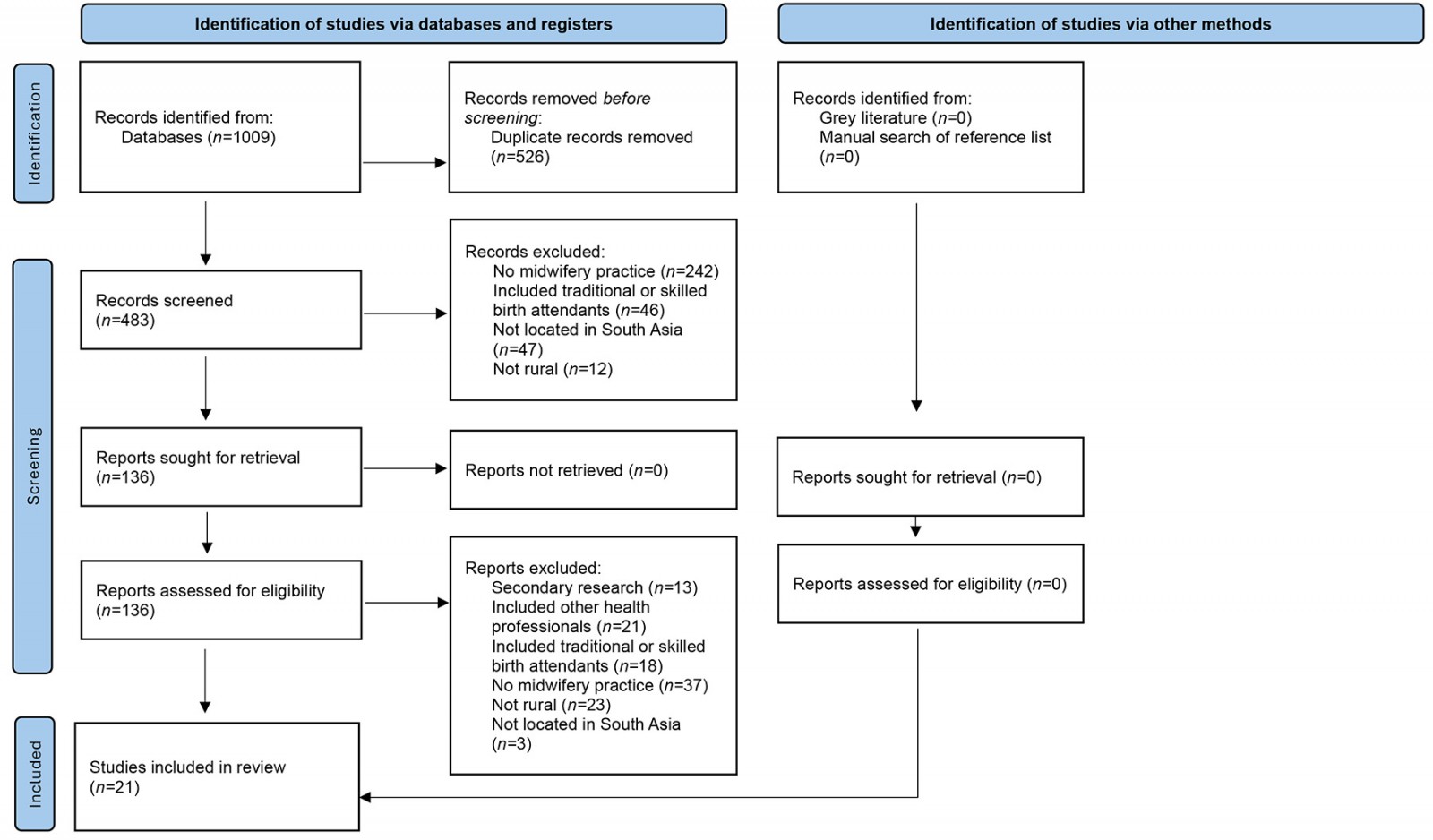
table image Figure 1: Identification and inclusion of literature using the Preferred Reporting Items for Systematic Reviews and Meta-Analyses (PRISMA) flowchart34.

Publication characteristics

Overall, the studies covered a diverse range of topics related to midwifery, with a publication time frame of 2009 to 2025, and most studies published since 2016 (Appendix II). The publication characteristics revealed contributions from various countries in the regions, including Afghanistan (n=1), Bangladesh (n=1), Bhutan (n=1), India (n=4), Pakistan (n=6), Nepal (n=5) and Sri Lanka (n=3), while no research was found regarding the Maldives (Fig2). A range of research methodologies was employed, comprising qualitative studies (n=8), quantitative analyses (n=9), mixed-methods studies (n=3) and case studies (n=1). Interestingly, the terms for midwives varied across countries, such as nurse-midwives in India, auxiliary nurse-midwives in India and Nepal, community midwives in Pakistan, public health midwives in Sri Lanka, and midwives in Bangladesh, Bhutan and Afghanistan. Because all these terms related to professional training that culminated in a midwifery qualification, they were considered appropriate for inclusion.

The qualitative studies used in-depth interviews and focus group discussions to explore a wide range of topics, including the influence of social factors on the acceptance of midwives35, the experiences of midwives36, the barriers and facilitators affecting midwifery care37, and service utilisation38. Additionally, these studies examined the impact of mental health training on midwifery practices39, the feeding and infant nutrition practices and knowledge of midwives and mothers40, the midwives’ experiences with promotion of community health interventions41 and experiences of completing the Helping Babies Breathe training program42.

Nine studies included utilised quantitative methods, including questionnaires, surveys, observations, descriptive case review and program evaluation, and a health service utilisation report. The topics explored included factors affecting the retention of midwives43,44, workload stress45, emergency obstetric care46,47, pelvic floor muscle training education for midwives48, midwifery-led ultrasonography49 and abortion care50, and implementation of electronic information management system51.

Three studies used mixed-methods approaches, including interviews, focus group discussions, surveys and semi-structured feedback forms to examine the retention of midwives in rural employment related to various recruitment strategies52, developing a tool for measuring midwifery motivation53 as well as exploring the effectiveness of directed and self-directed training54. A case study was conducted to investigate the role of midwives in delivering care during humanitarian crises and emergency situations55.

The articles reviewed revealed several key themes, including commitment to being a midwife, scope of practice education, resources and workforce, technology, society and culture as well as environment and weather. These themes serve as a framework for discussing the findings.

Identified themes

Commitment to being a midwife

Midwives across rural South Asia demonstrate a profound commitment to their clinical roles, with many expressing a deep sense of pride and responsibility for improving the health of their communities37,53. In rural Nepal, auxiliary nurse-midwives reported being highly motivated by their work, viewing it as a vital contribution to maternal and neonatal health53. Similarly, community midwives in rural Pakistan identified themselves as trained health professionals, providing comprehensive maternal care in stark contrast to traditional birth attendants36. Midwives’ increasing confidence in managing obstetric and neonatal emergencies is notable in the literature, with nurse-midwives in rural India effectively assessing and referring women in midwife-led clinics for emergency care, achieving significant success – with only one recorded maternal death over 8 years46.

Nurse-midwives have shown competence in dealing with complex emergencies, such as postpartum haemorrhages, and have further developed their skills over time, even in managing complex cases like twin births46. In rural Pakistan, community midwives reported that completing the Helping Babies Breathe program was highly beneficial in enhancing their neonatal resuscitation knowledge, practical skills and overall confidence42. Despite these achievements in complex and emergency care, a critical gap persists in knowledge regarding basic infant and child feeding and nutrition practices, as evidenced in rural Sri Lanka, where the understanding of public health midwives falls short of national clinical guidelines40.

Scope of practice

The data revealed insights into auxiliary nurse-midwives working within the normal scope and an expanded scope of midwifery practice, including areas such as abortion care50 and sonography49, as well as pelvic floor muscle training48. A study from Nepal involved the training of auxiliary nurse-midwives in rural and remote regions for 5 days in medical abortion procedures, resulting in a 98.5% success rate50. Women also received pain management as part of their care, with an 85% uptake of post-abortion contraception, including oral contraceptives, implants and intrauterine devices50. Another study in rural Nepal involved the training of auxiliary nurse-midwives to use sonography for detecting third-trimester complications49. The auxiliary nurse-midwives demonstrated high sensitivity and specificity in identifying non-cephalic presentations, multiple gestations and placenta praevia49. A cost analysis of this intervention showed this approach was projected to prevent 160 perinatal deaths at a cost of US$65 (A$100) per life saved over a 5-year period49. Additionally, training auxiliary nurse-midwives in pelvic floor muscle exercises enhanced their knowledge and resulted in improved pelvic floor muscle strength in mothers who participated in the program48.

Professional education and training

The evidence concerning the education and training of midwives, community midwives and auxiliary nurse-midwives in rural regions was notably limited, yet key insights emerged regarding gaps in communication training35, reliance on senior staff for guidance37,53 and confidence in their professional skills37. In rural India, auxiliary nurse-midwives expressed concerns about inadequate training in essential communication and negotiation skills, which are critical for navigating the often unwelcoming village environments in which they work35. They also reported a lack of awareness about their legal rights and how to manage harassment or abuse encountered in the field35. Conversely, auxiliary nurse-midwives from Nepal53 and community midwives from Pakistan37 noted that senior staff frequently played a crucial role in providing education and support, helping to enhance their clinical knowledge. This same study from rural Pakistan37 highlighted that community midwives felt well prepared after their 18-month training and 6-month internship, perceiving themselves as competent and capable qualified professionals, despite the challenges they faced. Auxiliary nurse-midwives in rural Nepal reported that further training in perinatal mental health greatly enhanced their competencies, particularly in pathophysiology, counselling, making appropriate referrals and reducing the stigma associated with mental health conditions in their communities39. Both directed and self-directed training programs for auxiliary nurse-midwives in rural India effectively enhanced their knowledge, skills and confidence in areas like pre-eclampsia and neonatal resuscitation54. Additionally, more than half of the participants retained crucial knowledge and skills as found through an assessment at 3 months post-training54.

Resources and workforce availability

Significant challenges concerning midwifery resources and workforce availability persist across various rural regions in South Asia. In rural Pakistan, for instance, inadequate remuneration for midwifery services is a pressing issue37,47, with community midwives receiving a monthly stipend of US$50 (A$74)37. These midwives reported being expected to supplement their income by charging clients for their services, despite indicating that most women were unable or unwilling to pay37. Auxiliary nurse-midwives in rural India highlighted a critical shortage of essential supplies, medications and appropriate facilities, often contending with minimal equipment, substandard accommodation and poor transportation options35. A separate study conducted in a rural region of India reported that 72% of auxiliary nurse-midwives experienced work-related fatigue, 51% suffered from muscle strain linked to their duties and 54% reported experiencing workplace stress45. In rural Pakistan, inadequate transportation services and insufficient security measures were frequently cited as barriers to effective midwifery care47. Regarding the workforce, a study conducted in rural Afghanistan revealed that community-led recruitment strategies, facilitated by community mobilisation efforts, resulted in higher employment rates in rural regions compared to traditional recruitment methods reliant on national or regional entrance examinations52. Research in rural Bhutan indicated that the retention of midwives in remote areas was positively correlated with factors such as higher average monthly income, personal origins and values as well as favourable working and living conditions43. Likewise, in rural Pakistan, community midwives were significantly more likely to stay in midwifery after graduation if a family member also worked in the health sector44.

Technology

There was limited evidence on the utilisation of technology in midwifery care, with only three studies addressing this issue45,49,51. The first study introduced an electronic information management system for public health midwives in rural Sri Lanka, yielding overwhelmingly positive outcomes51. The public health midwives expressed high satisfaction with the system, showing a strong preference for its continued use and potential expansion across the region. The primary reason for this favourable response was the substantial time savings compared to traditional handwritten documentation methods51.

As previously mentioned, a study conducted in rural Nepal provided auxiliary nurse-midwives with ultrasound training for third-trimester assessments, enabling them to identify potentially life-threatening complications and significantly improving maternal and neonatal outcomes49. A study conducted in rural India found that 45% of auxiliary nurse-midwives faced challenges using mobile and tablet applications while performing their tasks45.

Society and culture

Sociocultural factors emerged as the most prominent theme affecting midwifery care, encompassing issues like patriarchy35, gender norms35,39 and community politics35-37,53. The patriarchal structure of society, along with entrenched gender norms and social restrictions, was particularly evident in a study from rural India, where auxiliary nurse-midwives faced these challenges in community settings rather than hospitals35. Gender norms complicated discussions on topics like contraception, especially with men, who perceived these midwives to possess questionable morals35. Moreover, the societal preference for male children led to midwives receiving reduced or no payment when assisting the birth of baby girls, or to their exclusion from future births altogether35. Similarly, in rural Nepal, auxiliary nurse-midwives identified the birth of a girl as a factor contributing to maternal depression39. Unfortunately, instances of sexual harassment were frequently reported by auxiliary nurse-midwives in rural India35.

The literature available suggests that acceptance of midwives within communities varied across countries, significantly influencing their ability to provide effective care. In rural India, auxiliary nurse-midwives from outside the community often encountered resistance, making it challenging to provide care35. This hostility was partly due to the auxiliary nurse-midwives being non-locals, but was also deeply rooted in the caste system, a rigid and complex social hierarchy where social status dictates their societal and professional roles35. Auxiliary nurse-midwives perceived as belonging to a lower caste faced severe discrimination, including restrictions on physical contact with women and frequent abuse35.

In contrast, community midwives in rural Pakistan were mostly embraced as vital members of the community, having established strong, trust-based relationships with women36,37. Many women described midwives as blessings, noting their availability at any hour and their willingness to walk long distances to provide care37. Similarly, in rural Sri Lanka, public health midwives successfully integrated into their communities, offering maternal and child healthcare services while also providing essential links to state health services, promoting sexual and reproductive health and advocating for comprehensive maternal care41.

Environment and weather

An interesting insight from the literature was the significant impact of extreme weather and environmental conditions on midwifery care. In rural Pakistan, where community midwives provide home-based care, adverse weather was identified as a major barrier to care provision36. For example, snow in high-altitude and mountainous regions severely hindered community visits, inducing anxiety among midwives36. Similarly, during the rainy season, frequent road blockages and landslides further complicated their ability to reach women in need37. In contrast, midwives deployed to flood-affected rural regions in Bangladesh were found to be highly effective in providing midwifery care, particularly during perinatal emergencies and referral to tertiary health care facilities55.
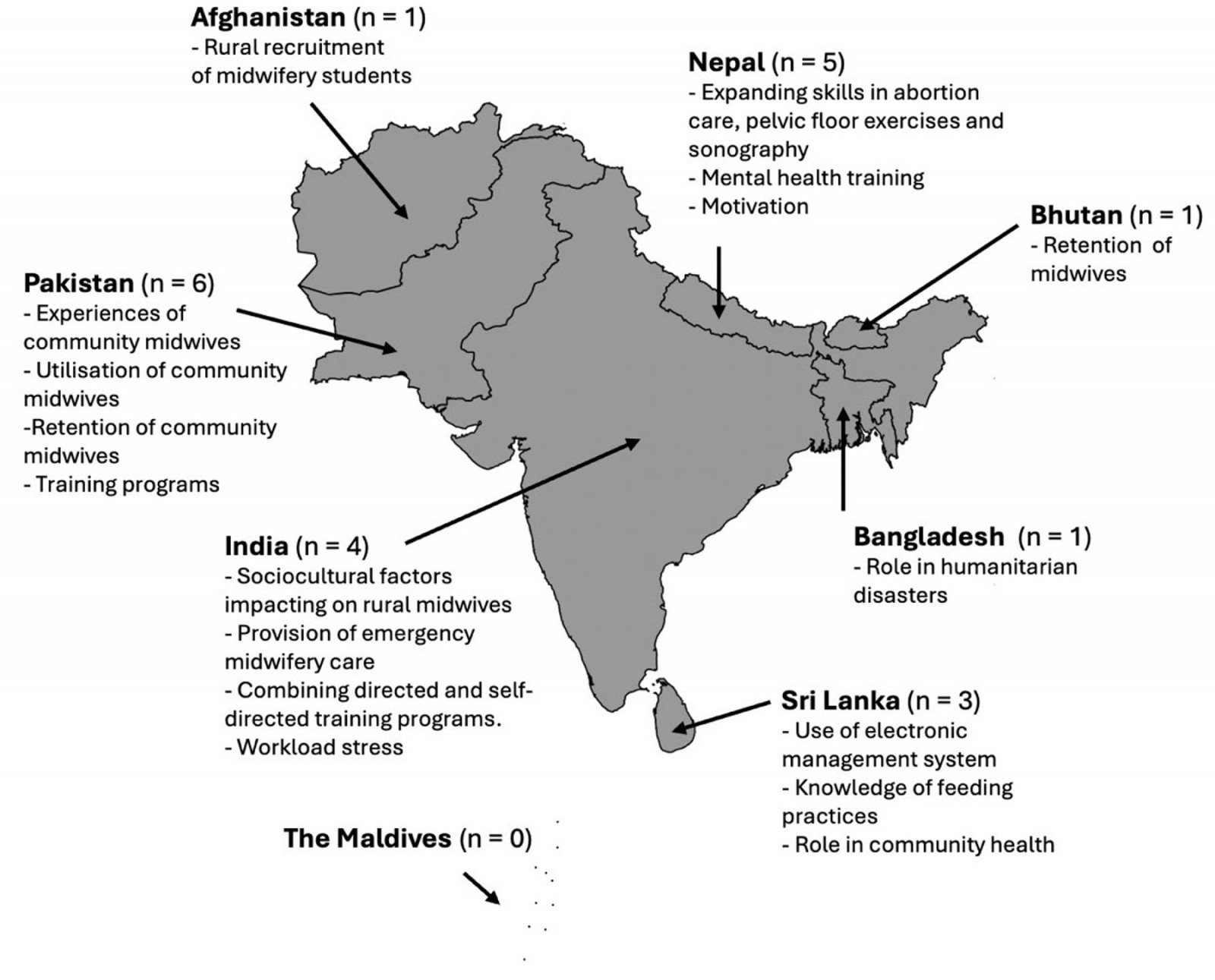
table image Figure 2: Summary of study results based on country in South Asia.

Discussion

To our knowledge, this scoping review represents the first comprehensive exploration of literature regarding the diverse experiences, knowledge and practices of midwives in rural and remote settings of South Asia. It identified challenges encountered by midwives, auxiliary nurse-midwives, community midwives and public health midwives in providing maternal and neonatal care, which are often intensified by entrenched sociocultural beliefs35,37, resource limitations35,37,47, inadequate funding35, geographic isolation and extreme weather conditions36,55. The available literature suggests that, despite these significant obstacles, empowering midwives by expanding their full scope of practice49,50, implementing modern technology51 and fostering community integration37 are effective strategies for enhancing midwifery care. Furthermore, combining research from various countries highlights that differing sociocultural settings, midwifery practices and geographical contexts could significantly influence midwifery care in rural South Asia, suggesting the necessity for tailored and individual interventions.

While pregnancy and birth are recognised as a deeply significant rite of passage around the world56, social and cultural factors play a crucial role in shaping midwifery care in rural South Asia57. The dominance of traditional norms in these regions creates considerable obstacles for midwives, whose contemporary clinical practices frequently conflict with entrenched ideologies and longstanding customs58,59. This challenge is not limited to South Asia but mirrors a broader trend observed in developing nations, where attempts to modernise healthcare systems often neglect cultural sensitivities, resulting in diminished community acceptance and adequate utilisation of available services60. A large study highlighted that interventions aimed at addressing cultural barriers are essential for enhancing maternal and newborn health outcomes61. More attention needs to be paid to understanding and integrating local cultural norms into healthcare delivery, which can substantially influence service uptake61. Such a culturally sensitive approach could be effectively implemented in South Asia, enabling midwives to fully utilise their diverse skill sets within a practice framework that respects and incorporates local customs and practices%u200B

A notable finding from this review was the significant role and benefits of incorporating modern technology into midwifery care across rural areas. Implementation of electronic health management systems51 and ultrasound technology49 has proven advantageous for both auxiliary nurse-midwives and the communities they serve. Rural regions in South Asia present immense potential for the adoption of cost-effective and sustainable technologies. For example, the use of telehealth services by midwives led to increased interactions with pregnant women and improved satisfaction by women62. In Bangladesh, midwives trained in telehealth within urban settings observed a marked increase in clinic attendance and enhanced antenatal education for women and their families63. Given the widespread availability of mobile phones and service, feasibility and positive health outcomes in low- and middle-income countries64, this technology could be leveraged further to improve the quality of maternal and neonatal care.

The International Confederation of Midwives stressed the importance of ensuring midwives possess the required knowledge and skills to function within their full scope of practice65, with the findings demonstrating the substantial benefits of this approach in areas like abortion care50. These findings resonate with global data indicating that when midwives are empowered to deliver comprehensive sexual and reproductive health services, significant advancements in maternal and neonatal health follow66. A predictive modelling study even suggested that fully utilising the skills of midwives and deploying them globally could avert up to 67% of maternal deaths, 64% of neonatal deaths and 65% of stillbirths annually by 203566. Nonetheless, implementing such comprehensive care faces hurdles, particularly in patriarchal societies, where sensitive services such as contraception and abortion can encounter resistance67. Encouragingly, South Asia is progressively advancing sexual and reproductive health rights, creating opportunities for midwives to provide these crucial services effectively and safely68.

Rural South Asia, with its diverse geography – including the mountainous regions of Bhutan and Nepal, the coastal and river deltas of Bangladesh and the remote atolls of the Maldives – is particularly vulnerable to adverse weather events69. The present review identified that midwives in these regions already face significant challenges posed by these conditions, for example community midwives in rural Pakistan identifying extreme weather, such as snow and flooding, as a major barrier to providing essential care36. Given that South Asia is at high risk for natural disasters exacerbated by climate change, these challenges are expected to intensify, resulting in transportation disruptions, food and water shortages, and adverse impacts on healthcare systems69. Additionally, climate change appears to be influencing maternal health outcomes, as evidence from Bangladesh points to increased rates of hypertensive disorders among pregnant women, attributed to rising salinity levels in rural areas70. This emphasises the critical need for climate action and the development of strategies that ensure midwifery services can be maintained amid worsening environmental conditions.

Limitations

While attempts have been made to ensure a high-quality methodology, this review has several limitations. Although the search was broad and allowed for articles beyond the English language, the search terms themselves were restricted to English, potentially excluding relevant studies published in languages from the region.

Additionally, the variability in terminology used to describe midwifery roles across different South Asian countries may have caused some relevant studies to be overlooked. A key limitation of this review lies in the risk of overgeneralisation, which may obscure important contextual differences within individual countries. Moreover, this review did not examine the preference and perceptions of women regarding midwifery care, which is an important aspect that warrants further exploration. Understanding these views could provide valuable insights into the utilisation of midwifery services, potentially identifying areas for improvement. Importantly, while this review represents the first systematic account of midwifery experiences across South Asia, it is essential not to generalise the findings, as each country and region presents has distinct cultural and societal contexts that impact and shape the role and practice of midwives. Despite these limitations, the themes extracted can inform future research and practice-orientated initiatives. This topic is extremely important for the region and for achieving a key United Nations Sustainable Development Goal.

Conclusion

This scoping review highlighted the diverse experiences of midwives across South Asia, discussing both the significant challenges and promising practices that impact their roles in contributing to maternal and neonatal health outcomes. The findings identified the critical need for targeted interventions to address barriers such as sociocultural constraints, inadequate resources and community integration. Future research should focus on expanding the scope of practice of midwives to enable comprehensive sexual and reproductive healthcare in rural South Asia. Additionally, interventions must address sociocultural barriers, such as patriarchal norms and assess the impact of climate change on midwifery services to ensure sustainable healthcare provision. Importantly, midwifery care across South Asia is significantly shaped by diverse contextual factors, with promising advancements addressing the needs of women and their newborns, although continued culturally appropriate efforts are required to ensure equitable health outcomes across the region.

Funding

This research was supported by an Australian Government Research Training Program Stipend Scholarship.

Conflicts of interest

The authors confirm that they have no financial interests or personal relationships that could have influenced the work presented in this article.

References

1 United Nations. UN Population Division Data Portal. United Nations, 2023. https://population.un.org/dataportal. (Accessed 10 May 2025).
2 Ryabchikov AM, Sivaramamurti C. South Asia. Britannica, 2024. https://www.britannica.com/place/South-Asia. (Accessed 10 May 2025).
3 World Bank Group. South Asia. World Bank, 2024. https://genderdata.worldbank.org/en/regions/south-asia#related-countries. (Accessed 10 May 2025).
4 Roster M, Ritchie H. Maternal mortality. Global Change Data Lab, 2024. https://ourworldindata.org/maternal-mortality#all-charts. (Accessed 10 May 2025).
5 The Alliance for Maternal and Newborn Health Improvement (AMANHI) mortality study group. Population-based rates, timing, and causes of maternal deaths, stillbirths, and neonatal deaths in South Asia and sub-Saharan Africa: a multi-country prospective cohort study. Lancet Global Health 2018; 6(12): e1297e308. DOIhttps://doi.org/10.1016/S2214-109X(18)30385-1 PMid:30361107https://www.ncbi.nlm.nih.gov/pubmed/30361107
6 United Nations General Assembly. The 17 goals. United Nations, 2015. https://sdgs.un.org/goals. (Accessed 10 May 2025).
7 Bogren M, Begum F, Erlandsson K. The historical development of the midwifery profession in Bangladesh. Journal of Asian Midwives 2017; 4(1): 6574. DOIhttps://doi.org/10.1016/j.midw.2018.02.021 PMid:29554606https://www.ncbi.nlm.nih.gov/pubmed/29554606
8 Bogren M, Erlandsson K. Opportunities, challenges and strategies when building a midwifery profession. Findings from a qualitative study in Bangladesh and Nepal. Sexual & Reproductive Healthcare 2018; 16: 4549. DOIhttps://doi.org/10.1016/j.srhc.2018.02.003 PMid:29804774https://www.ncbi.nlm.nih.gov/pubmed/29804774
9 Mumtaz Z, Levay AV, Bhatti A. Successful community midwives in Pakistan: an asset-based approach. PLOS One 2015; 10(9): e0135302. DOIhttps://doi.org/10.1371/journal.pone.0135302 PMid:26333067https://www.ncbi.nlm.nih.gov/pubmed/26333067
10 Sawyer WE. Influences and risks of traditional birth attendants in maternal and child health in the Global South. International Journal of Innovative Healthcare Research 2024; 12(3): 719.
11 Vedam S, Titoria R, Niles P, Stoll K, Kumar V, Baswal D, et al. Advancing quality and safety of perinatal services in India: opportunities for effective midwifery integration. Health Policy and Planning 2022; 37(8): 10421063. DOIhttps://doi.org/10.1093/heapol/czac032 PMid:35428886https://www.ncbi.nlm.nih.gov/pubmed/35428886
12 Nove A, Boyce M, Neal S, Homer CS, Lavender T, Matthews Z, et al. Increasing the number of midwives is necessary but not sufficient: using global data to support the case for investment in both midwife availability and the enabling work environment in low-and middle-income countries. Human Resources for Health 2024; 22(1): 54. DOIhttps://doi.org/10.1186/s12960-024-00925-w PMid:39039518https://www.ncbi.nlm.nih.gov/pubmed/39039518
13 Ward ZJ, Atun R, King G, Dmello BS, Goldie SJ. Global maternal mortality projections by urban/rural location and education level: a simulation-based analysis. EclinicalMedicine 2024; 16(72): 102653. DOIhttps://doi.org/10.1016/j.eclinm.2024.102653 PMid:38800798https://www.ncbi.nlm.nih.gov/pubmed/38800798
14 Dhakal S, Chapman GN, Simkhada PP, van Teijlingen ER, Stephens J, Raja AE. Utilisation of postnatal care among rural women in Nepal. BMC Pregnancy and Childbirth 2007; 7(1): 19. DOIhttps://doi.org/10.1186/1471-2393-7-19 PMid:17767710https://www.ncbi.nlm.nih.gov/pubmed/17767710
15 Karkee R, Tumbahanghe KM, Morgan A, Maharjan N, Budhathoki B, Manandhar DS. Policies and actions to reduce maternal mortality in Nepal: perspectives of key informants. Sexual and Reproductive Health Matters 2022; 29(2): 1907026. DOIhttps://doi.org/10.1080/26410397.2021.1907026 PMid:33821780https://www.ncbi.nlm.nih.gov/pubmed/33821780
16 Hamal M, Dieleman M, De Brouwere V, de Cock Buning T. Social determinants of maternal health: a scoping review of factors influencing maternal mortality and maternal health service use in India. Public Health Reviews 2020; 41: 124. DOIhttps://doi.org/10.1186/s40985-020-00125-6 PMid:32514389https://www.ncbi.nlm.nih.gov/pubmed/32514389
17 Sarker BK, Rahman M, Rahman T, Hossain J, Reichenbach L, Mitra DK. Reasons for preference of home delivery with traditional birth attendants (TBAs) in rural Bangladesh: a qualitative exploration. PLOS One 2016; 11(1): e0146161. DOIhttps://doi.org/10.1371/journal.pone.0146161 PMid:26731276https://www.ncbi.nlm.nih.gov/pubmed/26731276
18 Garces A, McClure EM, Espinoza L, Saleem S, Figueroa L, Bucher S, et al. Traditional birth attendants and birth outcomes in low-middle income countries: a review. Seminars in Perinatology 2019; 43(5): 247251. DOIhttps://doi.org/10.1053/j.semperi.2019.03.013 PMid:30981470https://www.ncbi.nlm.nih.gov/pubmed/30981470
19 Griffin G, Bradfield Z, Than KK, Smith R, Tanimizu A, Raina N, et al. Strengthening midwifery in the South-East Asian region: a scoping review of midwifery-related research. PLOS One 2023; 18(12): e0294294. DOIhttps://doi.org/10.1371/journal.pone.0294294 PMid:38100488https://www.ncbi.nlm.nih.gov/pubmed/38100488
20 Abdullah ASM, Dalal K, Halim A, Rahman AF, Biswas A. Effects of climate change and maternal morality: perspective from case studies in the rural area of Bangladesh. International Journal of Environmental Research and Public Health 2019; 16(23): 4594. DOIhttps://doi.org/10.3390/ijerph16234594 PMid:31756954https://www.ncbi.nlm.nih.gov/pubmed/31756954
21 Adatara P, Amooba PA, Afaya A, Salia SM, Avane MA, Kuug A, et al. Challenges experienced by midwives working in rural communities in the Upper East Region of Ghana: a qualitative study. BMC Pregnancy and Childbirth 2021; 21: 287. DOIhttps://doi.org/10.1186/s12884-021-03762-0 PMid:33836689https://www.ncbi.nlm.nih.gov/pubmed/33836689
22 Crowther S. Providing rural and remote rural midwifery care: an ‘expensive hobby’. New Zealand College of Midwives Journal 2016; 52: 2634. DOIhttps://doi.org/10.12784/nzcomjnl52.2016.4.26-34
23 Daellenbach R, Davies L, Kensington M, Crowther S, Gilkison A, Deery R, et al. Rural midwifery practice in Aotearoa/New Zealand: strengths, vulnerabilities, opportunities and challenges. New Zealand College of Midwives Journal 2020; 56: 1725. DOIhttps://doi.org/10.12784/nzcomjnl56.2020.3.17–25
24 Indrayani FH, Sarbini AS, Andriyani A, Sari DN, Bachtar F, Bebasari M, et al. The midwifery practice challenges in the rural populations of Indonesia. Research Journal of Medical Sciences 2017; 11(1): 4045.
25 Carvajal B, Hancock A, Lewney K, Hagan K, Jamieson S, Cooke A. A global overview of midwives’ working conditions: a rapid review of literature on positive practice environment. Women and Birth 2024; 37(1): 1550. DOIhttps://doi.org/10.1016/j.wombi.2023.08.007 PMid:37648619https://www.ncbi.nlm.nih.gov/pubmed/37648619
26 Peters MD, Godfrey C, McInerney P, Khalil H, Larsen P, Marnie C, et al. Best practice guidance and reporting items for the development of scoping review protocols. JBI Evidence Synthesis 2022; 20(4): 953968. DOIhttps://doi.org/10.11124/JBIES-21-00242 PMid:35102103https://www.ncbi.nlm.nih.gov/pubmed/35102103
27 Aromataris E, Lockwood C, Porritt K, Pilla B, Jordan Z. JBI manual for evidence synthesis. 2024. DOIhttps://doi.org/10.46658/JBIMES-24-01
28 Aromataris E, Munn Z. JBI manual for evidence synthesis. JBI, 2020.
29 Pollock D, Peters MDJ, Khalil H, McInerney P, Alexander L, Tricco AC, et al. Recommendations for the extraction, analysis, and presentation of results in scoping reviews. JBI Evidence Synthesis 2023; 21(3): 520532. DOIhttps://doi.org/10.11124/JBIES-22-00123 PMid:36081365https://www.ncbi.nlm.nih.gov/pubmed/36081365
30 Braun V, Clarke V. Using thematic analysis in psychology. Qualitative Research in Psychology 2006; 3(2): 77101. DOIhttps://doi.org/10.1191/1478088706qp063oa
31 Xue X, Tang X, Liu S, Yu T, Chen Z, Chen N, et al. A scoping review on the methodological and reporting quality of scoping reviews in China. BMC Medical Research Methodology 2024; 24(1): 45. DOIhttps://doi.org/10.1186/s12874-024-02172-y PMid:38389063https://www.ncbi.nlm.nih.gov/pubmed/38389063
32 Hong QN, Fàbregues S, Bartlett G, Boardman F, Cargo M, Dagenais P, et al. The Mixed Methods Appraisal Tool (MMAT) version 2018 for information professionals and researchers. Education for Information 2018; 34: 285291. DOIhttps://doi.org/10.3233/EFI-180221
33 Zohrabi M. Mixed method research: instruments, validity, reliability and reporting findings. Theory and Practice in Language Studies 2013; 3(2): 254. DOIhttps://doi.org/10.4304/tpls.3.2.254-262
34 Page MJ, McKenzie JE, Bossuyt PM, Boutron I, Hoffmann TC, Mulrow CD, et al. The PRISMA 2020 statement: an updated guideline for reporting systematic reviews. BMJ 2021; 372: n71. DOIhttps://doi.org/10.1136/bmj.n71 PMid:33782057https://www.ncbi.nlm.nih.gov/pubmed/33782057
35 Kumar A, Mahapatro M. The cutting edge in the blunt space: an anthropological construct of auxiliary nurse midwives’ social world in the community. Healthcare in Low Resource Settings 2013; 1(1): 4043. DOIhttps://doi.org/10.4081/hls.2013.e10
36 Jaffer MQ, Jan R, Kaufman K, Lakhani A, Shahid S. Exploring community midwives’ perceptions of their work experience after deployment in the rural areas of Chitral, Pakistan. British Journal of Midwifery 2017; 25(6): 372378. DOIhttps://doi.org/10.12968/bjom.2017.25.6.372
37 Jan R, Lakhani A, Rattani S, Lalji L, Mubeen K, Jaffer M. Can CMWs sustain quality services and high coverage as private providers in Chitral? A three-year prospective qualitative study. Journal of Asian Midwives 2019; 6(2): 2338.
38 Khowaja BMH, Feroz AS, Saleem S. Facilitators and barriers influencing utilization of services provided by community midwives in district Thatta, Pakistan: a qualitative exploratory study. BMC Pregnancy Childbirth 2022; 22(1): 506. DOIhttps://doi.org/10.1186/s12884-022-04823-8 PMid:35733093https://www.ncbi.nlm.nih.gov/pubmed/35733093
39 Mahato PK, van Teijlingen E, Simkhada P, Angell C, Ireland J. Qualitative evaluation of mental health training of auxiliary nurse midwives in rural Nepal. Nurse Education Today 2018; 66: 4450. DOIhttps://doi.org/10.1016/j.nedt.2018.03.025 PMid:29665504https://www.ncbi.nlm.nih.gov/pubmed/29665504
40 Pallewaththa P, Agampodi SB, Agampodi TC, Siribaddana SH. Knowledge, attitudes, and practices of responsive feeding in rural Sri Lanka (a qualitative study). Ceylon Medical Journal 2019; 64(2): 7075. DOIhttps://doi.org/10.4038/cmj.v64i2.8894 PMid:31455070https://www.ncbi.nlm.nih.gov/pubmed/31455070
41 Udayanga S, De Zoysa LS, Bellanthudawa A. Mobilising communities prior to healthcare interventions: reflections on the role of public health midwives working with vulnerable communities of Sri Lanka. Community Health Equity Research and Policy 2024; 45(1): 87100. DOIhttps://doi.org/10.1177/2752535X241232000 PMid:38308494https://www.ncbi.nlm.nih.gov/pubmed/38308494
42 Naz A, Lakhani A, Mubeen K, Amarsi Y. Experiences of community midwives receiving helping baby breathe training through the low dose high-frequency approach in Gujrat, Pakistan. Midwifery 2022; 105: 103241. DOIhttps://doi.org/10.1016/j.midw.2021.103241 PMid:34986433https://www.ncbi.nlm.nih.gov/pubmed/34986433
43 Jurmin K, Jariya W. Factors influencing the retention of midwives in rural areas of Bhutan: a national cross-sectional study. Open Public Health Journal 2023; 16(1): e187494452308211. DOIhttps://doi.org/10.2174/18749445-v16-230927-2023-138
44 Shah F, Shahid F, Haider J, Ali S, Ara B, Bano M. Relationship of family members’ support with practice of community midwives in rural Sindh, Pakistan. Journal of Asian Midwives 2018; 5(1): 412.
45 Akshata M, Khanna A, Bajpai PK, Singh A, Kashyap S. Navigating stress: the psychological challenges of auxiliary nurse midwives in rural Lucknow. Indian Journal of Occupational and Environmental Medicine 2025; 29(1): 5964. DOIhttps://doi.org/10.4103/ijoem.ijoem_179_24 PMid:40275886https://www.ncbi.nlm.nih.gov/pubmed/40275886
46 Iyengar K, Iyengar SD. Emergency obstetric care and referral: experience of two midwife-led health centres in rural Rajasthan, India. Reproductive Health Matters 2009; 17(33): 920. DOIhttps://doi.org/10.1016/S0968-8080(09)33459-X PMid:19523578https://www.ncbi.nlm.nih.gov/pubmed/19523578
47 Kumar R, Mehraj V, Ahmed J, Khan SA, Ali TM, Batool S, et al. Barriers experienced by community midwives to provide basic emergency obstetric and newborn care in rural Pakistan. BMC Health Services Research 2023; 23(1): 1305. DOIhttps://doi.org/10.1186/s12913-023-10273-5 PMid:38012758https://www.ncbi.nlm.nih.gov/pubmed/38012758
48 Caagbay D, Black K, Wattimena J, Raynes-Greenow C. Teaching pelvic floor muscle training to local health workers in rural Nepal. International Journal of Health Promotion and Education 2018; 56(6): 289297. DOIhttps://doi.org/10.1080/14635240.2018.1522267
49 Kozuki N, Mullany LC, Khatry SK, Ghimire RK, Paudel S, Blakemore K, et al. Accuracy of home-based ultrasonographic diagnosis of obstetric risk factors by primary-level health care workers in rural Nepal. Obstetrics and Gynecology 2016; 128(3): 604612. DOIhttps://doi.org/10.1097/AOG.0000000000001558 PMid:27500343https://www.ncbi.nlm.nih.gov/pubmed/27500343
50 Andersen KL, Basnett I, Shrestha DR, Shrestha MK, Shah M, Aryal S. Expansion of safe abortion services in Nepal through auxiliary nurse-midwife provision of medical abortion, 2011–2013. Journal of Midwifery and Women’s Health 2016; 61(2): 177184. DOIhttps://doi.org/10.1111/jmwh.12419 PMid:26860072https://www.ncbi.nlm.nih.gov/pubmed/26860072
51 Rodrigo E S, Wimalaratne S R, Marasinghe R B, Edirippulige S. A pilot health information management system for public health midwives serving in a remote area of Sri Lanka. Journal of Telemedicine and Telecare 2012; 18(3): 159163. DOIhttps://doi.org/10.1258/jtt.2012.SFT109 PMid:22362835https://www.ncbi.nlm.nih.gov/pubmed/22362835
52 Mansoor G F, Hill P S, Barss P. Midwifery training in post-conflict Afghanistan: tensions between educational standards and rural community needs. Health Policy and Planning 2012; 27(1): 6068. DOIhttps://doi.org/10.1093/heapol/czr005 PMid:21278372https://www.ncbi.nlm.nih.gov/pubmed/21278372
53 Morrison J, Batura N, Thapa R, Basnyat R, Skordis-Worrall J. Validating a tool to measure auxiliary nurse midwife and nurse motivation in rural Nepal. Human Resources for Health 2015; 13: 30. DOIhttps://doi.org/10.1186/s12960-015-0021-7 PMid:25959298https://www.ncbi.nlm.nih.gov/pubmed/25959298
54 Karvande S, Purohit V, Gopalakrishnan S S, Sri B S, Mathai M, Mistry N. Building capacities of auxiliary nurse midwives (ANMs) through a complementary mix of directed and self-directed skill-based learning – a case study in Pune District, Western India. Human Resources for Health 2020; 18(1): 45. DOIhttps://doi.org/10.1186/s12960-020-00485-9 PMid:32552757https://www.ncbi.nlm.nih.gov/pubmed/32552757
55 Purno N H, Biswas A, Anderson R, Hoque D M E. Responding to humanitarian crises: midwifery care in Bangladesh. Journal of Midwifery and Women’s Health 2023; 68(3): 371375. DOIhttps://doi.org/10.1111/jmwh.13524 PMid:37255220https://www.ncbi.nlm.nih.gov/pubmed/37255220
56 Jacinto G A, Buckey J W. Birth: a rite of passage. International Journal of Childbirth Education 2013; 28(1): 1114.
57 Omer S, Zakar R, Zakar M Z, Fischer F. The influence of social and cultural practices on maternal mortality: a qualitative study from South Punjab, Pakistan. Reproductive Health 2021; 18(1): 97. DOIhttps://doi.org/10.1186/s12978-021-01151-6 PMid:34006307https://www.ncbi.nlm.nih.gov/pubmed/34006307
58 Bogren M, Erlandsson K, Byrskog U. What prevents midwifery quality care in Bangladesh? A focus group enquiry with midwifery students. BMC Health Services Research 2018; 18: 639. DOIhttps://doi.org/10.1186/s12913-018-3447-5 PMid:30111324https://www.ncbi.nlm.nih.gov/pubmed/30111324
59 Kaphle S, Hancock H, Newman L A. Childbirth traditions and cultural perceptions of safety in Nepal: critical spaces to ensure the survival of mothers and newborns in remote mountain villages. Midwifery 2013; 29(10): 11731181. DOIhttps://doi.org/10.1016/j.midw.2013.06.002 PMid:23845450https://www.ncbi.nlm.nih.gov/pubmed/23845450
60 Kehinde A N. Socio-demographic barriers to utilization of modern maternal healthcare services (MHCS) among reproductive age women utilizing the services of traditional birth attendants (TBAs) in Southwestern Nigeria. The Nigerian Journal of Medical Sociology 2020; 2(1):
61 Coast E, Jones E, Portela A, Lattof SR. Maternity care services and culture: a systematic global mapping of interventions. PLOS One 2014; 9(9). DOIhttps://doi.org/10.1371/journal.pone.0108130 PMid:25268940https://www.ncbi.nlm.nih.gov/pubmed/25268940
62 Golden BN, Elrefaay S, McLemore MR, Alspaugh A, Baltzell K, Franck LS. Midwives’ experience of telehealth and remote care: a systematic mixed methods review. BMJ Open 2024; 14(3). DOIhttps://doi.org/10.1136/bmjopen-2023-082060 PMid:38553065https://www.ncbi.nlm.nih.gov/pubmed/38553065
63 Islam A, Begum F, Williams A, Basri R, Ara R, Anderson R. Midwife-led pandemic telemedicine services for maternal health and gender-based violence screening in Bangladesh: an implementation research case study. Reproductive Health 2023; 20(1). DOIhttps://doi.org/10.1186/s12978-023-01674-0 PMid:37644451https://www.ncbi.nlm.nih.gov/pubmed/37644451
64 McCool J, Dobson R, Whittaker R, Paton C. Mobile health (mHealth) in low-and middle-income countries. Annual Review of Public Health 2022; 43(1): 525539. DOIhttps://doi.org/10.1146/annurev-publhealth-052620-093850 PMid:34648368https://www.ncbi.nlm.nih.gov/pubmed/34648368
65 International Confederation of Midwives. International definition and scope of practice of the midwife. International Confederation of Midwives, 2024. https://internationalmidwives.org/resources/international-definition-of-the-midwife. (Accessed 25 May 2025).
66 Nove A, Friberg IK, de Bernis L, McConville F, Moran AC, Najjemba M, et al. Potential impact of midwives in preventing and reducing maternal and neonatal mortality and stillbirths: a Lives Saved Tool modelling study. The Lancet Global Health 2021; 9(1): e24e32. DOIhttps://doi.org/10.1016/S2214-109X(20)30397-1 PMid:33275948https://www.ncbi.nlm.nih.gov/pubmed/33275948
67 Filby A, McConville F, Portela A. What prevents quality midwifery care? A systematic mapping of barriers in low and middle income countries from the provider perspective. PLOS One 2016; 11(5). DOIhttps://doi.org/10.1371/journal.pone.0153391 PMid:27135248https://www.ncbi.nlm.nih.gov/pubmed/27135248
68 Ravindran TKS, Govender V. Sexual and reproductive health services in universal health coverage: a review of recent evidence from low- and middle-income countries. Sexual and Reproductive Health Matters 2020; 28(2). DOIhttps://doi.org/10.1080/26410397.2020.1779632 PMid:32530387https://www.ncbi.nlm.nih.gov/pubmed/32530387
69 Agarwal RVB, Blagrave P, Cerutti E, Gudmundsson RRM. Climate change in South Asia: further need for mitigation and adaptation. International Monetary Fund, 2021. DOIhttps://doi.org/10.5089/9781513590677.001
70 Khan JR, Awan N, Archie RJ, Sultana N, Muurlink O. The association between drinking water salinity and hypertension in coastal Bangladesh. Global Health Journal 2020; 4(4): 153158. DOIhttps://doi.org/10.1016/j.glohj.2020.11.001

appendix I:

Appendix I: Search terms and Boolean search strings employed in database searches

Database Search strings
PubMed (midwi*) AND (Afghanistan OR Bangladesh OR Bhutan OR India OR Maldives OR Nepal OR "Sri Lanka")
AND (rural OR remote)
Scopus (TITLE-ABS-KEY(midwi*)) AND
(TITLE-ABS-KEY(midwi*)) AND
(TITLE-ABS-KEY(Afghanistan OR Bangladesh OR Bhutan OR India OR Maldives OR Nepal OR "Sri Lanka")) AND
(TITLE-ABS-KEY(rural OR remote))
CINAHL (midwi*) AND (Afghanistan OR Bangladesh OR Bhutan OR India OR Maldives OR Nepal OR "Sri Lanka") AND (rural OR remote)
Web of Science TS=(midwi*) AND TS=(Afghanistan OR Bangladesh OR Bhutan OR India OR Maldives OR Nepal OR "Sri Lanka") AND TS=(rural OR remote)

Appendix II: Summary of articles identified in the study, arranged by country

Authors and publication year Country Objective Methods Participants Results Quality assessment
Mansoor et al, 201252 Afghanistan To compare the rural employment of midwives who were recruited as students through community mobilisation in rural regions, regional examination and national university examination. Mixed-methods study with qualitative data collected via interviews and quantitative data collected via surveys. 178 midwives completed the survey and there was an unknown number of participants for interviews. For those graduates recruited through rural community mobilisation, 96% were employed and 63% were working in rural communities. For those graduates selected by regional examination or the national university examination, only 43% and 9% respectively were working in rural communities. 80%
Purno et al, 202355 Bangladesh To describe how midwives deployed in rural primary health centres provided quality sexual and reproductive healthcare in the aftermath of the flooding in northern Bangladesh in 2022. Case study. 50 midwives. Supportive supervision, adequate logistics and administrative backing from local health authorities created a conducive environment for midwives. The deployment of midwives in response to climate-induced natural disasters effectively established quality sexual and reproductive health services. 60%
Jurmin and Jariya, 202343 Bhutan To investigate the factors that affect the retention of midwives in rural regions of Bhutan. Quantitative study using questionnaires. 165 midwives. There was a high retention rate with positive areas including community spirit. There were low levels of work-related stress. Better financial payments and living standards were correlated with higher retention rates in rural areas. 100%
Akshata et al, 202545 India To explore the prevalence and contributing factors of psychological stress among auxiliary nurse-midwives working in a rural Indian setting. Quantitative study using a questionnaire. 300 auxiliary nurse-midwives. A high proportion of respondents at 54% reported experiencing workload-related stress, with 46% indicating moderate stress levels and 8% reporting severe stress. Auxiliary nurse-midwives based at primary health centres experienced significantly lower stress levels compared to their counterparts at community health centres, which often receive patient referrals from primary health centres. 80%
Iyengar and Iyengar, 200946 India To examine emergency obstetric care and referral systems within midwifery-led units in rural India. Quantitative study using health services utilisation research. 2 midwife-led health centres in rural India, employing nurse-midwives. There was a total of 2771 intrapartum and 202 antenatal or postnatal obstetric emergencies of which 21% were life-threatening. For intrapartum emergencies, 16% were referred onwards and for antenatal or postnatal emergencies 70% were referred one. There was only one maternal death in 9 years. 60%
Karvande et al, 202054 India To evaluate the effectiveness of combining directed and self-directed learning methods in developing essential skills for maternal and newborn health for auxiliary nurse-midwives in rural India. Mixed-methods study with quantitative data collected via descriptive statistics and qualitative data collected via semi-structured feedback forms and case narratives with semi-structured interviews. 341 auxiliary nurse-midwives with 12 completing the case narrative semi-structured interviews. Directed learning helped participants enhance clinical skills such as maternal and newborn resuscitation and eclampsia management, with those less experienced showing greater improvement. Over half of the participants either maintained or improved their post-training scores after three months. Self-directed learning supported experience sharing, problem-solving and active engagement through skill demonstrations and presentations. The supportive learning environment further reinforced their knowledge and skills and built confidence. 100%
Kumar and Mahapatro, 201335 India To explore the impact of social factors such as age, caste and marital status contribute to the acceptance of auxiliary nurse-midwives in a remote village. Qualitative study using in-depth interviews and quasi-non-participant observations. 20 auxiliary nurse-midwives. Social factors such as belonging to a different caste group, living location, younger age and insecurity negatively affected the acceptance by the community of auxiliary nurse-midwives. 100%
Jaffer et al, 201736 Pakistan To investigate the perceptions of community midwifes regarding their experiences working in a rural setting. Qualitative study using in-depth semi-structured interviews. 13 community midwives. Community midwives felt empowered as trained health professionals, with some integrated well into the community. Reported barriers included geography, weather conditions and lack of financial remittance. 100%
Jan et al, 201937 Pakistan To identify the facilitators and barriers affecting the service utilisation of midwives and evaluate the effectiveness of an intervention package in rural Pakistan. Qualitative study using in-depth interviews and focus group discussions. 27 community midwives and other relevant stakeholders and 14 villages with four focus group discussions of six to eight community members. Community midwives reported confidence in clinical skills, preferred to conduct births in the home environment compared to the clinic, felt included by the community and supported by their supervisors. Difficulties included issues with referrals including transportation and cost of treatment, and the monthly stipend not sufficient remuneration. 100%
Khowaja et al, 202238 Pakistan To investigate the challenges and facilitators that influence community midwife service utilisation in rural Pakistan. Qualitative study using key informant interviews and in-depth interviews. 5 key informant interviews with district officials and 20 in-depth interviews with midwifery students, community midwives and community married women. The biggest challenges for the utilisation of community midwifery services was lack of clinical training, minimal ownership of the program and lack of service structure by the regulatory body. 80%
Kumar et al, 202347 Pakistan To explore the barriers community midwives encounter in providing basic emergency obstetric and neonatal care in rural Pakistan. Quantitative study using a questionnaire. 258 community midwives. Most community midwives had recognised education. The largest barriers to emergency care were financial, transport and security issues. Facilitators to emergency care included training, experience, longer duration of work and liaison with other colleagues. 80%
Naz et al, 202242 Pakistan To assess the perceptions of Helping Babies Breathe trained community midwives regarding the effectiveness of the training and the challenges they encounter implementing these skills in their rural workplace. Qualitative study using semi-structured interviews and focus group discussions. 5 community midwives in the semi-structured interviews and two focus groups discussions of 10 community midwives in each. The training was effective in enhancing usability, knowledge, skills, confidence and satisfaction in newborn resuscitation. However, a low patient volume presented challenges for practising and reinforcing these skills. 100%
Shah et al, 201844 Pakistan To explore the potential relationship between family support and the retention of community midwives in rural Pakistan. Quantitative study using cross-sectional survey. 112 community midwives. Of those who graduated between 2007 and 2012, 39% remained actively practising, while 61% no longer worked in the field. Among those currently working as community midwives, 82% had a family member employed in a health-related profession. 60%
Andersen et al, 201650 Nepal To outline a training and support framework designed to equip auxiliary nurse-midwives with the skills necessary to provide medical abortion care, including in rural and remote regions. Quantitative study using descriptive program evaluation. 463 auxiliary nurse-midwives across 290 primary level facilities in 25 districts. Participants reported a high level of confidence in their medical abortion skills, clinical knowledge and capacity to provide this service to women, even in remote health facilities. However, post-training support is critical to address any potential barriers. 100%
Caagbay et al, 201848 Nepal To examine whether a workshop on pelvic floor muscle training for auxiliary nurse-midwives would enhance their knowledge and empower them to effectively teach this technique to women in rural Nepal. Quantitative study using questionnaire and structured observations. 88 auxiliary nurse-midwives completed questionnaires and 37 women were taught pelvic floor muscle training. The workshop increased auxiliary nurse-midwives%u2019 knowledge by 18.5%, with women taught pelvic floor muscle training by a sample of auxiliary nurse-midwives successfully completing this between 71% and 17%. 60%
Kozuki et al, 201649 Nepal To evaluate the feasibility of utilising ultrasonography by auxiliary nurse-midwives in rural areas for diagnosing obstetric risk factors during the third trimester. Quantitative study using descriptive case review. 3 auxiliary nurse-midwives. With limited training, auxiliary nurse-midwives were found to have sensitivity, specificity and positive and negative predictive values of between 90% to 100% compared to ultrasonogram reviewers including detection of position, multiple gestation and placenta praevia. 100%
Mahato et al, 201839 Nepal To investigate the impact of mental health training of auxiliary nurse-midwives in rural Nepal. Qualitative study using interviews. 15 auxiliary nurse-midwives. Participants reported improved interpersonal communication and counselling skills, better understanding of mental health conditions and ability to support women. Additionally, it was reported that the community did not treat women with respect who were experiencing a perinatal mental health condition as significant stigma occurs, and that birth of a girl can contribute to depression. 100%
Morrison et al, 201553 Nepal To assess the content and construct validity, the internal consistency and the reliability of a tool to measure auxiliary nurse-midwife and nurse motivation in rural Nepal. Mixed-methods study with qualitative data collected via interviews and focus groups, and quantitative data collected via surveys. 137 auxiliary nurse-midwives and nurses completed the survey and 78 completed interviews and focus groups. The tool provided valid and consistent measures and was found to be reliable. It revealed different concepts of motivation to work in rural Nepal, that auxiliary nurse-midwives must care, the importance of sharing knowledge and teamwork with colleagues. 100%
Pallewaththa et al, 201940 Sri Lanka To explore responsive feeding practices and knowledge among women and midwives in rural Sri Lanka. Qualitative study using interviews, focus group discussions and diary studies. 10 public health midwives and 18 women. There is a significant lack of knowledge about responsive feeding practices among public health midwives, with women reporting poor education offered by public health midwives about this feeding method. 60%
Rodrigo et al, 201251 Sri Lanka To design an electronic health information management system that is acceptable to public health midwives in rural Sri Lanka. Quantitative study using a survey. 16 public health midwives. All participants reported they were happy with the software, it was useful in their work activities and improved their service, had adequate training and would like expansion across their area of work. Importantly, no participant reported that this system negatively affected their routine duties. 60%
Udayanga et al, 202441 Sri Lanka To examine how public health midwives have transformed their roles into community change agents to promote community mobilisation for healthcare interventions. Qualitative study using in-depth interviews. 6 public health midwives, 4 field officers, 2 development officers, 2 mothers and 2 fathers. Public health midwives act as a link between the community and health services, facilitate community health projects, improve health literacy and advocate for sexual and reproductive health. Despite these positives, public health midwives lack formal training in working with vulnerable communities and the sociocultural determinants of health. 100%
This PDF has been produced for your convenience. Always refer to the live site https://www.rrh.org.au/journal/article/10079 for the Version of Record.