


 download PDF
Introduction
Aging is a complex process associated with the emergence of multiple comorbidities, which can significantly affect functionality and wellbeing1-4. In terms of physical changes, reduced muscle strength and mobility become critical factors that increase the need for support in performing activities of daily living and contribute to disability in older adults1,5-8. However, the decline in functional independence among older adults is not solely attributable to physical impairments or comorbidities. Contextual factors, such as the living environment, socioeconomic conditions, social support, educational attainment, and ethnicity, are also critical in maintaining functional ability9-11.
The surroundings in which older adults reside, along with their social interactions, have a crucial role in shaping the ability of these people to carry out daily activities, as well as impacting their self-esteem and social connections12,13. Research has shown that older adults generally prefer to age in place, maintaining their independence and community connections for as long as possible13. However, the accessibility for health programs that promote regular physical activity and physical exercise practice varies significantly between urban, rural, and Indigenous communities12,13. Indigenous older adults (Individuals aged 60 years and older, residing in an Indigenous community) often face a notable range of social, economic and educational disadvantages, including poor access to essential services such as electricity, healthy water, and health systems11,14. Additionally, homes in Indigenous communities have precarious construction and rarely accommodate the physical needs of older adults, often lacking ramps, safe sanitation facilities, and spaces accessible by wheelchair13. These structural inadequacies can negatively impact functional performance in daily activities and overall quality of life12,13,15.
Despite these structural barriers, Indigenous older adults often maintain higher levels of physical activity through their traditional lifestyle practices compared to urban populations16,17. Their daily activities typically involve natural forms of exercise through traditional practices such as farming, hunting, and ceremonial dances, which contribute to maintaining functional capacity18-20. These culturally embedded physical activities, combined with a natural diet, serve as protective factors for their wellbeing. Furthermore, Indigenous older adults hold a distinct and respected position within their communities, where their ancestral knowledge is highly valued, and their experiences serve as a vital resource for preserving traditions, culture, and communal practices21,22. This cultural recognition not only reinforces their social roles but also bolsters their self-esteem23,24.
Previous studies have demonstrated a significant relationship between functional dependence and self-esteem in older adults residing in urban areas, reporting that physical limitation is associated with diminished self-esteem24-26. However, studies examining this relationship in Indigenous communities are limited, often due to challenges related to accessibility, cultural nuances, and linguistic diversity. Also, there is a notable lack of understanding regarding functional capacity in Indigenous populations19,20.
Research in physical activity and sports science has thoroughly explored how regular exercise and movement habits impact both functional capacity and psychological wellbeing in older adults living in urban areas27-30. However, a significant gap remains in understanding these dynamics among Indigenous communities. This gap is particularly important for several reasons: Indigenous communities engage in unique movement patterns and physical activities that differ markedly from conventional exercise programs; their traditional physical practices may offer valuable insights for the design of culturally sensitive exercise interventions; and the relationships between these traditional activities, functional capacity, and self-esteem have not been thoroughly investigated18,31. Although challenges related to accessibility, cultural diversity, and language barriers have historically hindered research in these settings, gaining a deeper understanding of Indigenous physical activity patterns is essential for advancing adaptive exercise programming and developing culturally relevant strategies to promote physical activity20,32,33.
In this context, the present study aims to describe the functional capacity of Indigenous older adults in the Peruvian Amazon and to analyze the association between functional capacity and self-esteem in this population. Additionally, it was hypothesized that Indigenous older adults would exhibit moderate to severe functional dependence in activities of daily living, and that greater functional dependence would be associated with lower self-esteem. However, given the unique cultural values of Indigenous communities, a different association from that observed in non-Indigenous populations was anticipated.
Methods
This study employed an analytical survey design based on a cross-section (non-experimental) and was conducted in the Indigenous community of Uut, located in the Department of Amazonas, Peru, between the years 2023 and 2024.
Participants
According to data provided by the Apu (the leader of the Indigenous community) the total population of participants aged 60 years or older was 64 older adults in the Uut Indigenous community1. Given the small size of the Uut community, an approach based on a census was adopted, targeting all eligible older adults. Participants were recruited through the Apu, who informed eligible members about the study objectives and invited them to participate voluntarily. Individuals who were unable to participate due to cognitive issues, serious illnesses, or failure to complete the interview were excluded. Given that the predominant language of this group is Awajún2, an interpreter facilitated communication throughout the data collection process, from interviews to informed consent and questionnaire administration.
Data collection procedures
The researcher conducted all questionnaires in the native Uut community of Amazonas, which is located 6 hours by public transportation from Chachapoyas to Imaza, followed by an additional 2 hours by peque-peque (a small boat). Information about the location of the Uut community was obtained from the Native Communities Information System of the Peruvian Amazon (SICNA), created in 1996 in collaboration with the National Institute of Statistics and Informatics (INEI), which has identified 2703 Indigenous communities in the country, of which 362 (13.4%) are in Amazonas34,35. The measurements were functional capacity, self-esteem, and some sociodemographic variables. In this study, functional capacity is defined as the ability of an individual to perform daily activities that require aerobic effort36. Self-esteem is defined here as a global affective assessment that a person makes regarding their own worth, significance, or personal value37.
All evaluations were conducted in private spaces within the Uut Indigenous community, respecting local customs and privacy standards. To ensure the comfort and cultural sensitivity of the participants, especially in the assessment of intimate activities (such as personal hygiene and bathing), the following protocols were implemented: participants could choose the specific location within their homes for the interview; only female researchers and interpreters conducted assessments related to personal care activities; family members or trusted community members could be present if the participant requested it; participants were informed that they could skip any question that made them uncomfortable; and questions about sensitive activities were phrased indirectly using culturally appropriate terminology suggested by the community elders and local health workers.
Since the primary language of this group is Awajún, the data collection process was conducted using a collaborative translation approach that included an Awajún interpreter with extensive experience in the community, bilingual healthcare personnel from the local health center who work regularly with the Awajún community and possess a strong understanding of both medical terminology and the cultural context, and the research team. The measurements included functional capacity, self-esteem, and sociodemographic variables, all of which were administered following the same translation protocol.
Instrument for functional capacity
The culturally adapted Barthel Index for Activities of Daily Living instrument was used for Peruvian populations. The adapted version maintains the original structure while incorporating culturally relevant modifications, including bidirectional translations carried out by bilingual translators. The adapted instrument evaluates 10 dimensions of activities of daily living: feeding; transferring between chair and bed; personal hygiene/grooming; bathing; toileting; mobility; ability to climb steps, slopes, or elevated access points; dressing and undressing; bowel control; and bladder control. Items related to feeding were adjusted to reflect traditional communal eating practices; items related to toileting were modified to include river bathing customs; the mobility assessment took into account the local terrain and traditional activities; and personal care items were aligned with the facilities available in the Indigenous community.
To classify the level of dependency, the Barthel Index was used, applying its standardized cut-off points: total dependency (0–20 points), severe dependency (21–60 points), moderate dependency (61–90 points), mild dependency (91–99 points), and independence (100 points). For sensitive items related to personal hygiene and toileting, participants were given the option to self-report their level of independence instead of demonstrating the activities. All evaluations were conducted by female research assistants, and cultural customs related to modesty were strictly respected.
The reliability of the culturally adapted instrument was evaluated using Cronbach’s alpha coefficient, yielding a result of 0.92, indicating good internal consistency. Likewise, validation was carried out through expert judgment, who reviewed the adaptation and confirmed its high validity.
Classification of self-esteem
The Rosenberg Self-Esteem Scale was adapted in 2016 for use with local populations. This cultural adaptation process was thorough, following guidelines for intercultural research in Peruvian communities37. The translation into Awajún was carried out by two bilingual translators with experience in psychology. Additionally, specific cultural adjustments were made to capture the Awajún concepts of self-esteem and collective values, thus ensuring cultural and linguistic equivalence.
This scale classifies individuals into three levels of self-esteem: high, medium, and low. The validity of the instrument was confirmed through the Kaiser–Meyer–Olkin Index, which yielded a value of 0.76, indicating that it was adequate for the analyzed sample38. Participants were offered the option to have a trusted community member present during the assessment.
Sociodemographic variables
A sociodemographic questionnaire was administered to Indigenous older adults, including questions about age, gender, marital status, and household size. All measurements were taken in the presence of the Apu and were translated into Awajún.
All measurements were taken simultaneously, in accordance with the cross-sectional design nature of the study, providing an instantaneous view of the participants' functional capacity and self-esteem at a specific point in time.
Data analysis
Data analysis was carried out in two stages. In the initial stage, a descriptive analysis of all study variables was performed. Data normality was assessed using the Kolmogorov–Smirnov test, supplemented by a graphical analysis of normality. Continuous variables (age, Barthel Index functional capacity scores, and Rosenberg Self-Esteem Scale scores) were presented as means and standard deviations (SD). Categorical type variables (age, gender, marital status, and level of functional dependency) were expressed as absolute and relative frequencies. In the second stage, the relationship between functional capacity and self-esteem was analyzed using Spearman’s correlation coefficients, considering the continuous nature of both variables. Linear regression models were developed to further explore these associations. The process of variable selection was carried out systematically, taking into account both theoretical and statistical criteria. The main variables included self-esteem (dependent variable, continuous measure via the Rosenberg Self-Esteem Scale) and functional capacity (independent variable, continuous measure using the Barthel Index). Confounding variables, such as age, sex, and marital status, were selected based on theoretical frameworks from previous research showing their impact on functional capacity and self-esteem in older adults. Statistical criteria were also considered (variables with p<0.20 in bivariate analyses), a thorough review of the literature on similar studies in Indigenous populations, and cultural relevance to the Awajún community. The strategy for constructing the model began with bivariate models that analyzed each predictor individually, followed by an initial multiple regression that included all selected variables. A backward elimination process was then applied, retaining variables that altered the main effect estimate by more than 10%. The final model included both significant confounding factors and variables that are theoretically relevant, regardless of their statistical significance. To ensure the robustness of our regression models, comprehensive multicollinearity diagnostics were performed. These included calculating variance inflation factors (<5), tolerance values (>0.2), and condition index (<30), along with examining the correlation matrix between predictors (r<0.7)39. Model diagnostics included residual analysis for normality and homoscedasticity, Cook's distance for identifying influential observations (<1), and the Durbin–Watson test for autocorrelation40. The findings of the regression models were presented as beta coefficients (β) with 95% confidence intervals (CI) and p-values. A statistical significance value of p<0.05 was set for all tests. All statistical analyses were performed using SPSS v27 (IBM Corp; https://www.ibm.com/products/spss-statistics).
Ethics approval
The study was approved by the Research Ethics Committee of the Gustavo Lanatta Luján Hospital (006-2024-CIEI-HGLL), the ethics body with the greatest competence and closest to the studied Indigenous community. Additionally, data collection was conducted after obtaining informed consent from elderly adults.
Results
The sociodemographic and functional characteristics among Indigenous older adults in the Peruvian Amazon are presented in Table 1. A total of 63 older adults were included in this study, which represents approximately 98.44% of the older adult population in Uut; only one participant did not complete the questionnaire, for personal reasons. The age of the older adults was categorized into intervals, distributed as follows: the 60–65 years age group represented 31.75% of the sample, 66–70 years likewise accounted for 31.75%, followed by 71–75 years (22.22%); those aged over 76 years represented the smallest proportion (14.29%). The sample was predominantly composed of women, representing 60.32% (n=38). Regarding marital status, most Indigenous older adults were single (46.03%), while 47.62% were cohabiting. Only 3.18% of the older adults were married or widowed. Household size was also measured in intervals, with 49.21% of households consisting of one or two people, 41.27% with three or four people, and 9.52% with five or more members. Concerning functional capacity, as measured by the Barthel Index, the Indigenous older adults presented different levels of functional capacity: 4.76% of the elderly were totally dependent, 34.92% had severe dependence, 42.86% had moderate dependence, 11.11% had mild dependence, and only 6.35% were independent. The distribution of self-esteem levels in the sample was as follows: 23.81% of participants had low self-esteem, 34.92% had medium self-esteem, and 41.27% had high self-esteem.
Figure 1 presents the percentage of independence levels, requiring no physical or verbal assistance, for performing various activities according to the Barthel Index. Most older adults demonstrated independence in grooming (81%), mobility (65%), bathing (67%), feeding (56%), and bowel control (51%). However, older adults exhibited significant limitations in some other activities. Notably, 33% were unable to bathe independently, 29% were unable to climb stairs, 22% had difficulties with dressing, 17% were unable to use the toilet independently, 13% required assistance with transfers, and 3% needed help with feeding. Urinary incontinence, or the inability to manage a catheter independently, was observed in 16% of the participants, and 59% had occasional accidents. Although there were no reports of bowel incontinence (or the need for enemas), 49% of the older adults reported presenting occasional accidents.
Table 1: Demographic characteristics of Indigenous older adults in the Peruvian Amazon (N=63)
| Characteristic | Variable | n (%)/mean±SD |
|---|---|---|
| Age group (years) | 60–65 | 20 (31.75) |
| 66–70 |
20 (31.75) |
|
| 71–75 |
14 (22.22) |
|
| ≥76 |
9 (14.29) |
|
| Gender | Female | 38 (60.32) |
| Marital status | Single | 29 (46.03) |
| Married |
2 (3.18) |
|
| Cohabiting |
30 (47.62) |
|
| Widowed |
2 (3.18) |
|
| Number of household members | 1 or 2 | 31 (49.21) |
| 3 or 4 |
26 (41.27) |
|
| ≥5 |
6 (9.52) |
|
| Functional capacity† | Total | 64.12±23.65 |
| Total dependence |
3 (4.76) |
|
| Severe dependence |
22 (34.92) |
|
| Moderate dependence |
27 (42.86) |
|
| Mild dependence |
7 (11.11) |
|
| Independence |
4 (6.35) |
|
| Self-esteem¶ | Total | 20.16±7.93 |
| Low |
15 (23.81) |
|
| Moderate |
22 (34.92) |
|
| High |
26 (41.27) |
† Barthel Index for Activities of Daily Living.
¶ Rosenberg Self-Esteem Scale.
SD, standard deviation.
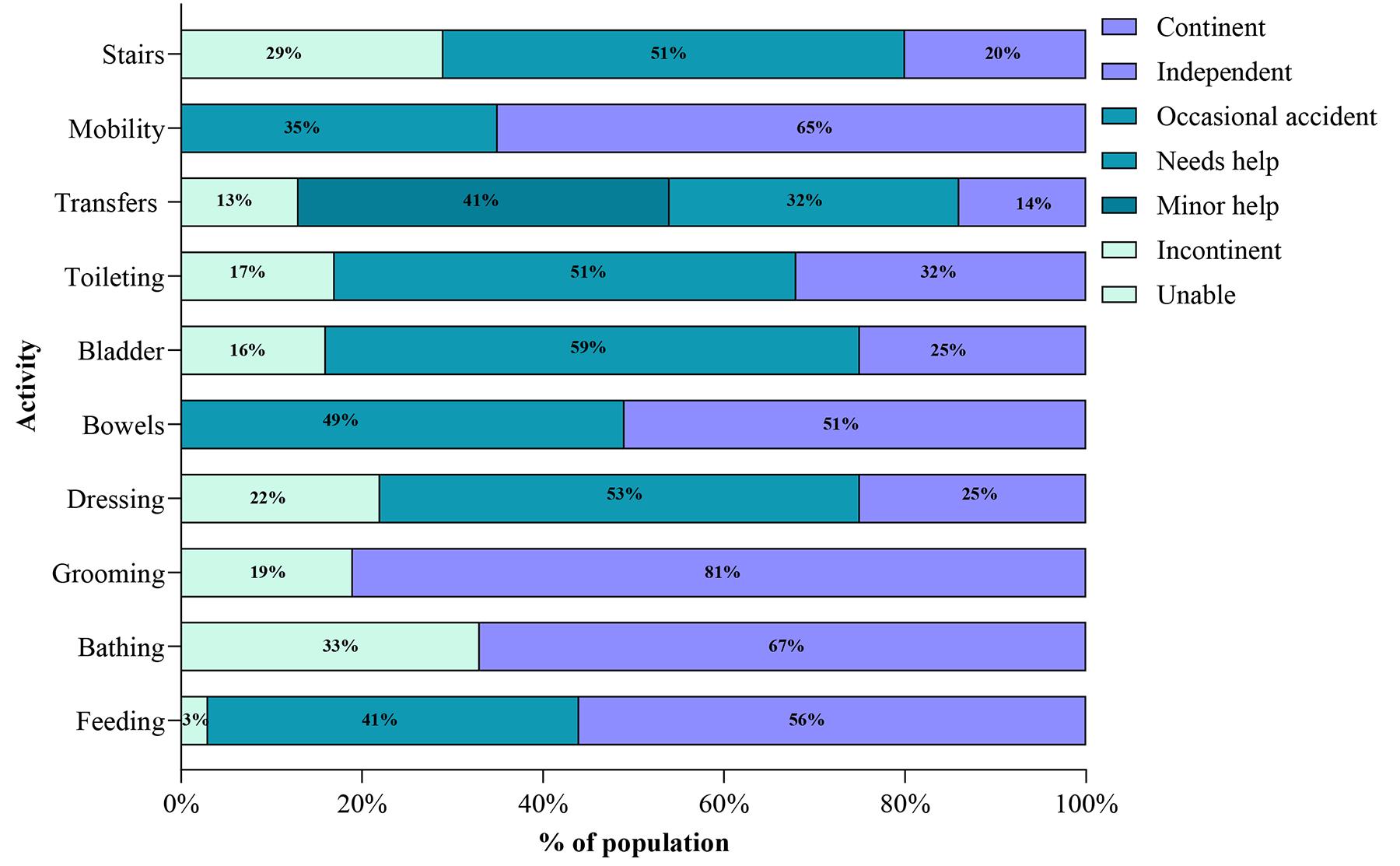 Figure 1: Percentage performance in daily activities, according to the Barthel Index, of Indigenous older adults in the Peruvian Amazon.
Comparison between Indigenous older adults with different levels of self-esteem
Indigenous older adults with low self-esteem were predominantly younger (46.67% aged 60–65 years), whereas those with high self-esteem were more commonly found in the older age groups (42.31% aged 71–75 years and 23.08% aged ≥76 years; p<0.001). No statistically relevant differences were evident in gender distribution, marital status, and household size across self-esteem levels (p=0.416, p=0.499 and p=0.451, respectively). Participants with high self-esteem exhibited lower mean Barthel Index scores (49.62±21.68) compared to those with moderate self-esteem (70.23±17.15) and low self-esteem (80.33±21.59). Notably, a greater proportion of individuals with high self-esteem were categorized as severely dependent (57.70%) compared to those in the other self-esteem groups (Table 2).
Table 2: Comparison between Indigenous older adults in the Peruvian Amazon with different categories of self-esteem (N=63)
| Characteristic | Variable | Self-esteem categorization n (%)/mean±SD | p-value | ||
|---|---|---|---|---|---|
| Low (n=15) | Moderate (n=22) | High (n=26) | |||
| Age group (years) | 60–65 | 7 (46.67) | 12 (54.55) | 1 (3.84) | <0.001 |
| 66–70 |
6 (40) |
6 (27.27) | 8 (30.77) | ||
| 71–75 |
2 (13.33) |
1 (4.55) | 11 (42.31) | ||
| ≥76 |
0 (0) |
3 (13.64) | 6 (23.08) | ||
| Gender | Female | 7 (46.67) | 15 (68.18) | 16 (61.54) | 0.416 |
| Male |
8 (53.33) |
7 (31.82) | 10 (38.46) | ||
| Marital status | Cohabiting | 6 (40) | 10 (45.45) | 14 (53.85) | 0.499 |
| Single |
9 (60) |
11 (50) | 9 (34.62) | ||
| Married |
0 (0) |
1 (4.55) | 1 (3.84) | ||
| Widowed |
0 (0) |
0 (0) | 2 (7.69) | ||
| Number of household members | 1 or 2 | 10 (66.67) | 8 (36.36) | 13 (50) | 0.451 |
| 3 or 4 |
4 (26.67) |
12 (54.55) | 10 (38.46) | ||
| ≥5 |
1 (6.66) |
2 (9.09) | 3 (11.54) | ||
| Functional capacity† | Total | 80.33±21.59* | 70.23±17.15* | 49.62±21.68 | 0.001 |
| Total dependence |
0 (0) |
0 (0) | 3 (11.54) | ||
| Severe dependence |
2 (13.33) |
5 (22.73) | 15 (57.70) | ||
| Moderate dependence |
6 (40) |
14 (63.63) | 7 (26.92) | ||
| Mild dependence |
5 (33.34) |
2 (9.09) | 0 (0) | ||
| Independence |
2 (13.33) |
1 (4.55) | 1 (3.84) | ||
* Statistical significance compared to high self-esteem categorization (p<0.05).
† Barthel Index for Activities of Daily Living.
SD, standard deviation.
Regression analysis between self-esteem and functional capacity
Self-esteem and functional capacity showed a negative correlation in Indigenous older adults (r=–0.51; p<0.001). In women, the correlation was r=–0.62, and in men, it was r=–0.44 (Fig2). The associations between self-esteem, functional capacity, and sociodemographic variables are presented in Table 3. Two regression models were performed to explore the association between self-esteem and functional capacity. In the unadjusted linear regression analysis (model 1), a correlation coefficient (β) of –0.21 (95%CI: −0.30–−0.12) was obtained, with p<0.001. In model 2, after adjusting for sociodemographic variables (age, gender, marital status, and household members), the β coefficient was –0.14 (95%CI: −0.27–−0.02).
The negative beta coefficients observed in both regression models (β=–0.21 and β=–0.14) confirm the inverse relationship between functional capacity and self-esteem. This relationship remained even after adjusting for sociodemographic variables, suggesting that it is a robust finding in our population. The regression model met all underlying assumptions necessary for valid inference. Multicollinearity diagnostics (Table 4) revealed acceptable levels for all predictors: variance inflation factors ranged from 1.038 to 1.801 (all <5), tolerance values were between 0.555 and 0.963 (all >0.2), and the condition index was 19.407 (<30). The correlation matrix showed no concerning relationships between predictors, with the highest correlation being r=0.40 between gender and functional capacity. Residual analysis supported the assumptions of linear regression. The Durbin–Watson statistic (2.431) indicated no significant autocorrelation. The normal probability plot and Kolmogorov–Smirnov test (p=0.030) showed that the residuals deviated from normality. Scatter plots of standardized residuals against predicted values showed no systematic patterns, supporting homoscedasticity. Cook's distance values ranged from 0.000 to 0.326, well below the critical value of 1, indicating that no influential outliers affected the model estimates.
Table 3: Association between self-esteem and functional capacity in Indigenous older adults in the Peruvian Amazon (N=63)
| Variable | Model 1† | Model 2¶ | ||
|---|---|---|---|---|
| Coefficient (95%CI) | p-value and R2 | Coefficient (95%CI) | p-value and R2 | |
| Functional capacity | –0.21 (–0.30– –0.12) | p<0.001*** R2=0.26 | –0.14 (–0.27– –0.02) | p=0.03* R2=0.29 |
*p<0.05, **p<0.01, ***p<0.001
† Unadjusted analysis.
¶ Adjusted for age, gender, marital status and household members.
Table 4: Multicollinearity diagnostics for predictor variables
| Variable | Variance inflation factor | Tolerance |
|---|---|---|
| Functional capacity | 1.801 | 0.555 |
| Age | 1.790 | 0.559 |
| Gender | 1.038 | 0.963 |
| Marital status | 1.046 | 0.956 |
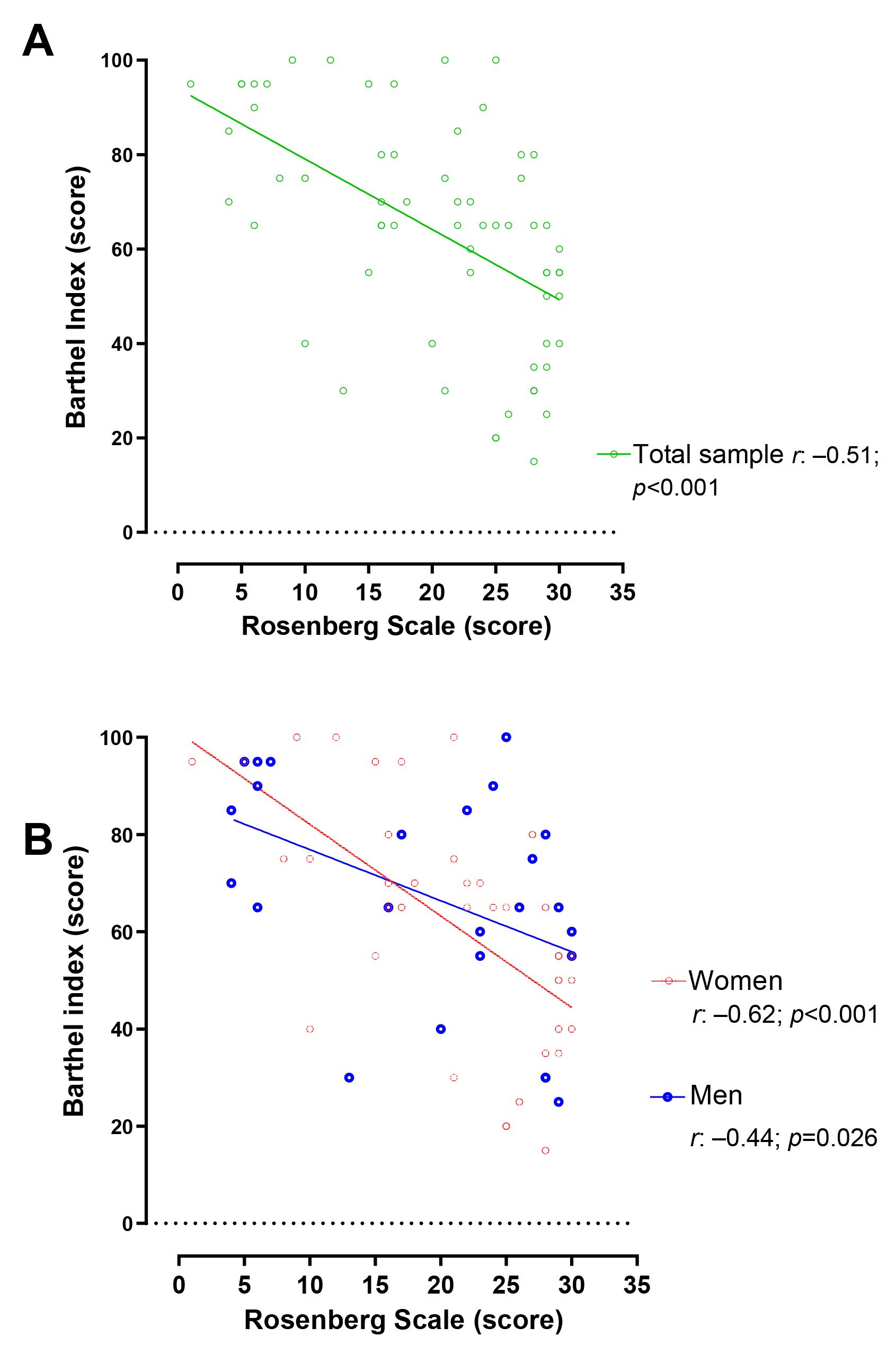 Figure 2: Correlation between self-esteem and functional capacity in Indigenous older adults (overall (A) and for men and women (B)) in the Peruvian Amazon.
Discussion
This study analyzed the relationship between functional capacity and self-esteem among Indigenous older adults, specifically in the Uut community of the Peruvian Amazon. Additionally, we provided an analysis of the social, demographic, and functional characteristics of this population, which has been scarcely studied. Notably, this population exhibited significant limitations in performing activities of daily living, requiring assistance with transfers, mobility, stair climbing, dressing, and toilet use. Additionally, urinary incontinence, occasional urinary accidents, and challenges with bowel control were observed.
Indigenous older adults in the Uut community were characterized by moderate to severe dependence. While this finding shares some similarities with patterns observed in other Indigenous communities of Latin America, it is essential to recognize that Indigenous populations exhibit a great deal of diversity41. A systematic review of Indigenous health in the region has documented varying levels of physical limitations across different communities, with studies reporting prevalence of frailty and prefrailty (32% and 59%, respectively)42,43. The prevalence of urinary incontinence in the studied Uut population (16%) differs from that reported in Indigenous older adults in the Brazilian Amazon (26%)44 and the general Peruvian older adult population (32%)45, highlighting the need to take into account local and cultural nuances.
Our most striking finding in the Uut community was the significant negative correlation between functional capacity and self-esteem (r=–0.51), where individuals with lower functional capacity exhibited higher levels of self-esteem. This result, although surprising, can be explained by cultural factors specific to Indigenous communities, where the elderly are valued and respected, regardless of their functional limitations. Additionally, the strong family and community support networks that characterize these populations may help elderly people maintain a positive self-image, despite physical difficulties. This relationship, specific to our study population, contrasts with findings from urban populations where functional decline typically correlates with decreased self-esteem25,26. Numerous studies focusing on Indigenous communities shed light on this surprising relationship22,46-48. Research conducted by Sefa et al21 and Viscogliosi et al22 shows that Indigenous cultures place a higher value on wisdom and experience rather than just physical ability. Additionally, Sepúlveda-Loyola et al highlight the robust intergenerational support systems that are typical in these communities49. These cultural aspects foster an environment where older adults can continue to hold important social roles, even when facing functional limitations47. This inverse relationship may be due to the distinct cultural context of Indigenous communities, where the traditional roles and social status of older adults are maintained or even enhanced despite functional limitations. In these communities, collective support systems serve as protective factors for self-esteem50.
Our ethnographic observations in the Uut community highlighted specific cultural traits that clarify the surprising link between functional capacity and self-esteem. The community's social structure upholds the status of elders through tangible practices, regardless of their physical limitations47,51,52. Older adults play a crucial role as the main custodians of traditional knowledge, which includes medicinal practices, oral histories, and agricultural skills22,53. Their authority is recognized in community gatherings and family discussions, while the multigenerational caregiving system ensures they retain dignity and power in decision-making, even as they require more physical assistance46,54. Interestingly, as physical abilities wane, the chances for sharing knowledge and taking on advisory roles often increase, offering alternative ways to contribute to community life47,55. This cultural context, where diminished mobility leads to greater community support and focused teaching opportunities, helps explain the elevated self-esteem seen in those with lower functional capacity47,56. It suggests that, in the Uut community, a decline in physical ability may actually enhance certain aspects of social status by creating more opportunities for cultural transmission and advisory roles21,22.
In the Uut community, we noticed that cultural values seem to play a protective role in enhancing self-esteem. Although other research has highlighted similar trends in various Indigenous settings22,57, it's crucial to recognize that each Indigenous group possesses its own distinct cultural practices and values. In our study population, we discovered that the passing down of knowledge through generations elevates older adults to a position of respect within the community, which may help mitigate the psychological effects of functional decline.
The demographic profile of our study population in the Uut community reveals specific characteristics that could impact functional capacity and self-esteem. The higher representation of women in our sample is consistent with observations from other studies on Indigenous populations58, although this trend may not hold true for all Indigenous communities. The social living arrangements we observed in the Uut community, with most participants being single or cohabiting and none living alone, represent a unique cultural pattern that may differ from other Indigenous and non-Indigenous groups6,59. This type of living situation seems to serve as a protective factor, as research in Latin American Indigenous communities consistently indicates that extended family living arrangements lead to improved physical and psychological wellbeing13,25.
Based on our research, we suggest several targeted implications for physical activity interventions within the Uut community and possibly other Indigenous settings. First, due to the significant prevalence of mobility and transfer challenges, interventions should focus on exercises that improve functional movements vital for daily living60-62. This could involve balance training, practice with transfers, and exercises aiming to strengthen the lower body13,63. However, it is crucial that these interventions are culturally tailored, for instance by integrating traditional community activities and movements that resonate with the participants57. The strong intergenerational connections noted indicate that communal interventions including various age groups could be especially beneficial, potentially merging physical activity with opportunities for sharing knowledge and cultural practices22. Furthermore, given the high levels of self-esteem despite functional challenges, physical activity programs should focus on sustaining and enhancing current abilities rather than dwelling on limitations21,25.
It is essential to acknowledge the limitations of this study. Primarily, the use of a cross-section limits the causality of our results. Additionally, exploring a specific Indigenous population means results can only be generalized with caution to other Indigenous communities. Functional capacity was measured exclusively with the Barthel Index, which may limit comparisons with studies employing alternatives or those specific to the population. Although the sample size seemed small, it is representative of this specific Indigenous population as it comprised 98% of the older adults located in this region. In addition, the translation process involved several bilingual professionals, including health personnel and an experienced interpreter; we did not carry out a formal translation validation process. However, the collaborative approach used ensured proper communication and understanding between the researchers and the participants. It is important to highlight that most studies about functional capacity and self-esteem have been conducted in populations other than Indigenous older adults in the Peruvian Amazon, where other social and cultural factors could have an influence. Additionally, research in Indigenous populations is often hindered by logistical challenges, language barriers, and cultural sensitivities. These factors posed significant challenges for the research team, particularly when addressing intimate questions such as self-esteem. Consequently, further research is needed to explore the interplay between functionality, self-esteem, and related variables in this and other Indigenous populations. Such studies are crucial for developing culturally informed public policies and healthcare interventions that address the unique needs of these communities.
Conclusion
In this study, Indigenous older adults in the Peruvian Amazon exhibited significant physical limitations in activities of daily living, particularly those involving mobility and transfers. Additionally, self-esteem was negatively associated with functional capacity: individuals with higher self-esteem tended to have lower functional capacity. This counterintuitive finding may reflect the unique cultural perspectives of Indigenous communities, where self-worth is often tied to wisdom, social roles, and harmonious relationships rather than to physical independence. In these communities, seeking assistance is viewed not as a weakness but as a reaffirmation of traditional social structures and family ties.
Given these physical limitations, exercise and rehabilitation interventions are essential to improve functional capacity in this population. Importantly, healthcare programs must be culturally sensitive, respecting Indigenous values while addressing functional needs. Interventions should emphasize communal participation and social connection, incorporating traditional activities such as group dances, agricultural tasks, and customary games that hold cultural significance. Programs that prioritize group engagement over individual achievement are likely to be more effective and culturally acceptable.
These findings have important implications for healthcare practice and policy. Culturally tailored interventions are crucial to ensure relevance and effectiveness in Indigenous populations, where Western concepts of self-esteem may not apply directly. Future research should explore the cultural mechanisms underlying these associations through mixed methods and longitudinal studies, further enriching our understanding of Indigenous health and aging.
Acknowledgements
We extend our deepest gratitude to all the individuals and organizations that made this research possible. First, we thank the older adults from the Uut Indigenous community, whose willingness to transmit their knowledge and experiences was key to the development of this research. We also thank the professionals and collaborators who supported the various stages of the project. Their dedication and commitment to social research have been an inspiration.
Funding
This research was funded by the Vice-Rectorate of Research of the National University Toribio Rodríguez de Mendoza, Amazonas.
Conflicts of interest
The authors claim that they have no conflicts of interest.
AI disclosure statement
AI-assisted technology (Claude 3.5 Sonnet) was used to facilitate the translation and summarization of the content. All data, statistical analyses, interpretations, and article content were reviewed and validated by all authors, who assume responsibility for the integrity of the work.