



 download PDF
Introduction
People experiencing out-of-hospital cardiac arrest (OHCA) may have a favourable neurological outcome when they are managed in the field with public access defibrillation (PAD) within 3–5 minutes from collapse1,2. Although guidelines exist3 for the development of a life-support system, bystander CPR and automatic external defibrillator (AED) use rates display considerable variation between European countries, ranging from 13% to 82% and 2.4% to 20% respectively4,5. Several issues continue to hamper the effectiveness of PAD:
- lack of education and training: Witnesses of OHCA are not willing to help the victim because they are not trained or are afraid of legal consequences in case of unfavourable outcome6
- lack of awareness of PAD programs: Although AEDs are marked, in case of OHCA, bystanders may not be aware or have the calmness to recall their location6
- locked or out-of-service AEDs: Vandalism is a major concern for individuals who buy an AED for public access but do not want their offer to the community to be ruined or stolen. Furthermore, such offers to the community are not usually maintained regularly regarding their functionality or the expiry date of pads and batteries7.
In Greece, the rate of CPR and AED use by bystanders ranges between 30% and 45%4,8, while survival after OHCA is less than 10%, one of the lowest in Europe9.
According to Greek legislation, every public service, private enterprise or organization where large numbers of people gather (eg airports, sports facilities, hotels) is obliged to have an AED, while CPR training is mandatory for sport trainers, lifeguards and employees of large organizations. Several organizations or individuals have installed AEDs all over Greece – approximately 2770 according to modest estimates. However, only those who installed them know their exact locations or functionality. More importantly, not all of them are available at all times, and we are aware of cases of locked AEDs, where access is granted via a code provided over the phone. During our early efforts to capture the PAD network in Crete, we came across many out-of-service AEDs, with expired batteries or pads. Furthermore, we are aware of two cases of OHCA where an AED was not used, in one instance because nobody knew that it was installed 40 m away from the scene and in the other case because bystanders were reluctant to use it.
To overcome the abovementioned obstacles, the Region of Crete, in collaboration with the Cardiopulmonary Resuscitation Laboratory of the Medical School of the University of Crete and the Foundation for Research and Technology – Hellas, launched Program ZOE (meaning ‘life’ in Greek), an innovative initiative aimed at establishing an effective PAD program in Greece, endorsing the bundle of interventions recommended by the European Resuscitation Council (ERC) Guidelines 2025: Systems Saving Lives3. In this article, we present the steps taken toward the effective establishment of the first organized PAD program in the country, as well as the results obtained during its first 8 months of implementation.
Methods
Program ZOE is an analytical and applied project that aims to support and evaluate the implementation of PAD in the Region of Crete. It was designed taking into account all the issues considered3,10 as essential approaches to improve PAD outcomes.
AED placement
AEDs were purchased to be placed in athletic fields and in high traffic public access locations: 256 AEDs were purchased after an international public tender. The selected model has both pediatric and adult mode and offers real-time CPR guidance with vocal instructions. AEDs had to meet the special requirement of remote management of their function through wi-fi connection to an online platform monitored by the University of Crete, to facilitate service issues and to enable us to obtain reliable information about their use in case of OHCA. The Region of Crete is responsible for their maintenance (purchase of spare parts such as batteries and pads). These AEDs are available at all times11.
CPR training
ERC basic life support (BLS)-certified training was given to sports teachers and other volunteers. We also trained motivated individuals on BLS training to increase PAD awareness and spread BLS training in schools and athletic clubs.
To facilitate large-scale BLS training, we developed a blended training program, lasting 45 minutes, that includes a brief video presentation (10 minutes) on hands-only CPR and AED use, followed by hands-on training in small groups of four or five participants per instructor/manikin. The video also presents the use of a pocket mask and the recovery position12.
This blended training program was presented to citizen volunteer teams (eg Hellenic Red Cross, Filios ZEUS, Epidrasis, Hellenic Rescue Team), which were invited to participate in Program ZOE, in a joint event led by the Cardiopulmonary Resuscitation Laboratory, with the aim of homogenization. Volunteers from these teams were then engaged as instructors in training events for students and citizens as part of Program ZOE.
Educational and promotional videos were created and distributed through social media accounts, interviews on local television and events across Crete13. Flyers were distributed in schools and during the Restart a Heart Day events organised in Crete. A CPR video competition for high school students in Crete is also underway to encourage engagement and promote the program within the student community.
Increase PAD awareness
Creation of a mobile phone app (Fig1) allowed bystanders to locate the closest AED, and the rescuer was provided with real-time step-by-step instructions (vocal and video instructions)14,15. In addition, we invited individual stakeholders to register privately purchased AEDs in the platform, provided they could ensure their operational status, enabling the creation of a comprehensive AED map and the display of all available devices within a single application for ease of access16.
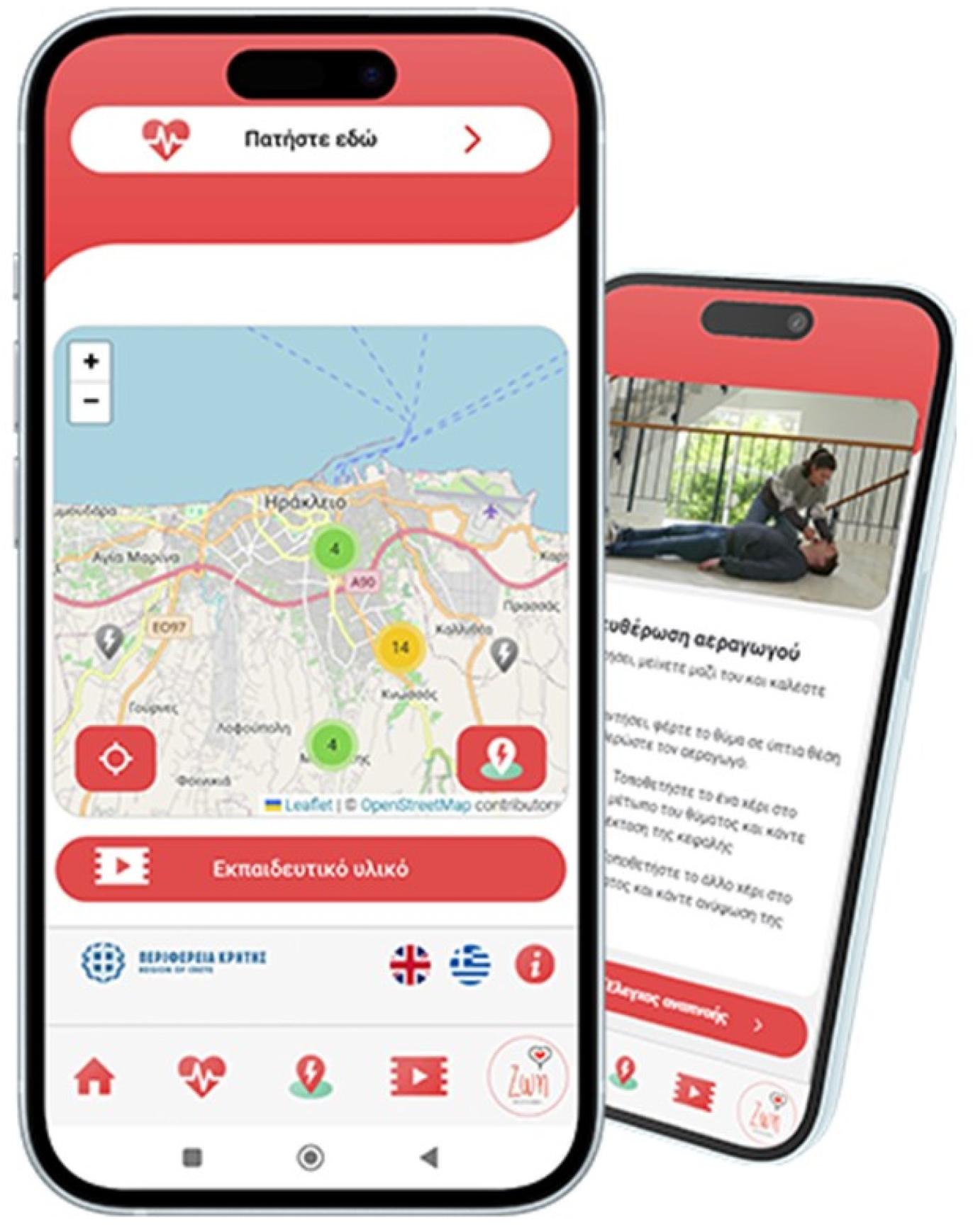 Figure 1: Program ZOE mobile application screenshots.
Assessment of the program
The evaluation of the program was based on the use of AEDs during the first 8 months of their placement. We prospectively assessed the use of AEDs in the Region of Crete with data collected from the online defibrillator monitoring system, emergency medical services (EMS), and interviews from people engaged in resuscitation.
The challenges associated with training, enhancing public awareness of PAD and the accompanying mobile application, and ensuring the functionality of AEDs, were resolved rather easily. However, the existing literature about AED placement was not enlightening since it applies only for cities. So, the main question we had to answer was ‘Where should we place the 256 AEDs?’
Crete is the largest island of Greece with a population of 617,360 inhabitants, a number that increases significantly during the summer – more than 4,500,000 tourists in 202417. The island is divided in four regional units (Heraklion, Chania, Rethymnon and Lasithi) and comprises nine cities (populations 6000–185,000) and numerous smaller villages across an area of 8336 km18. Furthermore, its mountainous terrain, with many remote villages, makes timely EMS access difficult.
We applied the following strategy to distribute the AEDs in a fair, horizontal and cost-effective manner.
First, the Cretan population was divided by the number of available AEDs, after ensuring coverage of athletic fields and stadiums – a program prerequisite. This established that each AED should serve approximately 3300 people, allowing us to determine the number of devices required for each regional unit.
Then, we covered the cities according to the criterion of one AED for 3300 people and finally we placed the remaining AEDs on the main squares of towns and larger villages, or villages with increased tourism during the summer. The decisions regarding the exact location of placement were taken in collaboration with the municipalities of each regional unit. Since we wanted to cover high-traffic places, we considered that the mayors’ offices were the most appropriate to provide this information.
Furthermore, we provided concise information and educational materials on BLS/AED to encourage local communities and citizens to embrace and take ownership of the AEDs installed in their neighbourhoods.
The EMS and all health centres were informed about the placement of defibrillators and were therefore able to direct citizens to them when needed. It should be noted that some health centres, particularly in more remote areas, are equipped with an ambulance, and doctors at these centres may be called upon to assist in cases of cardiac arrest.
Due to the lack of a comprehensive documentation system, there are no statistical data available that could be used to identify high-risk areas for cardiac arrest in Greece in general and in Crete in particular.
Results
Sixty-seven AEDs were placed in athletics fields and stadiums, 97 in urban areas and 92 in villages. The majority of the public access AEDs (90) were placed in the regional unit of Heraklion, 42 in Chania, 31 in Rethymnon and 26 in Lasithi (Fig2).
During the academic years 2023–24 and 2024–25, 268 sports and high school teachers and other volunteers attended the BLS providers’ course, and more than 1500 students were trained through the 45-minute program.
The mobile app, designed for both Android and iOS, was released for download in March 2025 and provides (online and offline) an educational video and step-by-step written, vocal and visual CPR and AED use instructions on the management of OHCA. It prompts the rescuer to call EMS by pressing the relevant shortcut and directs bystanders to the nearest AED installed through Program ZOE.
During the first 8 months of the program, six OHCAs were managed on scene, all in rural areas. One of the victims collapsed at home; relatives performed CPR and called for the AED located in the village. The person received three shocks and regained consciousness before EMS arrival. In the remaining five cases resuscitation efforts were not successful; they included a case of traumatic cardiac arrest, a gunshot wound case, two cases of drowning and a case of sudden cardiac arrest with initial non-shockable rhythm.
Based on the available information, the citizens who used the AEDs were aware of their location. The EMS was called for the advanced management of cardiac arrest, while resuscitation had already been initiated by bystanders.
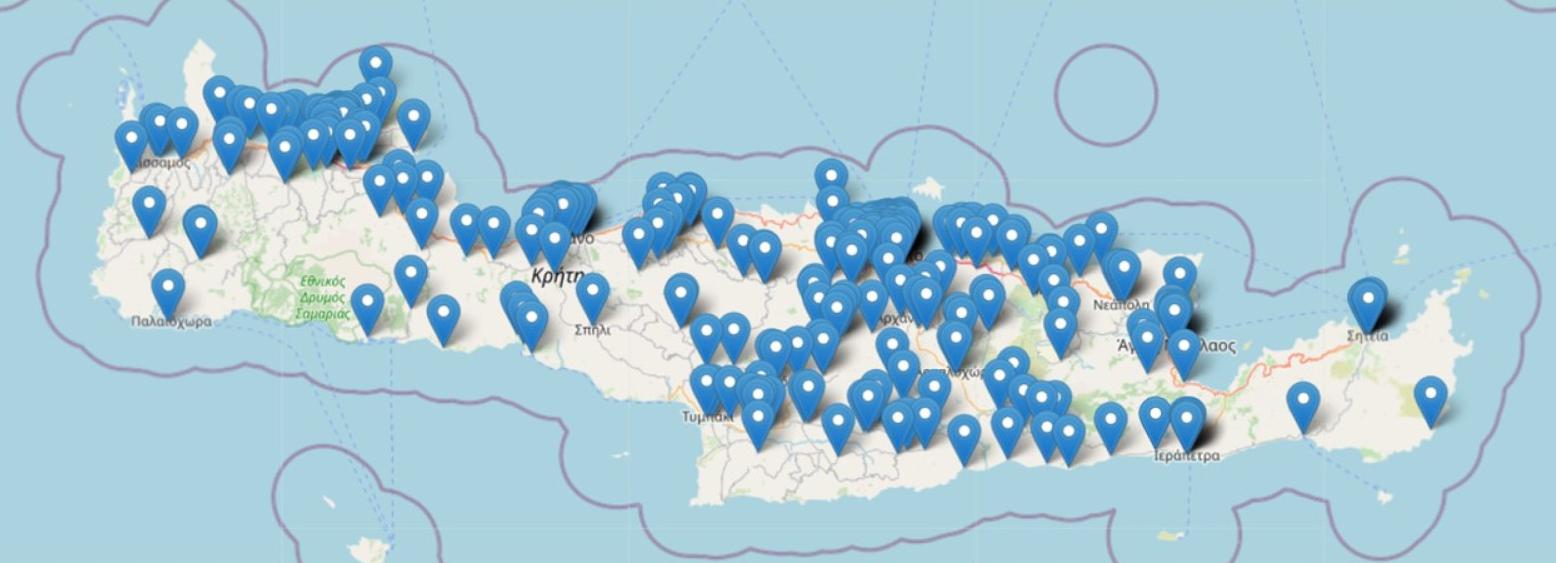 Figure 2: Map of Crete with the installed AEDs.
Discussion
Building a successful PAD system requires several steps3,10: public training to increase early detection of OHCA and willingness to perform CPR and use AED; AED placement with continuous availability; a mobile app to guide retrieval of available AED and to provide instructions; and promotional campaigns to increase awareness. Purchase and strategic placement of AEDs are the most important issues that need to be resolved, while no robust evidence exists regarding the appropriate AED placement strategy.
The American Heart Association in 200619 published explicit guidelines suggesting that AEDs should be placed where they can be reached, within a 1–1.5-minute walk. Similarly, the ERC guidelines in 202120 recommended two AEDs and at least 10 volunteer first responders per square kilometre for early access to resuscitation resources. This may be feasible in cities and high-traffic places, but its cost effectiveness is questionable if small towns or villages are also included in the program. The International Liaison Committee on Resuscitation suggests that statistical data regarding the identification of high-risk locations for OHCA should be considered10 but such data may be missing. Furthermore, the abovementioned guidelines may leave a large part of the population without coverage, especially in sparsely populated regions. In a recent scoping review, Petravić et al21 found that defibrillator placement strategies combine location-based and risk-based approaches, prioritizing high-footfall public areas, sports facilities, existing infrastructure and densely populated residential buildings, while also focusing on regions with historically high cardiac arrest incidence and vulnerable populations. Furthermore, optimization models such as the Maximal Covering Location Problem are used to identify locations that maximize coverage within critical time constraints. These guidelines were helpful in deciding AED placement in the cities, but the coverage of rural and remote areas with difficult road access remained unanswered.
We decided to use the population criterion for the distribution of AEDs for two main reasons. The first reason is political: Program Zoe is an initiative of the administration of the Region of Crete; therefore, it should include all regional units and reach as much of the Cretan population as possible. Second, by excluding towns and villages, we would ignore places with difficult EMS access where OHCAs do occur, and a person’s survival relies mostly on bystanders’ efforts.
As mentioned earlier, during the first 8 months of the program, six OHCAs in rural areas were managed on scene. During this period, OHCAs also occurred in cities but no public AEDs were used, for reasons that remain unclear. We can only speculate that the expectation of a timely EMS response may have discouraged bystander intervention. Conversely, in small, isolated communities, residents tend to know one another, develop closer bonds and care more readily for each other. In such villages, if someone feels unwell, they are more likely to call a neighbour before contacting EMS. In contrast, in cities anonymity may translate into indifference. Similar findings are reported by Gemberini et al22.
The success of a PAD program cannot be reflected solely in the increased survival of those experiencing OHCA, as not all of them survive. It is also reflected in the frequency of AED use, which indicates the level of public engagement. Unfortunately, AED use remains very low worldwide, with studies from North America reporting that bystanders apply AEDs in fewer than 3% of OHCAs10,23. Some authors advocate that PAD as we know it is a failed strategy since it ignores that the majority of OHCAs happen at victims’ residence, where AEDs are rarely applied. They suggest that technology with the implementation of ultraportable AEDs may overcome this issue with personal AEDs24. This may be a solution in high-income countries. In the case of Greece or other low- and middle-income countries, the economic burden may be prohibitive. In contrast, a neighbourhood-based AED model, combined with the provision of appropriate information to increase public awareness, may be more suitable. Indeed, the data collected so far indicate that residents of rural areas are willing to engage in OHCA management. Our experience with a centrally coordinated PAD suggests that, when designing a PAD network, it is essential to consider and adapt to the specific geomorphological characteristics of the area. Remote communities with relatively small populations and limited EMS access may benefit equally from AED installation.
Conclusion
The preliminary evaluation of Program ZOE suggests that remote communities with relatively difficult EMS reach may benefit from public AED installation. Complete evaluation of the impact of Program ZOE will require time – potentially several years. During the first 8 months, the AEDs were used six times, giving us confidence that ZOE is a unique initiative in Greece and an important step toward a more organized and effective approach to management of OHCA.
Acknowledgements
We would like to acknowledge Georgios Pitsoulis, Deputy Governor of the Region of Crete, Dr Apostolos Kamekis and Dr Evangelos Zacharis, for their dedicated efforts and valuable contributions to the development and implementation of the PAD program. We also extend our gratitude to all members of the Program ZOE Collaborators Group and the students at the School of Medicine – University of Crete, who over the years have devoted their time and energy to supporting the educational activities of the Cardiopulmonary Resuscitation Laboratory.
The ZOE Programme Collaborators Group: George Pitsoulis, Apostolos Kamekis, Georgios Kavlentakis, Vassilis Tzikoulis, Nikolaos Tselas, Ioanna-Maria Bemplidaki, Dimitris Kouvidakis, Dimitris Apostolidis, Emmanouil C. Petrakis, Michalis Papapanagiotou, Ioanna Bouchlaki and Kallirroi Papadaki.
Funding
This study did not receive any funding.
Conflicts of interest
None of the authors have any conflicts of interest to declare.
AI disclosure statement
No generative AI or AI-assisted artificial tools were used in the conduct of this research or the preparation of this manuscript.