


 download PDF

Introduction
Attracting and retaining a suitably skilled health workforce for rural and remote communities remains a persistent global challenge1. Understanding the factors that influence how and where future health professionals choose to practise is essential, particularly given maldistribution-driven workforce shortages2 and constrained funding.
Rural generalist (RG) training in Australia is a 4-year postgraduate program delivered by both the Australian College of Rural and Remote Medicine (ACRRM) and the Royal Australian College of General Practitioners (RACGP). Candidates can commence registrar training after a 1-year internship following medical school. Registrars undertake a range of supervised hospital and general practice rotations to prepare for independent practice, as outlined in Figure 13.
RGs provide comprehensive general practice, emergency and inpatient care. Advanced skills training extends capability in one or more selected disciplines beyond the broad generalist scope expected of rural medical officers.
The Queensland Rural Generalist Pathway (QRGP) provides recruitment, training and support to aspiring RGs from internship through fellowship training and beyond. Continuation requires application to ACRRM or RACGP and progression toward an RG fellowship.
QRGP applications are open to final-year medical students seeking an internship and to postgraduate entrants, although most trainees enter as interns. Selection considers factors associated with rural practice, such as rural background, demonstrated interest in rural medicine, and commitment to a rural career4-6.
Applicants submit a written application, with shortlisted candidates invited to interview. Interviews assess suitability and identify applicants for whom RG training may not be the best fit. While evidence suggests that personality traits may influence specialty choice, with some specialties attracting particular personality profiles7-10, personality assessments are not used because of concerns about their reliability, ethical implications, and the potential for personality preferences to change over time8. The evidence supporting optimal selection is limited and needs further development.
Existing literature describes RG training programs and some outcomes11-14, but provides little insight into why trainees withdraw. This study explored the experiences and perspectives of former QRGP trainees, guided by the primary research question, ‘Why do QRGP trainees withdraw?’ An earlier study of the same program explored attrition at the program level15, while this study examined withdrawal from trainees’ perspectives. Its findings may inform strategies to reduce avoidable withdrawal from rural medical training.
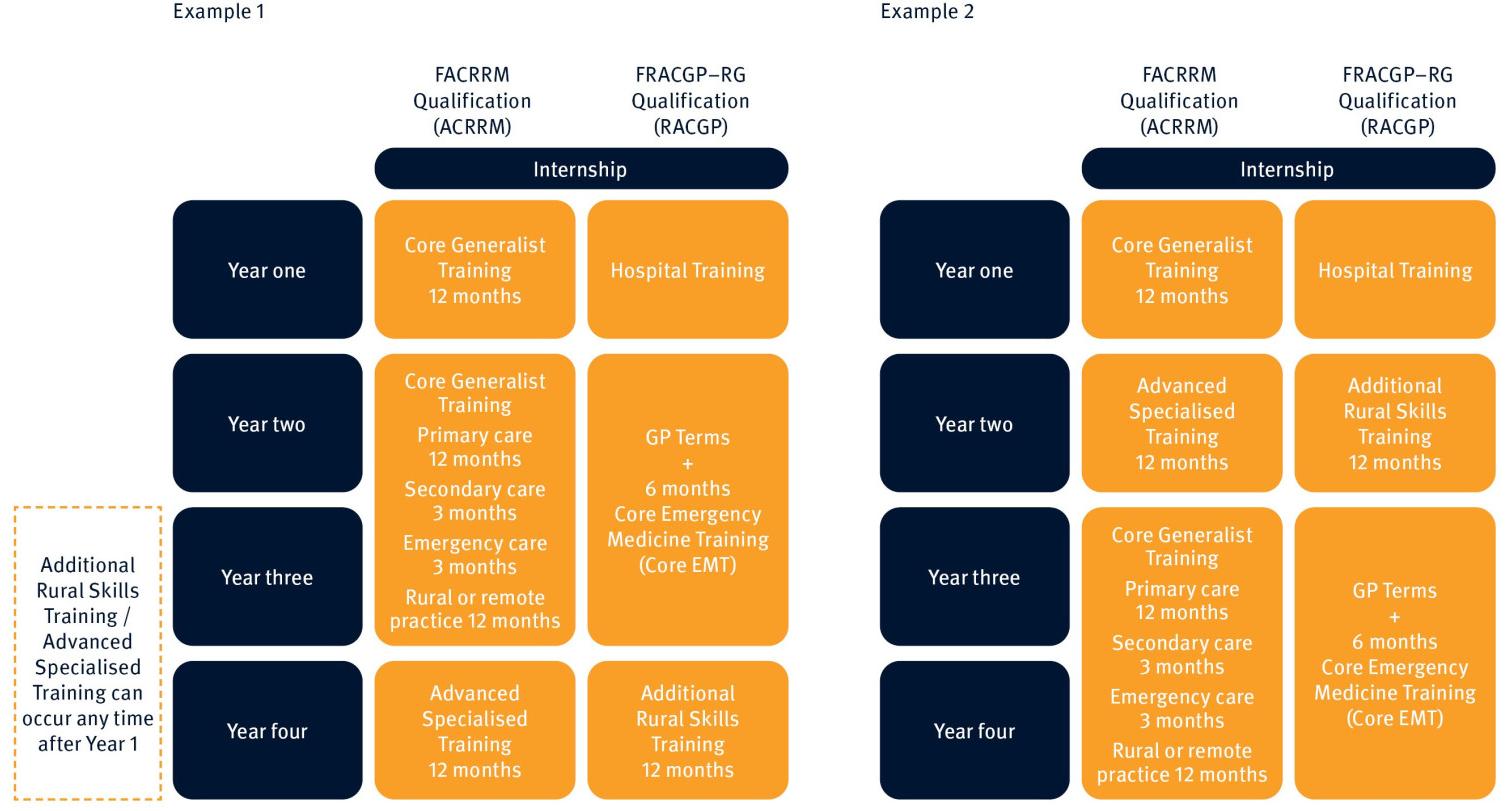 Figure 1: Examples of rural generalist training progression. FACRRM, Fellow of Australian College of Rural and Remote Medicine. FRACGP, Fellow of Royal Australian College of General Practitioners. RG, Rural Generalist. Source: Queensland Rural Generalist Pathway.
Methods
Design
This research was conducted within interpretivist and constructivist paradigms using a qualitative descriptive study design16 and Braun and Clarke’s reflexive thematic analysis17.
The study examined why trainees left RG training and what, if anything, might have influenced them to remain. A qualitative approach enabled participants to describe their experiences and the authors to interpret patterns across their accounts.
Participant selection and contact
All QRGP trainees who commenced between 2007 and 2017 and had withdrawn prior to data export on 7 September 2020 were invited by the QRGP database administrator to contact the interviewer (DB) (n=196; 195 contactable). A reminder was sent 1 month later. Fifteen individuals consented and 12 proceeded to interview.
Data collection methods
Semi-structured interviews explored participants’ experiences and motivations regarding training and withdrawal. Participants confirmed demographic information, including postgraduate year at withdrawal and rural background.
The QRGP defines rural background by residence and geography: at least 10 cumulative years or five consecutive years in Modified Monash Model (MMM) locations MM 4–718,19 (populations of 15,000 or less).
Participants were asked why they joined the QRGP, why they withdrew, what might have influenced them to remain, and what they had pursued since withdrawing. Interviews were recorded via Zoom and ranged from 10 to 90 minutes. In one interview, a co-located participant’s partner contributed briefly.
The interviewer took notes during interviews and summarised key points immediately afterward. Audio recordings were transcribed using NVivo v12 Plus (Lumivero; https://lumivero.com/products/nvivo) and transcripts were checked for accuracy.
Researcher positioning and reflexivity
The lead author conducted this research for a postgraduate thesis independently of her QRGP employment. Her lived experience of rural workforce challenges and 20 years with the QRGP provided contextual insight but could have influenced data collection and interpretation. She knew all participants to varying degrees, facilitating rapport but increasing the potential for unexamined assumptions. She maintained a reflexive approach, documenting assumptions and emerging interpretations throughout the study. Regular discussions with rural academic co-authors and thesis supervisors with qualitative research expertise challenged assumptions, explored alternative interpretations, and supported analytical rigour.
Data analysis
The interviewer engaged in data-driven familiarisation20 through repeated review of transcripts, notes and recordings before inductive analysis. Initial codes were manually recorded in NVivo by highlighting significant phrases or features and recording interpretive notes. Codes were reviewed and notes made about developing patterns, interview reflections and early analysis.
Codes were clustered and diagrammatically mapped into tentative themes. Analytic notes supported reflection and iteration, and developing themes were reviewed against the interview data. Later interviews provided depth but did not substantially alter the developing analysis.
All participants received preliminary findings and follow-up questions for member checking21. Seven responded (58%), all indicating that the findings reflected their experiences and some providing additional context that informed refinement of the results.
Ethics approval
This study was approved by the Darling Downs Health Human Research and Ethics Committee (LNR/19/QTDD/52445). Governance and data provision arrangements were agreed with QRGP executives before commencement. Authors did not access QRGP data systems themselves to conduct the study.
Results
Most participants had a rural background (Table 1). They joined the QRGP for a range of reasons, including influential role models, positive rural undergraduate experiences, partners with rural ties, interest in an RG scope of practice, or the support and opportunities offered by the pathway. Several were bonded Queensland Health Rural Scholarship Scheme recipients, required to undertake rural service following graduation in return for financial support received during their medical degree. Most considered the scholarship and QRGP complementary, although one participant reported feeling compelled to join due to their scholarship and would not otherwise have done so.
Participant enrolment in the QRGP varied from 1 to 11 years (Table 1). Interviews were conducted between 2 and 10 years after withdrawal. Women were slightly overrepresented in the study sample compared with both the overall QRGP training cohort and the withdrawn cohort, in which women comprised just under two-thirds of trainees.
Many participants retained an interest in rural health after withdrawal. They had subsequently completed or pursued alternative specialty training and were providing or planning to provide regional or rural services.
Factors influencing withdrawal were grouped into four overarching domains: professional, organisational, environmental, and social. These domains were represented respectively by four themes: scope of practice, structural and policy impediments, work environment, and relationship and family considerations. Representative data extracts, annotated with interview ID, sex and year of QRGP commencement (eg 8_Fem_2012), are presented to support the findings. Although presented separately, participants commonly described multiple intersecting influences; one participant observed, ‘most people leave for complicated reasons’. The four themes are followed by participants’ views on what might have supported continuation and their broader reflections on withdrawal and the pathway.
Table 1: Participant demographics
| Characteristic | Variable | Frequency |
|---|---|---|
| Sex (n=12) | Female | 9 |
| Male |
3 |
|
| Australian university main campus location (n=12) |
Regional: James Cook University, University of New England, University of Wollongong, University of Newcastle |
5 |
|
Metropolitan: For example University of Queensland, University of Sydney |
7 |
|
| Relationship status during training (n=11) | Partner | 7 |
| No partner |
4 |
|
| Rural background (MM 4+) (n=12) | No | 2 |
| Yes |
10 |
|
| Intake year (n=12) | 2007–2010 |
4 |
| 2011–2014 |
5 |
|
| 2015–2017 |
3 |
|
| Withdrawal year (n=12) | 2011–2013 | 2 |
| 2014–2016 |
5 |
|
| 2017–2019 |
5 |
|
| Postgraduate year at withdrawal (n=12) | 1–3 | 4 |
| 4–6 |
7 |
|
| ≥7 |
1 |
|
| QRGP enrolment length (years) (n=12) | ≤4 | 7 |
| >4–8 |
4 |
|
| >8 |
1 |
MMM, Modified Monash Model – an Australian geographical classification system that measures remoteness and population size on a scale from metropolitan (MM 1) to very remote (MM 7). QRGP, Queensland Rural Generalist Pathway.
Scope of practice
Some participants felt that they were not well suited to an RG career because of the breadth and demands of RG practice.
Personal characteristics
RG practice requires resourcefulness, self-reliance, clinical courage, tolerance for uncertainty, and strong clinical reasoning skills to investigate and manage undifferentiated presentations. Several participants felt that their personal characteristics were incompatible with the broad, unpredictable, and context-dependent nature of RG work:
… primarily it was a realisation of who I was as a person. So, as a rural generalist you have to be ok with uncertainty … and that does not suit my personality … I like to bring people in and get answers and do lots of tests … Seeing someone and not quite knowing what was wrong with them and sending them home, I would actually just have been quite anxious about that, and I think it would have made for a very unhappy career for me … Being a med student doing a rotation, and picking a career and actually doing the job, is very different. (8_Fem_2012)
Clinical practice aspirations
Some participants indicated that their clinical practice aspirations were unlikely to be met within the training or employment opportunities available to them. Comments primarily related to concerns about advanced skill scope and employment opportunities post-training:
I looked into the [advanced skill discipline] and spoke to a few people, and it sort of was quite limiting, it was really just doing [procedure] rather than any true procedural stuff. (7_Male_2015)
Structural and policy impediments
This theme captures how a range of structural and policy-driven impediments, compounded by the involvement of multiple organisations, affected participants’ training experiences. All but one participant had enrolled with a regional training organisation and commenced general practice training with ACRRM, RACGP or both, before withdrawing from the QRGP.
Confusion and administrative burden
Participants described being confused by all the different players involved in their training and, at times, attributed the policies or decisions of one organisation to another. They also reported feeling burdened by the need to keep multiple parties informed while simultaneously trying to survive their junior doctor years:
My recollection is that there were three different organisations [college, regional training organisation and QRGP] involved in my training and I had quite a lot of incoming correspondence from all three groups and I found it quite difficult to coordinate in my junior doctor years … I didn’t think it was going to be fixed quickly and I just found it too much to be honest. (3_Fem_2008)
Lack of flexibility
A lack of flexibility was widely reported amongst participants, most commonly in relation to national general practice training policies. Participants described wanting to attain additional skills before commencing rural practice or needing to temporarily prioritise location over vocation to take on caring duties or manage other family commitments. They frequently recounted feeling ‘forced’, ‘time pressured’, ‘pushed’, ‘not allowed’, and ‘out of time’, and expressed dissatisfaction and disappointment at having to withdraw from training despite actively seeking support for more flexible training arrangements:
… my [family member] was sick ... There was no option given me but to leave ... [it] not only shows a lack of compassion for the individuals, but a lack of compassion for the people in the bush, who are the ones that are actually missing out. (2_Fem_2016)
Work environment
This theme explores how the work environment influenced participants’ decisions to withdraw from training. All participants had completed their RG prevocational training in regional or metropolitan hospitals. Three had progressed to vocational training in smaller rural hospital or general practice settings.
The prevocational learning environment impacted professional identity formation
Professional identity formation is considered to be most pronounced during postgraduate training22, when trainees observe and internalise the norms, values, and power structures of the profession they aspire to join23. Environmental and contextual factors, such as the visibility and quality of role models and exposure to relevant clinical practice, strongly influence identity formation22,24,25.
Participants described a lack of visibility, clarity, and perceived value of RG training within their day-to-day clinical work. Their accounts highlighted a contextual mismatch between training environments and intended career pathways, with large training sites led predominantly by non-RG specialists providing few visible examples of RG practice or practitioners:
I had [another specialty] in my ear more than rural training and it just seemed simpler … amongst doctors there was an uncertainty about what rural generalist was. (3_Fem_2008)
Participants valued the QRGP's efforts to foster professional identity through RG-focused educational and networking activities, and dedicated career advisors, although these supports often competed with more immediate and sustained workplace influences from non-RG specialty colleagues. This aligns with evidence that experiences and role models influence specialty choice22,26 and that generalist trainees may be encouraged toward alternative specialties when generalism is neither visible nor valued and supervisors are invested in developing their own future workforce23,27.
Competing service-training demands and workplace culture
Healthcare facilities are responsible for not only delivering safe and effective patient care but also educating the future health workforce. These responsibilities compete for limited time and resources, inevitably creating tension between service and training demands28-30. Workforce shortages in rural areas, combined with expectations that individuals will ‘get the work done’, can further intensify this tension.
One participant described their experience with a rural relieving program, where they were the primary treating clinician managing high-acuity or complex presentations. They recalled case details with striking emotional clarity and conveyed the profound impact these events had on them:
I did my internship and then the first term of the following year, apparently, I was deemed good enough to be sent out to the middle of nowhere by myself … I was still a glorified intern basically. It was terrifying … I was so scared … you just barely slept, you were in a constant state of readiness and anxiety about what could go wrong. (1_Male_2013)
Those who were further along in their training described challenges that emerged during their rural vocational placements. They spoke about the pressures of working in short-staffed teams while simultaneously trying to meet training requirements, and highlighted the additional workload inherent in a generalist scope of practice:
Half the staff at any one point were locums … the clinical load was so heavy that I didn’t get a lot of supervision and support … all the administrative tasks fell to the people who weren’t locums, so there’s a whole lot of extra stress and responsibility … I worked on average, I think, 80 hours a week, and I was on call four nights a week, sometimes for [advanced skill discipline] and sometimes for ED. I just think that everybody was working so hard that they didn’t have time to support me when I kind of needed it. (12_Fem_2009)
Participants also described the impact of workplace culture:
There was always a lot of infighting between the doctor group and the management group … and that just, it really didn’t create a positive working environment. (13_Male_2008)
Relationship and family considerations
This theme explores the significant influence that relationship and family considerations had on participants’ decisions to withdraw from training.
Finding a partner
One participant described the impact rural placement might have on their relationship circumstances:
I was … nervous about being sent out on rural placements … as a woman in her mid-20s who desperately wanted to find … a partner … I [couldn’t] handle being single and alone in a tiny place. (3_Fem_2008)
Parenthood and medicine
Female participants commonly described the challenge of balancing caregiving responsibilities with the demands of medical training. One participant reflected on the logistical and emotional strain of navigating motherhood and medicine, highlighting how these competing pressures shaped her experience:
I want to be the perfect mum, and I want to be a perfect doctor … And it’s really hard to cope with knowing how to do everything really well. And I think I realised that I can’t do it all really well. So, I had to prioritise being a parent ... I did feel like I missed out [on time with her child] and that probably drove my decision making after that. (6_Fem_2012)
Although most participants in this study were female, similar challenges may be experienced by fathers and others with significant caring responsibilities.
Accommodating partner careers
Several interview participants, all female and all in relationships, reported that accommodating their partner’s career played a significant role in their decision to withdraw. They described how their partner’s work, whether medical or non-medical, was incompatible with continuing RG training, largely due to the geographical footprint of their roles:
… if things had worked out differently, I probably would have met a partner who was not from the city or whatever and may have wanted to do rural generalist as well … It impacts it a big amount. (8_Fem_2012)
… [partner’s] remote work dried up and we weren’t sure whether we’d end up in the city for a short period of time or later on in life and sort of made the decision to move to [another specialty]. (10_Fem_2014)
Post-interview data review confirmed that all female participants who identified their partner as a factor in their withdrawal were partnered with professional males whose careers were incompatible with living rurally.
Although no participants in same-sex relationships, and no male respondents, reported similar issues, these dynamics should still be considered when examining the broader influence of partner career compatibility on RG training pathways.
Figure 2 summarises the four domains and corresponding themes influencing withdrawal.
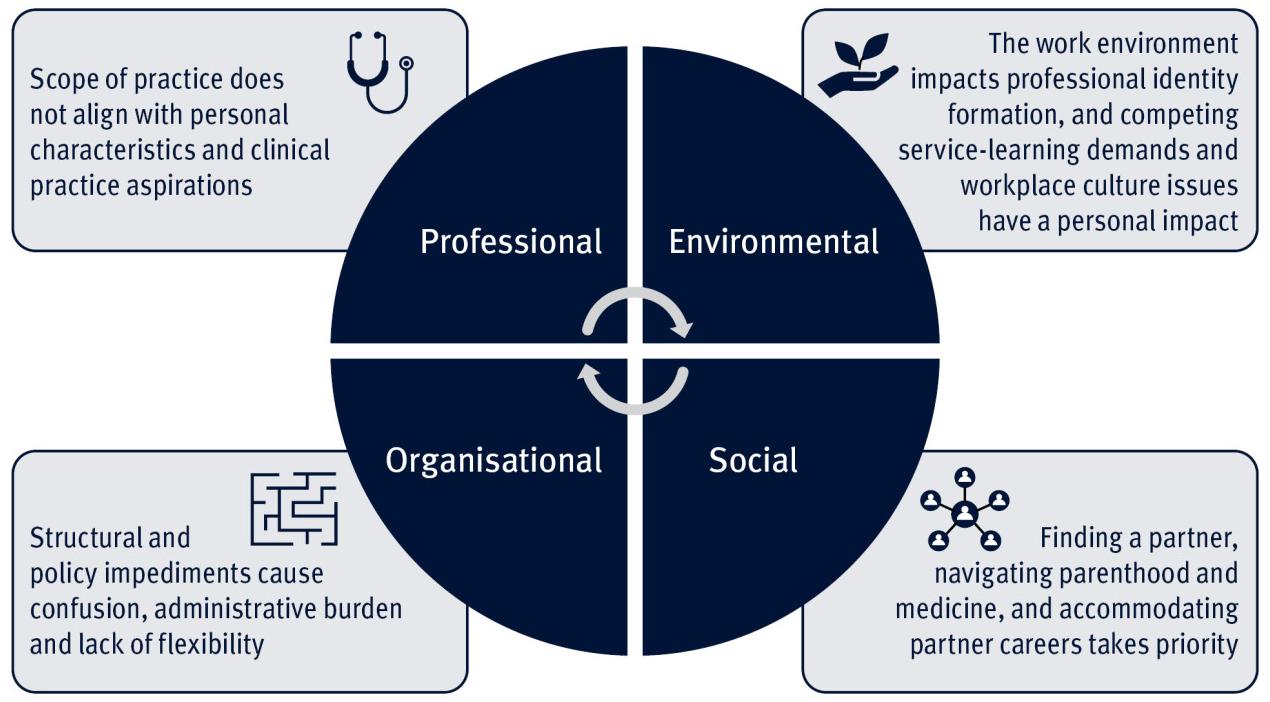 Figure 2: Reasons that trainees withdraw from rural generalist training.
Participant-identified supports
When asked what might have influenced them to remain, participants identified practical supports directly corresponding to barriers identified across several themes. These included proactively identifying placements with known staffing or workplace culture risks and offering additional support, as well as providing pre-placement check-ins and post-placement debriefing. They also proposed assistance with navigating partner employment and child care, flexible training plans negotiated across organisations, and continued support for those practising rurally interstate or transitioning to another specialty while retaining a rural interest.
Reflections on withdrawal and the pathway
Several participants reflected on rural workforce recruitment and retention challenges, and described feelings of personal responsibility and guilt associated with withdrawal. They reported feeling ‘bad for the system’, said that leaving the QRGP ‘was not an easy thing’, and described ‘how much of a blow it is when people leave’. Participant accounts indicated that some felt vulnerable or sensitive to criticism and believed they had disappointed the rural ‘family’ to which they aspired to belong, and that these feelings persisted long after leaving.
Some participants expressed disappointment and disillusionment that those ‘in the system’ could not help them navigate personal or professional barriers, despite their genuine intent to practise rurally long term. Several remained deeply affected by traumatic clinical experiences during training.
Member-checking responses provided additional data about professional identity. Rural-background participants described fairly strong or complete identification with the RG role at commencement, compared with somewhat or no identification by withdrawal.
Despite these experiences, participants spoke fondly of the QRGP and its lasting value, with one reflecting, ‘I still draw back on the learning I got in those first two years … I’m a much better doctor for it’. They attributed their career changes to personal circumstances, individual fit, or external factors rather than shortcomings of the pathway.
Discussion
Building on earlier program-level research15, this study provides a more in-depth understanding of withdrawal from RG training based on former trainees’ perspectives. The findings are consistent with research highlighting the complexity of medical career decision-making and the influence of intrinsic factors, such as individual characteristics and aspirations, and extrinsic factors, such as lived experience, training context, and alternative career options31-35. The timing of some withdrawals from RG training is consistent with rural workforce retention research showing that decisions to stay or leave may be made early36,37 and are shaped by personal, job and organisational factors36,38,39. Decisions to pursue rural careers are typically made outside of rural practice, whereas decisions to remain are shaped by experiences in that setting40. Further investigation is warranted to determine whether strategies aimed at supporting current trainees may also enhance retention across the training continuum.
The enduring impact of some participants’ training and withdrawal experiences also has implications for research involving former trainees. Researchers should anticipate potentially distressing disclosures and ensure appropriate support and debriefing for participants and interviewers.
Advanced skills training extends an individual’s professional scope and expands service delivery in rural communities. However, it does not typically constitute most of the time spent in RG practice and is not intended to be similar in scope to specialist practice in that discipline. Clear communication regarding the purpose, scope, and expectations of advanced skills training may help ensure trainees develop realistic expectations of its role within an RG career.
The findings suggest that the breadth, uncertainty, and context-dependent nature of RG practice may suit some individuals more than others. Previous research has found that rural GPs exhibit lower harm avoidance and higher novelty-seeking traits than their urban counterparts41.
The postgraduate training structure and context in Queensland have historically limited opportunities to meaningfully observe and experience full scope rural generalism during the early, formative prevocational years. Limited exposure to holistic, continuing care across primary and secondary settings does little to showcase the complexity and rewards of RG practice. It is therefore unsurprising that some trainees gravitate toward ‘being what they can see’ when forming their professional identity and sense of belonging.
Several significant Australian medical education and workforce reforms and strategies that aim to support RG models, increase access to generalist experiences, and expand exposure to generalist practice in early postgraduate training are now underway2,42-46. These and other initiatives may also expand training opportunities within rural settings, allowing trainees to gain earlier and more sustained exposure to rural clinical practice and the breadth of the RG role, which may support more informed career decision-making and training retention.
The findings suggest that a range of strategies, adapted to contextual circumstances, are needed to support the diverse needs of the future rural medical workforce. Focusing on one factor alone is unlikely to meaningfully influence training outcomes. Instead, coordinated action is needed across multiple stakeholders, from pre-medical school selection and support strategies to embedding RG practice in undergraduate and postgraduate teaching, supervision and leadership, and providing flexible training and employment options.
The context in which participants undertook their training should be considered when interpreting these findings, as organisational and policy changes inevitably influence trainee experiences and decisions. Three major developments have occurred since the period described in this study. First, rural relief program arrangements have changed. Reforms now specify that early-career doctors augment rather than replace the rural workforce, with duties, supervision, and remuneration aligned with their level of training47. Placement preparation includes assessment of an individual’s suitability for rural terms and targeted education before and during placement. These changes respond to concerns about supervision and support similar to those identified in this study and reported previously48.
Second, Australian General Practice Training (AGPT) structural and organisational policies changed substantially during the training period of study participants. In Queensland, three regional training providers were consolidated into two regional training organisations in 2016. Trainees subsequently navigated shifting geographical boundaries, training time caps, and reduced flexibility to move between rural and general pathways or between colleges. The involvement of multiple postgraduate training and support entities, shifting goalposts and transition periods all influenced trainee experiences. These reforms were followed by the transition of AGPT to ACRRM and RACGP in 2023. While collaborative intent among Queensland entities has endured, differing organisational priorities, structures, funding arrangements, and privacy requirements can slow collaborative progress, reflecting challenges reported internationally in postgraduate medical education governance49.
Third, RG medicine is now nationally recognised as a specialist field within general practice50. This recognition is expected to elevate the profile and legitimacy of rural generalism within the Australian health system and, together with broader workforce and training reforms, support expanded rural training opportunities, greater pathway clarity, and increased exposure to the full scope of RG practice. While it remains too early to determine the long-term effects of these changes, the training experiences of future cohorts may differ substantially from those described by participants in this study.
There is clear opportunity for RG programs to collaborate more effectively with other training stakeholders for the benefit of both trainees and the system. Although training policies are generally well intentioned, unintended consequences may arise when policies intersect in ways that trainees perceive as restrictive. Understanding trainees’ lived experiences of policy implementation, alongside the evidence underpinning those policies, is essential. Further research should examine how policy levers influence rural practice interest, training progression and retention.
While organisational and policy reforms may address some causes of withdrawal, attrition itself should not automatically be viewed as a negative outcome. Not every trainee who commences RG training will, or should, complete it and some withdrawal may reflect appropriate career redirection. The dual challenges of rural practice as both a vocation and location mean that this career path will not suit everyone. Programs such as the QRGP provide value by helping trainees determine whether RG practice is the right fit and, where appropriate, supporting transition to a more suitable specialty. Efforts should therefore focus on understanding and minimising avoidable withdrawal rather than aiming for zero attrition, recognising the importance of interpreting outcomes within their broader context.
Assessing the effectiveness of attraction, selection, and support initiatives across the training continuum may help optimise RG training entry and continuation. Trainees enter the pathway with varying levels of rural exposure, affinity, and other protective factors associated with rural practice. While many support needs are shared, the nature and level of support required may vary.
Career intentions appear to become more defined as doctors progress through postgraduate training and gain greater exposure to different specialties and practice environments10,51. This raises important questions about the timing of entry into RG pathways. Recruiting trainees later in their postgraduate years may reduce subsequent withdrawal, although it could also decrease exposure to and uptake of RG careers. Consequently, there may be an inherent trade-off between early recruitment and higher attrition, an issue that warrants further investigation. The increasing proportion of trainees entering the QRGP as postgraduate entrants will provide opportunities to explore this issue further.
RG trainees rotate through both regional/metropolitan and rural settings and are likely to encounter both positive and negative experiences in each. As this study focused on withdrawn trainees, participant accounts may be more strongly weighted toward negative experiences than those of trainees who completed training. It is important that the experiences of trainees who completed RG training are also examined to determine whether similar challenges arose, and, if so, what enabled their continuation.
For rural background trainees in particular, whose sense of professional identity may be closely tied to their training experiences, programs should facilitate a respectful, well-supported exit from rural training when needed.
Finally, consideration should be given to how interested individuals might continue supporting rural health in ways aligned with their skills and circumstances. Such contributions may include clinical practice, education, research, supervision, outreach, and locum work.
The findings highlight opportunities to strengthen RG training through enhanced individualised support and flexibility, increased professional visibility, and improved coordination between training organisations. Future strategies should seek to reduce avoidable withdrawal by addressing barriers encountered during training and improving integration across workforce, training, and career planning processes.
Limitations
This study has several limitations. It examined a single model of RG training, and experiences may differ across other programs and jurisdictions. Trainees who were more dissatisfied with their experience may have been more motivated to participate, while the interviewer’s employment with the QRGP may have deterred some individuals due to concerns about confidentiality. Conversely, the interviewer’s experience and familiarity with participants may have facilitated deeper disclosures that might not have occurred with an external interviewer. Further research in different settings could examine the transferability of these findings.
In addition, the time elapsed between withdrawal and interview may have influenced participants’ recall of events. However, the interval may have provided space for reflection and a more considered perspective, potentially offering additional insight into the factors contributing to withdrawal.
Conclusion
RG pathways are important contributors to attracting and retaining the rural medical workforce. Like any pathway, they require ongoing inspection and maintenance to ensure they remain accessible, to remove obstacles that may impede progress and to reinforce sections at risk of deterioration. Achieving this requires coordinated action across the training continuum, including reducing structural barriers, strengthening support systems, increasing exposure to RG practice, and fostering training environments in which generalism is visible and valued.
These findings may inform training reform and contribute to broader discussions about what constitutes success in RG training.
Funding
This research was supported by an Australian Government Research Training Program Scholarship.
Conflicts of interest
The authors have no conflicts of interest to declare.
AI disclosure statement
Microsoft 365 Copilot was used minimally and only to assist with some language editing and manuscript shortening to meet the journal’s word limit requirements. The authors reviewed and verified the appropriateness of AI-suggested revisions and take full responsibility for the content and final version of the manuscript.