





 download PDF
Introduction
The maldistribution of the medical workforce is a global phenomenon, with WHO identifying rural physician retention as a critical barrier to achieving universal health coverage1. While international strategies range from coercive return-of-service schemes to targeted recruitment, many high-income countries, including Australia, Canada and the US, have invested heavily in regionalised medical education to foster ‘rural intent’ early in the professional pipeline2. Given this significant public investment, which exceeds $200 million annually in Australia alone3, and with the 21 rural clinical schools (RCSs) established since 2000, there is a critical need to evaluate whether these programs are achieving their goal of moving beyond short-term satisfaction to long-term psychological commitment.
Rural and remote areas in Australia are home to 28% of the Australian population4 and are defined by the Australian Statistical Geography Standard-Remoteness Area scale5 as levels 2–5 (RA2–5) and the Modified Monash Model (MMM) geographical location as MM 2–76. There is a shortage of medical doctors in these areas that has persisted for decades7-10, contributing to health inequities among residents11 and placing a significant burden on the existing workforce, which may lead to a higher risk of burnout10-12. Recruitment and retention of doctors to these areas has remained a topic of interest, and various studies have highlighted a complex interaction between factors that act as drivers or barriers, including lifestyle, personal, familial, financial, professional and social factors13. Several government strategies have been implemented to encourage postgraduate rural practice, including financial incentives, rural scholarships and RCSs3,7,9.
RCSs provide medical students (both undergraduate and graduate-entry) with the opportunity to undertake extended (minimum 1-year) clinical placements during their clinical training years3,12-14. An independent evaluation of RCS outcomes in 2020 identified a variety of benefits, including integration of rural training into the medical curriculum and an increase in both the number of students participating in RCSs and the length of rural placements completed3. Rural placements through RCSs are a central government strategy to foster and maintain rural interest among participating medical students15. Recent government funding includes initiatives such as an allocation of $14.8 million in 2021–2022 to establish the Charles Sturt University RCS and over $81 million in 2023 for the expansion of rural placements16,17.
Despite significant government investment in RCSs, the proportion of domestic graduates working in rural communities remains low18, indicating the need for ongoing evaluation of RCSs to ensure cost-effective distribution of resources. The persistence of rural workforce shortages underscores the importance of examining not only stated rural career intentions, but also the underlying attitudinal and emotional responses to rural practice that may precede and shape such intent. In particular, affective responses such as positive or anxious feelings towards rural work may act as early psychological determinants of rural intent among students who have completed a rural placement. Understanding the factors that foster or mitigate these emotional responses may assist RCS programs to address perceived barriers to rural practice and, in turn, strengthen the rural intent of domestic medical students.
Numerous studies support the association between rural exposure and rural intent, which is defined as a desire or commitment to work in rural settings14,19-21. Factors that have been found to influence the rural intent of medical students include the duration, timing and rurality of their placement, and whether they have a rural background14,16,17,19. Past research has also identified various features associated with student satisfaction, such as positive academic experiences, financial support, and feeling welcomed16,22. In contrast, geographical isolation and poor supervision22,23 were found to negatively impact student satisfaction.
Evidence from systematic reviews and longitudinal cohort studies indicates that rural career intent during medical training is strongly associated with subsequent rural practice. A systematic review by Laven and Wilkinson demonstrated that stated rural intention is a consistent predictor of rural workforce outcomes, acting independently of rural background24. Complementing this, Playford et al25 found that medical students who expressed rural work intentions were significantly more likely to practise rurally after graduation, with intent shown to be influenced by rural clinical exposure. Together, these findings support rural intent as a meaningful and empirically validated intermediate outcome linking medical education experiences to actual rural workforce participation.
Most of the current research investigating the rural intent of medical students consists of single-university, retrospective studies, which are at risk of confounding, selection bias and poor generalisability3,26-30. Although similar findings have been reported by a few multi-university studies18,26, their reliability and comparability are limited26 by inter-university variability in placement design, length and method of student selection18.
The present study aimed to assess the rural intent of medical students by examining the prevalence of negative and positive feelings associated with their RCS placement, as well as any associations with demographic characteristics and placement experiences. Identifying factors associated with negative or positive feelings towards RCS placements could help RCSs enhance the student experience and promote favourable attitudes towards rural practice post-graduation. Additionally, it could identify student subpopulations at higher risk of less favourable rural practice sentiment, allowing for the development of targeted rural programs. The study further investigated associations between rural placement experiences and subsequent career preferences, enabling an evaluation of a potential link between rural immersion and rural career intent.
Methods
Study design
This study utilised a retrospective, cross-sectional design to analyse data from the Federation of Rural Australian Medical Educators (FRAME) survey, a voluntary survey completed by medical students upon completion of a minimum of 1 year at an RCS.
Participants
Placements in Australian medical schools typically occur during the penultimate or final clinical years of a medical degree, where students are immersed in multidisciplinary teams across primary care and regional hospital settings. After completing RCS placement of at least 12 months duration, all students are invited to take part in a survey administered by FRAME, a peak organisation representing 21 Australian universities with RCS and regional medical programs funded through the Rural Health Multidisciplinary Training program of the Australian Government. The participants in this study were medical students who completed this survey within the study period (2013–2022). The survey evaluates the RCS program, students’ perceptions post-placement, and the impact of the rural experience on future intent to practise in regional, rural and remote areas. The FRAME surveys and a summary of responses are published on their website31.
Inclusion and exclusion criteria
Data were extracted from medical students who completed an RCS placement, consented to the FRAME survey, and provided responses to the questions identified as the dependent and independent variables. Non-consenting participants, who did not respond to the items identified as outcome variables, and those who completed placements outside of the study period were excluded.
Rural and remote areas in Australia are defined by the Australian Statistical Geography Standard-Remoteness Area scale as levels 2–5 (RA2–5) and the MMM geographical location as MM 2–7. The MMM stratifies locations based on population size and geographic remoteness to reflect access to services and workforce context. While the MMM is specific to Australia, its conceptual approach is consistent with international rurality frameworks used in health workforce research, such as the Rural-Urban Commuting Area codes in the US32, the Canadian Index of Remoteness33, and national rural–urban classifications used in the UK and New Zealand. Use of the MMM therefore provides an internationally comparable approach to operationalising rurality within the Australian policy context.
Survey design
There have been multiple revisions to the FRAME survey since its release in 2009, but the latest version used in this study (2022) consists of 28 questions, of which nine were deemed relevant to the primary aim of the study, and two additional items relevant to the secondary aim. Of the 11 items, nine consistently had results in each year across the study period. These items consisted of demographic variables, including the survey year, gender, age, rural background and whether the participant had lived outside a metropolitan area in Australia for 10 years cumulatively or 5 years consecutively.
Rural background was defined using the FRAME criteria, which classify students based on early-life exposure to rural environments, including factors such as place of upbringing, schooling and/or parental residence during formative years. This measure is intended to capture developmental exposure to rural settings. In contrast, the place lived the longest was assessed as a single self-reported variable, indicating the location in which participants had spent the greatest cumulative duration of their lives. This measure reflects overall residence patterns across the life course and may include time spent in metropolitan areas during later adolescence or adulthood (eg for education or employment). These variables capture distinct constructs, formative rural exposure versus cumulative duration of residence, and were therefore analysed separately.
Dependent variables
Two dependent variables were assessed in this study: negative feelings towards rural practice and positive feelings towards rural practice. Negative feelings towards rural practice were measured by students’ responses to ‘I get a sinking (anxious) feeling when I think of working in a rural setting’. ‘Sinking feeling’ reflects a situational, anxiety-related emotional response characterised by unease or apprehension towards the prospect of rural clinical practice and is used interchangeably with the term ‘anxious feeling’. Positive feelings towards rural practice were measured by students’ responses to ‘I have a strong positive feeling when I think of working in a rural setting’.
For these variables, the responses were assessed on a five-point Likert scale, which was scored as 1 for ‘strongly disagree’, 2 for ‘disagree’, 3 for ‘neutral’, 4 for ‘agree’ and 5 for ‘strongly agree’. The specific items regarding ‘sinking’ and ‘positive’ feelings were selected to capture the affective domain of career decision-making, which provides deeper insight into student apprehension or motivation than categorical intent questions34.
Independent variables
Independent variables relevant to the primary and secondary aims included the demographic variables described above, the funding type of the medical school placement, their original preference for the RCS, career preference after the rural placement, and whether they had a rural-based mentor. For this study, Commonwealth-supported places and bonded medical places were treated as mutually exclusive categories based on the primary funding contract identified in the FRAME survey. The MMM geographical location classification from 2021 and 2022 was merged with previous categories using available data from the then Department of Health and Aged Care.
Data analysis
Before analysis, the retrospective data, originally collected by an external body, underwent a thorough cleaning and sorting process to ensure accuracy and consistency. This involved multiple rounds of communication with the data custodians to verify the accuracy of key variables, participant responses and early descriptive statistics. We cross-checked the data for missing values, duplicate entries, outliers and logical errors such as dates out of sequence. Early descriptive analyses were conducted iteratively to identify any irregularities, which were subsequently reconciled with the custodians. Corrections were made where necessary based on clarifications from the original data source, ensuring the dataset was accurate and internally consistent before formal analysis.
Descriptive statistics, including frequencies and percentages, were used to summarise participant characteristics across sociodemographic variables, RCS preference, career preference and rural mentor access. To address the primary aim of assessing feelings towards rural practice, responses to the Likert scale items regarding ‘anxious/sinking feelings’ and ‘strong positive feelings’ were collapsed into three categories: ‘disagree’ (combining ‘strongly disagree’ and ‘disagree’), ‘neutral’ and ‘agree’ (combining ‘agree’ and ‘strongly agree’). This approach was adopted to improve statistical power and ensure adequate cell sizes for regression analysis, while preserving the ordinal structure of the original responses. The ‘neutral’ category was retained as a distinct group to avoid misclassification bias.
Chi-squared tests were used to examine associations between sociodemographic and RCS-related factors and feelings towards rural practice. Multinomial logistic regression, using a manual stepwise approach, was performed to identify factors associated with ‘anxious/sinking feelings’ and ‘strong positive feelings’ towards rural practice, controlling for potential confounding variables. Variables with a p-value <0.2 in the univariate analyses were retained in the multinomial regression models. In the regression models, ‘disagree’ was selected as the reference category for anxious/sinking feelings, representing students with low levels of anxiety towards rural practice. For positive feelings, ‘agree’ was chosen as the reference category, reflecting a favourable inclination towards rural practice. These reference categories were selected to facilitate meaningful interpretation of results, allowing comparisons against practically relevant baseline groups (ie absence of anxiety and presence of positive sentiment).
Results from the multinomial logistic regression were presented as odds ratios (ORs) with corresponding 95% confidence intervals (CIs). Variables demonstrating p<0.05 in the final models were considered statistically significant. All analyses were conducted using Statistical Package for the Social Sciences v30 (IBM Corp; https://www.ibm.com/products/spss-statistics).
Ethics approval
Before completing the survey, participants provided written informed consent for the use of their data. The study adhered to the principles of the Declaration of Helsinki, with ethics approval obtained from the University of Notre Dame Australia (2020 196S) and each participating university. Approval for the extraction and use of the dataset for this study was obtained from the FRAME data custodian.
Results
Sociodemographic characteristics
The FRAME survey included a total of 6371 participants between 2013 and 2022. Table 1 presents the sociodemographic characteristics of the participants in this study. The distribution of participants across the survey years was relatively even, with each year contributing between 7.3% and 12.3% of the total sample. The sample was predominantly female (58.0%), with 61.3% of participants aged younger than 26 years. Most participants held a Commonwealth-supported place (64.0%), with bonded medical places (30.5%) comprising the second largest group. Domestic and international fee-paying places represented a small proportion of the sample, 2.8% and 2.7%, respectively. Missing data were less than 5% for all variables, except age and rural mentor, which each had 6.1% of missing data.
Table 1: Sociodemographic characteristics of FRAME survey participants (2013–2022)
| Variable | Frequency (%) | |
|---|---|---|
| Year (n=6371) | 2013 | 658 (10.3) |
| 2014 |
641 (10.1) |
|
| 2015 |
782 (12.3) |
|
| 2016 |
677 (10.6) |
|
| 2017 |
698 (11.0) |
|
| 2018 |
657 (10.3) |
|
| 2019 |
668 (10.5) |
|
| 2020 |
464 (7.3) |
|
| 2021 |
557 (8.7) |
|
| 2022 |
569 (8.9) |
|
| Gender (n=6241) | Female | 3619 (58.0) |
| Male |
2622 (42.0) |
|
| Age (years) (n=6005) | <26 | 3681 (61.3) |
| ≥26 |
2324 (38.7) |
|
| Placement type (n=6264) | Commonwealth-supported place† | 4008 (64.0) |
| Bonded medical place |
1913 (30.5) |
|
| Domestic fee-paying place |
177 (2.8) |
|
| International fee-paying place |
166 (2.7) |
|
| Rural background (n=6221) | No | 3461 (55.6) |
| Yes |
2760 (44.4) |
|
| Geographical classification of location in Australia lived the longest (n=6268) | Capital/major urban city or metropolitan (MM 1) | 2977 (47.5) |
| Regional or rural (MM 2–7) |
3291 (52.5) |
|
| Rural clinical school preference (n=6259) | My first choice/high on my list | 5196 (83.0) |
| My mid-choice |
484 (7.7) |
|
| My last choice/low on my list |
579 (9.3) |
|
| Career preference at exit from rural clinical school (n=6156) | Rural generalist/GP | 1829 (29.7) |
| Specialist with broad scope |
2755 (44.8) |
|
| Subspecialist/other |
1572 (25.5) |
|
| Have a rural-based clinician as a mentor (n=6003) | Agree | 3706 (61.7) |
| Neutral |
1086 (18.1) |
|
| Disagree |
1211 (20.2) |
|
† In Australia, a Commonwealth-supported place is a government-subsidised university position. A bonded medical place is a subset of the Commonwealth-supported program, in which students receive a subsidised place in exchange for a commitment to work in a regional or rural area for a specified period after graduation.
MM, Modified Monash [category].
Prevalence of positive and anxious feelings towards rural practice
Figure 1 shows how students responded to questions about their feelings towards working in a rural setting. It presents two key areas: (A) agreement with strong positive feelings about rural work, and (B) agreement with feelings of sinking or anxiety about rural practice. In this study, medical students reporting positive feelings about rural practice were less likely to report feelings of anxiety about rural work. A smaller group (about 7.5%) reported negative feelings about rural practice, while a notable proportion of students remained neutral.
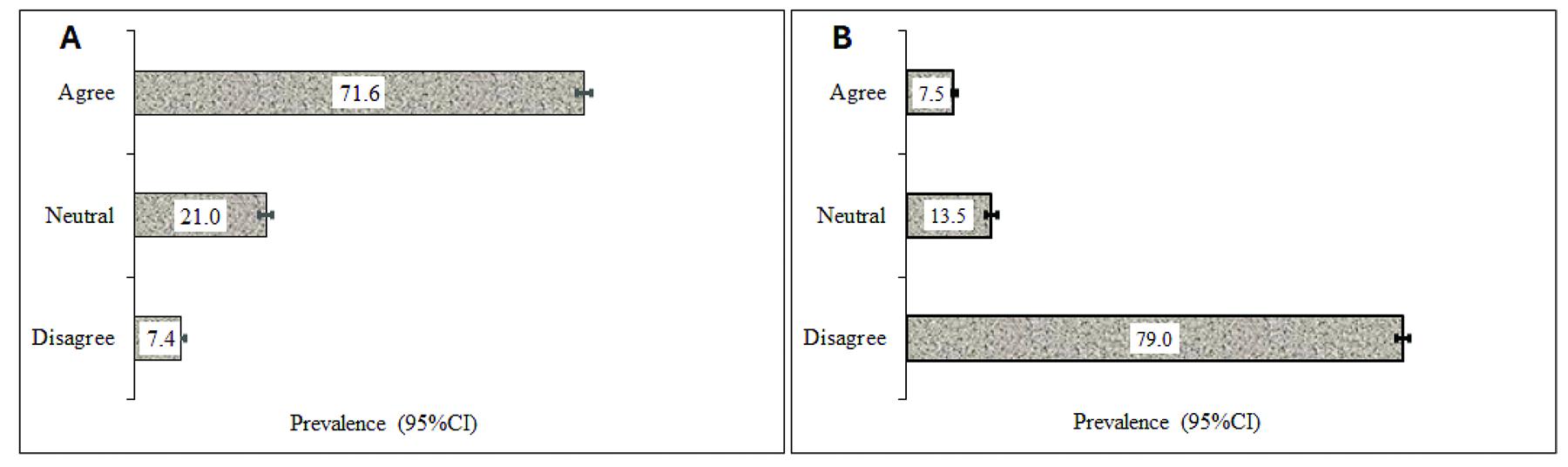 Figure 1: Prevalence (95%CI) of participant responses on three-point Likert scales: (A) positive feelings about working in a rural setting and (B) feeling anxious about rural practice. CI, confidence interval.
Associations between sociodemographic factors and feelings about working in a rural setting
Table 2 and Table 3 examine the associations between sociodemographic factors and having either a ‘strong positive’ or an ‘anxious/sinking’ feeling related to working in a rural setting. The statistical significance of these associations was assessed using χ² tests.
Table 2: Association between the demographic variables and feelings of anxiety concerning rural practice (derived from response to ‘I get a sinking (anxious) feeling when I think of working in rural settings’)
| Variable |
Sinking/anxious feeling, n (%) |
p-value | |||
|---|---|---|---|---|---|
|
Disagree |
Neutral |
Agree | |||
| Gender | Female | 2844 (81.0) | 430 (12.2) | 237 (6.8) | <0.001*** |
| Male |
1963 (76.5) |
390 (15.2) | 214 (8.3) | ||
| Age (years) | <26 | 2842 (79.1) | 488 (13.6) | 262 (7.3) | 0.833 |
| ≥26 |
1796 (79.4) |
296 (13.1) | 170 (7.5) | ||
| Placement type | Commonwealth-supported place† | 3115 (79.4) | 527 (13.4) | 279 (7.1) | <0.0001*** |
| Bonded medical place |
1474 (79.6) |
239 (12.9) | 138 (7.5) | ||
| Domestic fee-paying place |
137 (79.7) |
22 (12.8) | 13 (7.6) | ||
| International fee-paying place |
101 (62.7) |
37 (23.0) | 23 (14.3) | ||
| Rural background | No | 2573 (76.3) | 512 (15.2) | 287 (8.5) | <0.001*** |
| Yes |
2221 (82.6) |
300 (11.2) | 167 (6.2) | ||
| Geographical classification of the location lived the longest | Capital/major urban city or metropolitan (MM 1) | 2244 (77.4) | 425 (14.7) | 232 (8.0) | 0.005** |
| Regional/rural/remote (MM 2–7) |
2591 (80.7) |
400 (12.5) | 219 (6.8) | ||
| Rural clinical school preference | My first choice/high on my list | 4200 (82.7) | 597 (11.8) | 282 (5.6) | <0.001*** |
| My mid-choice |
315 (68.2) |
92 (19.9) | 55 (11.9) | ||
| My last choice/low on my list |
311 (55.6) |
133 (23.8) | 115 (20.6) | ||
| Career preference at exit from rural clinical school | Rural generalist/GP | 1531 (85.4) | 185 (10.3) | 77 (4.3) | <0.001*** |
| Specialist with a broad scope |
2127 (78.5) |
363 (13.4) | 219 (8.1) | ||
| Subspecialist/other |
1128 (72.7) |
267 (17.2) | 156 (10.1) | ||
| Have a rural-based clinician as a mentor | Agree | 3006 (82.2) | 433 (11.8) | 218 (6.0) | <0.001*** |
| Neutral |
801 (74.7) |
172 (16.0) | 100 (9.3) | ||
| Disagree |
867 (72.9) |
195 (16.4) | 128 (10.8) | ||
*p<0.05, **p<0.01, ***p<0.001.
† In Australia, a Commonwealth-supported place is a government-subsidised university position. A bonded medical place is a subset of the Commonwealth-supported program, in which students receive a subsidised place in exchange for a commitment to work in a regional or rural area for a specified period after graduation.
MM, Modified Monash [category].
Table 3: Association between demographic variables and having a strong positive feeling when thinking about working in a rural setting
| Variable |
Strong positive feeling, n (%) |
p-value | |||
|---|---|---|---|---|---|
|
Disagree |
Neutral |
Agree | |||
| Gender | Female | 222 (6.3) | 657 (18.7) | 2635 (75.0) | <0.001*** |
| Male |
229 (8.9) |
613 (23.8) | 1731 (67.3) | ||
| Age (years) | <26 | 267 (7.4) | 772 (21.5) | 2557 (71.1) | 0.189 |
| ≥26 |
165 (7.3) |
443 (19.5) | 1658 (73.2) | ||
| Placement type | Commonwealth-supported place† | 303 (7.7) | 846 (21.5) | 2777 (70.7) | 0.002** |
| Bonded medical place |
123 (6.6) |
348 (18.8) | 1380 (74.6) | ||
| Domestic fee-paying place |
13 (8.1) |
36 (20.7) | 125 (71.8) | ||
| International fee-paying place |
13 (8.1) |
51 (31.7) | 97 (60.2) | ||
| Rural background | No | 308 (9.1) | 840 (24.9) | 2230 (66.0) | <0.001*** |
| Yes |
145 (5.4) |
427 (15.9) | 2118 (78.7) | ||
| Geographical classification of location lived longest | Capital/major urban city or metropolitan (MM 1) | 253 (8.7) | 700 (24.1) | 1951 (67.2) | <0.001*** |
| Regional/rural/remote (MM 2–7) |
197 (6.1) |
583 (18.1) | 2435 (75.7) | ||
| Rural clinical school preference | My first choice/high on my list | 259 (5.1) | 947 (18.6) | 3877 (76.3) | <0.001*** |
| My mid-choice |
63 (13.6) |
134 (28.9) | 266 (57.5) | ||
| My last choice/low on my list |
127 (22.6) |
203 (36.1) | 232 (41.3) | ||
| Career preference at exit from rural clinical school | Rural generalist/GP | 55 (3.1) | 225 (12.5) | 1515 (84.4) | <0.001*** |
| Specialist with broad scope |
201 (7.4) |
634 (23.4) | 1878 (69.2) | ||
| Subspecialist/other |
195 (12.5) |
411 (26.4) | 948 (61.0) | ||
| Have a rural-based clinician as a mentor | Agree | 209 (5.7) | 611 (16.7) | 2840 (77.6) | <0.001*** |
| Neutral |
79 (7.3) |
292 (27.1) | 706 (65.6) | ||
| Disagree |
156 (13.1) |
334 (28.0) | 702 (58.9) | ||
*p<0.05, **p<0.01, ***p<0.001.
† In Australia, a Commonwealth-supported place is a government-subsidised university position. A bonded medical place is a subset of the Commonwealth-supported program, in which students receive a subsidised place in exchange for a commitment to work in a regional or rural area for a specified period after graduation.
MM, Modified Monash [category].
Anxious/sinking feelings
Chi-squared analysis revealed a statistically significant association between gender and anxious/sinking feelings about rural work (χ²=13.08, degrees of freedom (df)=2, p<0.001, Table 2), but not age and anxious/sinking feelings about rural work (χ²=1.33, df=2, p=0.820). A statistically significant association was observed between having a rural-based mentor and anxious/sinking feelings about rural work (χ²=48.87, df=2, p<0.001). Students who disagreed or were neutral that they had a rural-based mentor were more likely to express anxious or sinking feelings towards rural practice.
Feelings about working in a rural setting
Table 3 shows the association between student characteristics and having strong positive feelings about working in a rural setting. Gender was significantly associated with strong positive feelings, with a greater proportion of females (75.0%) expressing this feeling compared to males (67.3%; p<0.001). There was no significant association between age and positive feelings towards rural work (p=0.189). Additionally, having a rural-based mentor was significantly associated with strong positive feelings; 77.6% of those who agreed they had a rural-based mentor were more likely to have strong positive feeling compared to 58.9% of those who disagreed (p<0.001). Associations with a p-value <0.20 in univariate analyses were included in a multinomial regression model (Table 4).
Table 4: Variables associated with anxious/sinking feeling concerning rural practice: results from the multinomial regression analysis
| Variable |
Neutral† |
Agree† | |||||
|---|---|---|---|---|---|---|---|
|
OR |
95%CI |
p-value | OR | 95%CI | p-value | ||
| Gender | Female | 1.00 | 1.00 | ||||
| Male |
1.23 |
1.04–1.45 | 0.013 | 1.13 | 0.91–1.34 | 0.269 | |
| Placement type | Commonwealth-supported place¶ | 1.00 | 1.00 | ||||
| Bonded medical place |
1.08 |
0.90–1.28 | 0.420 | 1.14 | 0.90–1.43 | 0.271 | |
| Domestic fee-paying place |
1.08 |
0.67–1.73 | 0.755 | 1.11 | 0.59–2.07 | 0.739 | |
| International fee-paying place |
1.95 |
1.28–2.98 | 0.002 | 2.41 | 1.46–3.98 | <0.001*** | |
| Rural background | No | 1.00 | 1.00 | ||||
| Yes |
0.75 |
0.60–0.94 | 0.011 | 0.87 | 0.65–1.17 | 0.354 | |
| Geographical classification of location lived longest | Capital/major urban city or metropolitan (MM 1) | 1.00 | 1.00 | ||||
| Regional/rural/remote (MM 2–7) |
1.01 |
0.81–1.25 | 0.958 | 0.93 | 0.71–1.23 | 0.620 | |
| Rural clinical school preference | My first choice/high on my list | 1.00 | 1.00 | ||||
| My mid-choice |
1.87 |
1.43–2.25 | <0.001 | 2.29 | 1.63–3.22 | <0.001*** | |
| My last choice/low on my list |
2.79 |
2.21–3.52 | <0.001 | 4.77 | 3.68–6.19 | <0.0001*** | |
| Career preference at exit from rural clinical school | Rural generalist/GP | 1.00 | 1.00 | ||||
| Specialist with broad scope |
1.25 |
1.02–1.53 | 0.031 | 1.73 | 1.30–2.29 | <0.0001*** | |
| Subspecialist/other |
1.65 |
1.33–2.05 | <0.001 | 2.17 | 1.60–2.94 | <0.001*** | |
| Have a rural-based clinician as a mentor | Agree | 1.00 | 1.00 | ||||
| Neutral |
1.33 |
1.09–1.64 | 0.006 | 1.55 | 1.19–2.02 | 0.001** | |
| Disagree |
1.34 |
1.09–1.63 | 0.004 | 1.69 | 1.32–2.17 | <0.001*** | |
*p<0.05, **p<0.01, ***p<0.001.
† The disagreeing group was used as the reference group.
¶ In Australia, a Commonwealth-supported place is a government-subsidised university position. A bonded medical place is a subset of the Commonwealth-supported program, in which students receive a subsidised place in exchange for a commitment to work in a regional or rural area for a specified period after graduation.
CI, confidence interval. MM, Modified Monash [category]. OR, odds ratio.
Multinomial regression analysis: anxious/sinking feelings
Table 4 presents the results of the multinomial regression analysis examining factors associated with anxious/sinking feelings about rural practice. Compared to females, males had significantly higher odds of reporting a neutral feeling (OR=1.23, 95%CI 1.04–1.45) towards rural practice, while there was no significant difference in the odds of agreeing with the statement.
International fee-paying students demonstrated significantly higher odds of feeling neutral or (OR=1.95, 95%CI 1.28–2.98) or agreeing (OR=2.41, 95%CI 1.46–3.98) than Commonwealth-supported students. Students with a rural background had significantly lower odds of having a neutral feeling (OR=0.75, 95%CI 0.60–0.94) and no significant difference in the odds of agreeing with the statement.
Those who felt neutral about having a rural-based mentor were significantly more likely to feel neutral or agree that they have anxious/sinking feelings, with ORs of 1.33 (95%CI 1.09–1.64) and 1.55 (95%CI 1.19–2.02), respectively. Similar trends were seen in those who disagreed about having a rural-based mentor, with ORs of 1.34 (95%CI 1.09–1.63) and 1.69 (95%CI 1.32–2.17) of having neutral or agreeing responses, respectively (Table 4).
Multinomial regression analysis: strong positive feelings
Table 5 shows the results of the multinomial regression analysis of variables associated with strong positive feelings about working in a rural setting. Males had significantly higher odds of feeling neutral (OR=1.33, 95%CI 1.15–1.53, p<0.001) and disagreeing (OR=1.41, 95%CI 1.13–1.76, p=0.002) with the statement that they had a positive attitude towards rural work compared to females.
Students with a rural background were less likely to remain neutral (OR=0.65, 95%CI 0.53–0.79) or disagree that they had strong positive feelings about working rurally (OR=0.62, 95%CI 0.46–0.85) than those without a rural background. Students who chose RCS as their last priority for placements were significantly more likely to be neutral (OR=2.92, 95%CI 2.34–3.64) and disagree (OR=7.02, 95%CI 5.33–9.26) than those who chose RCS as their first choice. Having RCS as the mid-choice during selection or preferencing increased the odds of disagreeing with the statement by three-fold (OR=3.13, 95%CI 2.24–4.37).
There were strong associations between positive feelings about working rurally, having a rural-based clinician as a mentor and career preference when exiting their RCS. Students who did not feel positively about working rurally were more likely to be students who did not want to specialise in rural generalism (OR=4.56, 95%CI 3.21–6.47) and did not have a rural-based clinician as a mentor (OR=2.29, 95%CI 1.79–2.95). Similarly, those who preferred a specialist career with a broad scope were more likely to disagree with the statement than those who wanted to choose rural generalism (OR=2.38, 95%CI 1.68–3.36).
Table 5: Variables associated with a strong positive feeling when thinking about working in a rural setting: results from the multinomial regression analysis
| Variable |
Neutral† |
Disagree† |
|||||
|---|---|---|---|---|---|---|---|
|
OR |
95%CI | p-value | OR | 95%CI | p-value | ||
| Gender | Female | 1.00 | 1.00 | ||||
| Male |
1.33 |
1.15–1.53 | <0.001*** | 1.41 | 1.13–1.76 | 0.002** | |
| Age (years) | <26 | 1.00 | 1.00 | ||||
| ≥26 |
0.918 |
0.79–1.06 | 0.253 | 1.04 | 0.82–1.31 | 0.754 | |
| Placement type | Commonwealth-supported place¶ | 1.00 | 1.00 | ||||
| Bonded medical place |
0.93 |
0.79–1.09 | 0.346 | 0.90 | 0.70–1.16 | 0.427 | |
| Domestic fee-paying place |
0.82 |
0.53–1.25 | 0.356 | 0.82 | 0.42–1.59 | 0.548 | |
| International fee-paying place |
1.63 |
1.11–2.41 | 0.014** | 1.04 | 0.55–1.96 | 0.911 | |
| Rural background | No | 1.00 | 1.00 | ||||
| Yes |
0.65 |
0.53–0.79 | <0.001** | 0.62 | 0.46–0.085 | 0.003** | |
| Geographical classification of the location lived the longest | Capital/ major urban city or metropolitan (MM 1) | 1.00 | 1.00 | ||||
| Regional/rural/remote (MM 2–7) |
0.99 |
0.82–1.19 | 0.8830 | 0.92 | 0.69–1.24 | 0.602 | |
| Rural clinical school preference | My first choice/high on my list | 1.00 | 1.00 | ||||
| My mid-choice |
1.81 |
1.42–2.30 | <0.001*** | 3.13 | 2.24–4.37 | <0.001*** | |
| My last choice/low on my list |
2.92 |
2.34–3.64 | <0.001*** | 7.02 | 5.33–9.26 | <0.001*** | |
| Career preference at exit from the rural clinical school | Rural generalist/GP | 1.00 | 1.00 | ||||
| Specialist with a broad scope |
1.93 |
1.60–2.31 | <0.001*** | 2.38 | 1.68–3.36 | <0.001*** | |
| Subspecialist/other |
2.41 |
1.97–2.94 | <0.001*** | 4.56 | 3.21–6.47 | <0.001*** | |
| Have a rural-based clinician as a mentor | Agree | 1.00 | 1.00 | ||||
| Neutral |
1.72 |
1.44–2.06 | <0.001*** | 1.25 | 0.93–1.69 | 0.138 | |
| Disagree |
1.99 |
1.68–2.37 | <0.001*** | 2.29 | 1.79–2.95 | <0.001*** | |
*p<0.05, **p<0.01, ***p<0.001.
† The disagreeing group was used as the reference group.
¶ In Australia, a Commonwealth-supported place is a government-subsidised university position. A bonded medical place is a subset of the Commonwealth-supported program, in which students receive a subsidised place in exchange for a commitment to work in a regional or rural area for a specified period after graduation.
CI, confidence interval. MM, Modified Monash [category]. OR, odds ratio.
Discussion
The study analysed the FRAME database over 10 years to evaluate the proportion of medical students who, upon completion of their RCS placement, reported anxious/sinking or positive feelings when contemplating rural practice. The main finding was that the majority of students had positive feelings towards rural practice after their rural placement. Furthermore, most students indicated that the thought of future rural practice did not induce anxious/sinking feelings, while a few reported experiencing these negative emotions.
While the majority of students expressed positive feelings towards rural work, the multinomial regression analysis highlights potential factors that may be addressed to enhance rural workforce retention and participation. The sociodemographic characteristics of the students included in this study were similar to those reported by the Medical Students Outcome Database Report, which publishes data obtained annually from graduating medical students throughout Australia. According to the report, the median age of graduates is 25 years, and females represent 53.1% of graduates35. In this study, over half of the participants were aged less than 26 years (61.3%) and female (58.0%). This similarity strengthens the generalisability of the study's findings to the broader population of Australian medical graduates.
There were several significant associations between sociodemographic variables and feelings towards rural practice upon completion of RCS placements. A statistically significant association was observed between gender and both anxious/sinking and strong positive feelings towards rural work. In this study, males who reported experiencing anxious or ‘sinking’ feelings were significantly more likely to remain neutral about their future rural practice intentions, whereas females with similar anxious feelings were more likely to express disagreement with positive sentiment. This finding warrants investigation to better understand the factors influencing emotional responses to rural placements and how these may shape future rural career intentions.
The finding that the majority of students had positive feelings towards rural practice at completion of their rural placement is encouraging. However, it is crucial to acknowledge that this positive sentiment does not necessarily translate to an increased rural medical workforce, as evidenced by the persistently low proportion of domestic graduates working in rural communities18. This highlights the complex interplay of factors influencing rural workforce retention. Consistent with previous research27,36, students with a rural background in our study exhibited lower odds of remaining neutral or disagreeing with positive feelings towards rural work, underscoring the importance of early rural exposure to being positively associated with a connection to regional communities. Furthermore, the significant association between placement preference and post-placement feelings, echoing findings that choosing an RCS is associated with rural intent, suggests that intrinsic motivation is a key factor in shaping the placement experience. Prioritising the admission of rural-background students into medical programs and rural placements remains a practical strategy for improving long-term rural workforce retention37. Although the association between the geographical classification of the location lived longest, and anxious/sinking (p=0.005) and strong positive feelings (p<0.001) was statistically significant in the univariate analysis, it was not significant in the multinomial regression analysis after controlling for other factors. This suggests that while there might be a trend, other factors in the model were stronger predictors.
Placement type was significantly associated with anxious/sinking feelings. International fee-paying students demonstrated significantly higher odds of reporting both a neutral and an agreeing response regarding anxious/sinking feelings than Commonwealth-supported students. Those who ranked RCS placements as their last priority had significantly higher odds of reporting neutral or disagreeing feelings about rural practice. While the strength of these associations suggests that individual motivation and placement preference play an important role in shaping placement experiences, these findings should be interpreted within a broader structural and systemic context.
It should also be noted that the RCS experience is one that is targeted towards Commonwealth and domestic fee-paying students by virtue of its funding model. McGrail et al38 identified that foreign graduates of Australian medical schools have similar odds of working rurally as domestic graduates (OR=0.93, 95%CI 0.77–1.13) so factors such as those identified in our study provide an insight into potential feelings and barriers to rural practice.
For international students in particular, heightened anxiety may reflect external constraints such as visa conditions, Medicare provider number restrictions, training pathway complexity, and uncertainty about long-term employment eligibility in rural settings, rather than personal reluctance alone. Australian evidence indicates that international medical graduates or foreign graduates of Australian medical schools as described by McGrail et al38 (those who have graduated internationally and then come to work in Australia) face persistent challenges related to visa security, workforce regulation, recognition of prior training, and access to supervised rural training pathways, all of which can contribute to career uncertainty and psychological distress during rural placements39,40.
Similarly, students who rank rural placements lower may do so in response to perceived systemic barriers, including concerns about specialty training availability, professional isolation and long-term workforce policies that disproportionately affect non-domestic graduates. Consistent with previous research demonstrating that actively choosing an RCS placement predicts stronger rural practice intentions29, these findings suggest that while rural placements can foster interest, students who enter with hesitancy, shaped by both personal and policy-level factors, may require additional targeted support. Structured interventions such as tailored preplacement orientations, clearer communication regarding rural training and visa pathways, exposure to rural role models (including international medical graduates practising rurally), and individualised academic and career guidance may help mitigate both affective and systemic barriers, improve placement experience, and strengthen rural career pathways.
Students’ career preferences upon exiting their RCS placement showed strong associations with their rural sentiments. Those who did not intend to pursue a career in rural generalism were significantly more likely to disagree with having a strong positive feeling towards rural work, suggesting that specialty interests may shape perceptions and intentions regarding regional medical practice. Several studies have noted that students’ career preferences often evolve during medical school and are influenced by clinical exposures and mentorship experiences13,41. Importantly, rural placements may have varying impacts on students’ rural intent depending on their initial career aspirations, with those inclined towards urban-based or highly specialised fields showing greater resistance to rural practice13.
The importance of mentorship, particularly from rural-based clinicians, also featured prominently in the results. The analysis showed that students without a rural-based clinician mentor had significantly higher odds of disagreeing with the statement that they felt positively towards rural work. This supports the findings of a study by Isaac et al41, which found that positive RCS experiences, including strong mentorship, were associated with increased interest in rural careers. Another study42 linked mentorship and exposure to rural clinical environments with higher levels of self-efficacy and rural career intent among medical students. Given that students without a rural-based clinician mentor had significantly higher odds of disagreeing with positive rural sentiment, RCS programs should consider structured, preferential matching.
Strengths and limitations
The strengths of this study include the:
- large sample size of 6371 participants over 10 years (2013–2022), which significantly increases the statistical power of the analyses and reduces the risk of random errors
- inclusion of participants from 22 universities affiliated with RCS, which enhances the generalisability of the findings to the broader population of medical students undertaking rural placements across Australia. This multi-institutional approach also reduces the risk of bias that might arise from studies conducted at a single institution, where unique program characteristics could influence the results
- use of data from the FRAME survey, a national survey administered to students upon completion of their RCS placements, which further supports the generalisability of the study’s findings.
However, the study also has several limitations. The voluntary nature of the FRAME survey introduces the potential for selection bias because students who chose to participate may have had particularly positive or negative experiences, or those with a pre-existing interest in rural practice, potentially skewing the overall sentiment reported. The reliance on self-reported data from the FRAME survey also introduces the possibility of recall bias. The study’s retrospective, cross-sectional design, while allowing for the analysis of a large dataset over time, limits the ability to establish causality between the identified associations and students’ long-term career choices. Although the study captures students’ feelings immediately post-placement, it does not provide information on how these sentiments evolve or translate into actual rural practice. The missing data were less than 5% for all variables, except for age and rural mentor, which each had 6.1% missing data. While these levels of missing data are generally acceptable, they could still introduce some degree of bias. A manual stepwise variable selection approach (p<0.20) was used in this study to identify variables for inclusion in the multinomial regression models. While this approach is commonly applied in exploratory analyses, it may increase the risk of overfitting and produce unstable estimates, particularly in large datasets with multiple predictors. As a result, the identified associations should be interpreted with caution.
Conclusion
This study contributes valuable insights into the factors influencing medical students’ attitudes towards rural practice, where the consistency of positive attitudes over 10 years reflects the effectiveness of structured rural immersion programs in shaping favourable perceptions of rural work. Notably, this study adds new dimensions to the existing discourse. The observed gender differences in positive rural sentiment, along with the elevated anxiety levels among international fee-paying students, highlight specific subgroups that may benefit from targeted intervention, ensuring inclusivity and equity in rural workforce development strategies. Students without rural clinician mentors expressed significantly lower levels of rural positivity, reinforcing existing evidence that mentorship is central to developing and sustaining rural workforce intent. These findings are of direct relevance to policymakers, educators and rural communities alike, to inform future rural health workforce development and support the vitality and sustainability of rural healthcare services across Australia.
To enhance the translation of rural interest into long-term workforce retention, the study supports strategies such as prioritising rural-background students for rural placements, developing targeted support for vulnerable subgroups, and refining placement selection processes to ensure motivated students are given priority. We recommend that RCS programs move beyond generic mentorship to targeted interventions, where students identified as being at higher risk for anxiety, such as international fee-paying students, are intentionally paired with rural-based mentors to mitigate systemic and psychological barriers. The findings of this study support the recommendation that future research should focus on longitudinal tracking of RCS graduates to assess the durability of rural intent, alongside qualitative exploration of placement experiences, particularly among students with an initial low preference for rural placements. Comparative analysis across rural immersion programs nationwide could further elucidate best practices and inform national policy. Additionally, investment in structured, longitudinal mentorship programs and early exposure to rural mentors is strongly recommended to nurture emerging rural practitioners.
Acknowledgements
The authors would like to thank Minha Lee for her support with formatting and proofreading.
Funding
This research did not receive any funding.
Conflicts of interest
The authors declare that they have no competing interests.
AI disclosure statement
No generative AI or AI-assisted technologies were used in preparation for this article.
Availability of data and materials
The dataset supporting the conclusions of this article is included within the article. Data are also available on request from the corresponding author ULO.
References
You might also be interested in:
2022 - Factors associated with adolescent birth in Indonesia: a national survey
2017 - Avian influenza prevalence among hunter-harvested birds in a remote Canadian First Nation community
2011 - Determinants of apparent rural-urban differentials in measles vaccination uptake in Indonesia