





 download PDF
Introduction
The Yolηu People of North East Arnhem Land are one of Australia’s oldest continuing cultures and maintain strong cultural traditions and knowledge systems. North East Arnhem Land is a geographically vast region of approximately 40,000 km² comprising numerous remote communities, homelands and island settlements accessible primarily by air or seasonal road transport. Yolηu communities experience substantial health inequities, which have contributed to some of the highest rates of avoidable mortality in Australia, predominantly due to cardiovascular disease1. This is a consequence of Australia’s history of colonisation, which has led to culturally inappropriate and unsafe healthcare settings2. This disparity is particularly acute in remote areas of Australia2, where healthcare services delivered through remote primary healthcare clinics often face ongoing workforce and infrastructure challenges, making timely access to pathology testing and specialist services difficult.
Type 2 diabetes is a key modifiable risk factor for cardiovascular disease, and the best outcomes are achieved with early diagnosis and management to prevent health complications. However, managing diabetes in remote areas is challenging. The Yolηu region of East Arnhem consists of six main communities and their health centres, which are on average 627 km from the nearest laboratory, making access to pathology results and follow-up of patients logistically challenging. We have observed that many clinics in the region are chronically understaffed, and patients may have limited opportunities to discuss results, ask questions and engage in shared decision-making regarding type 2 diabetes and cardiovascular disease prevention and management3. Therefore, a need for approaches such as portable point-of-care testing (POCT) for haemoglobin A1c (HbA1c) that can be applied in supportive outreach settings (eg home-based) are required.
Accordingly, we examined the agreement between the portable A1CNow+ glycated haemoglobin POCT system (PTS Diagnostics; https://www.ptsdiagnostics.com/a1cnow-training) and routine laboratory HbA1c testing in a very remote North East Arnhem Land community.
Methods
In 2022, we undertook a single-arm pre–post intervention trial in overweight and obese Aboriginal and Torres Strait Islander adults living in a remote Yolηu community in North East Arnhem Land, Northern Territory (trial registration ACTRN12622000174785)4. The intervention was a novel, co-designed 4-month nutrition and lifestyle program centred around traditional knowledge and practices. The team included Yolηu and non-Indigenous researchers who had worked together previously. Study design, implementation and interpretation were informed by Yolηu leadership, local knowledge and community priorities. Full methodology and inclusion and exclusion criteria have been reported elsewhere4. In this analysis we examine the agreement between point-of-care capillary HbA1c and routine laboratory HbA1c testing in this remote setting. Data collection for this occurred from 7 November to 14 December 2022. Participant eligibility included those with a post-intervention point-of-care capillary HbA1c and a venous blood sample.
Post-intervention capillary and venous blood samples for HbA1c testing were collected in the non-fasting state by a registered nurse during the same clinic visit. A 5 µL sample of capillary blood was obtained and HbA1c measured using the A1CNow+ POCT system, according to manufacturer guidelines5. This device measures HbA1c immunochemically, producing a result within 5 minutes, and results can be given to participants during the same clinic visit. The A1CNow+ system performs more than 50 internal electronic and chemical quality control checks during each analysis. Device quality assurance was undertaken in accordance with the manufacturer's recommendations and site-specific standard operating procedures to ensure appropriate performance throughout the study period5-7. Venous blood samples were drawn into EDTA anticoagulant-containing tubes and stored at 4°C before being sent to Western Diagnostic Pathology, Perth, Australia, for testing using routine procedures. Agreement was examined using a modified Bland–Altman analysis, presenting the systematic bias and observed limits of agreement, and diagnostic agreement for HbA1c≥6.5% using Cohen’s kappa coefficient8,9.
Ethics approval
This study followed the National Health and Medical Research Council ethical guidelines for research with Aboriginal and Torres Strait Islander Peoples. The Northern Territory Health and Menzies School of Health Research Human Research Ethics Committee approved the study protocol (HREC:2021-4166).
Results
Point-of-care capillary HbA1c was measured in 52 participants and laboratory venous HbA1c in 50 participants. A total of 49 participants with both measurements were included in the agreement analysis. Mean age was 43.3±9.8 years and 32 (65%) participants identified as female (Table 1). One or more comorbidities were present in 45 (92%) participants at enrolment, most commonly liver impairment (27, 55%), renal impairment (16, 33%) and type 2 diabetes (16, 33%).
Mean and median HbA1c concentrations for point-of-care HbA1c (range 4.5–9.8%, 26–84 mmol/mol) and laboratory HbA1c (range 4.7–10.3%, 28–89 mmol/mol) were similar (6.0% and 5.7%, 43 and 39 mmol/mol respectively, Table 1). Correlation between the two HbA1c measurements was high (Pearson’s coefficient 0.95, 95% confidence interval (CI) 0.91–0.97) (Fig1A). The mean difference was not clinically meaningful (mean bias 0.03%, (0.34 mmol/mol) 95%CI –0.08–0.15% (–8.15–8.83 mmol/mol)) and constant over the range of HbA1c values (Spearman’s correlation 0.03) when comparing point-of-care HbA1c to laboratory HbA1c (Fig1B,C). The observed limits of agreement ranged from –0.75% to 0.81%. There were seven (14%) participants with an absolute difference greater than 0.5%. Overall, 10 participants had HbA1c ≥6.5% (≥48 mmol/mol); six had elevated HbA1c using both tests, two using point-of-care HbA1c and two using laboratory HbA1c (92% agreement). Diagnostic agreement for type 2 diabetes (HbA1c≥6.5%) was moderate (Cohen’s kappa statistic 0.70, 95%CI 0.40–1.00).
Table 1: Characteristics of study participants, laboratory and point-of-care haemoglobin A1c results
| Characteristic | Variables | With type 2 diabetes | Without type 2 diabetes | Total |
|---|---|---|---|---|
| (Total, n (%)) | 8 (16) | 41 (84) | 49 (100) | |
| Age (years), mean±SD | 47.4±9.3 | 42.4±9.8 | 43.3±9.8 | |
| Gender, n (%) | Male | 3 (38) | 14 (34) | 17 (35) |
| Female |
5 (62) |
27 (66) | 32 (65) | |
| Indigenous status, n (%) | Aboriginal | 6 (75) | 38 (93) | 44 (90) |
| Both Aboriginal and Torres Strait Islander |
2 (25) |
3 (7) | 5 (10) | |
| BMI (kg/m2), mean±SD | 32.3±5.9 | 29.5±4.8 | 30.0±5.1 | |
| Smoker during past month, n (%) | 5 (62) | 25 (61) | 30 (61) | |
| Laboratory venous HbA1c (n=50) | ||||
| HbA1c (%), mean±SD | 8.2±1.6 | 5.6±0.4 | 6.0±1.2 | |
| HbA1c (%), median (IQR) | 8.0 (6.7–9.8) | 5.6 (5.3–5.9) | 5.7 (5.3–6.2) | |
| HbA1c (mmol/mol), mean±SD | 66.4±17.7 | 37.5±4.7 | 42.2±13.4 | |
| HbA1c (mmol/mol), median (IQR) | 64.0 (50.0–83.0) | 38.0 (34.0–41.0) | 39.0 (34.0–44.0) | |
| HbA1c (%), n (%) | ≤5.5% (normal) | 0 (0) | 20 (49) | 20 (41) |
| >5.5% to <6.5% (pre-diabetes) |
0 (0) |
21 (51) | 21 (43) | |
| ≥6.5% (diabetes) |
8 (100) |
0 (0) | 8 (16) | |
| Point-of-care capillary HbA1c (n=52) | ||||
| HbA1c (%), mean±SD | 8.1±1.8 | 5.6±0.5 | 6.0±1.2 | |
| HbA1c (%), median (IQR) |
|
8.5 (6.4–9.8) | 5.6 (5.4–5.9) | 5.7 (5.4–6.2) |
| HbA1c (mmol/mol), mean±SD |
|
65.0±19.5 | 38.1±4.9 | 42.5±13.3 |
| HbA1c (mmol/mol), median (IQR) | 70.0 (46.5–83.1) | 37.7 (35.5–41.0) | 38.8 (35.5–43.9) | |
| HbA1c (%), n (%) | ≤5.5% (normal) | 0 (0) | 19 (46) | 19 (39) |
| >5.5% to <6.5% (pre-diabetes) |
2 (25) |
20 (49) | 22 (45) | |
| ≥6.5% (diabetes) |
6 (75) |
2 (5) | 8 (16) | |
HbA1c, haemoglobin A1C. IQR, interquartile range. SD, standard deviation.
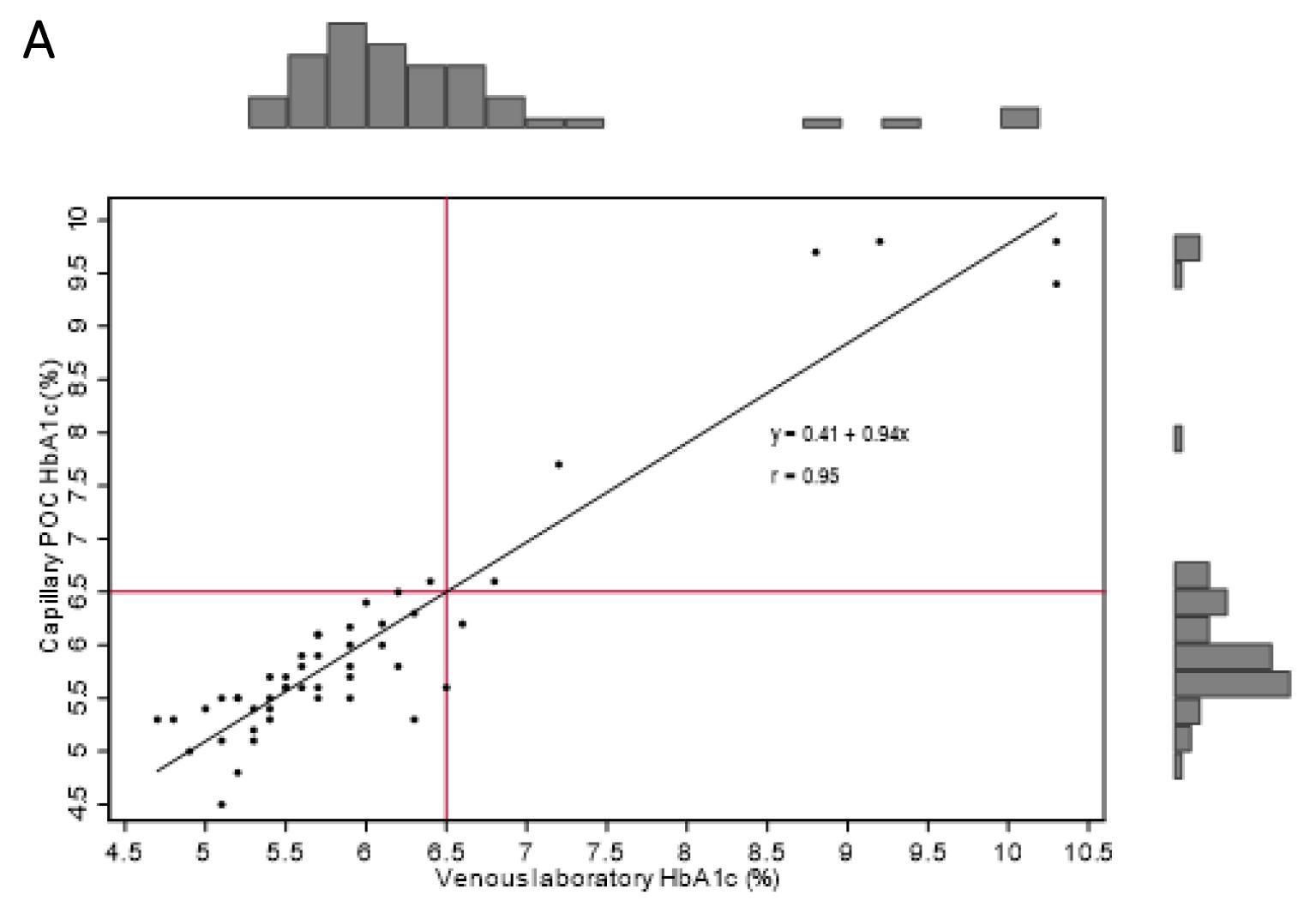
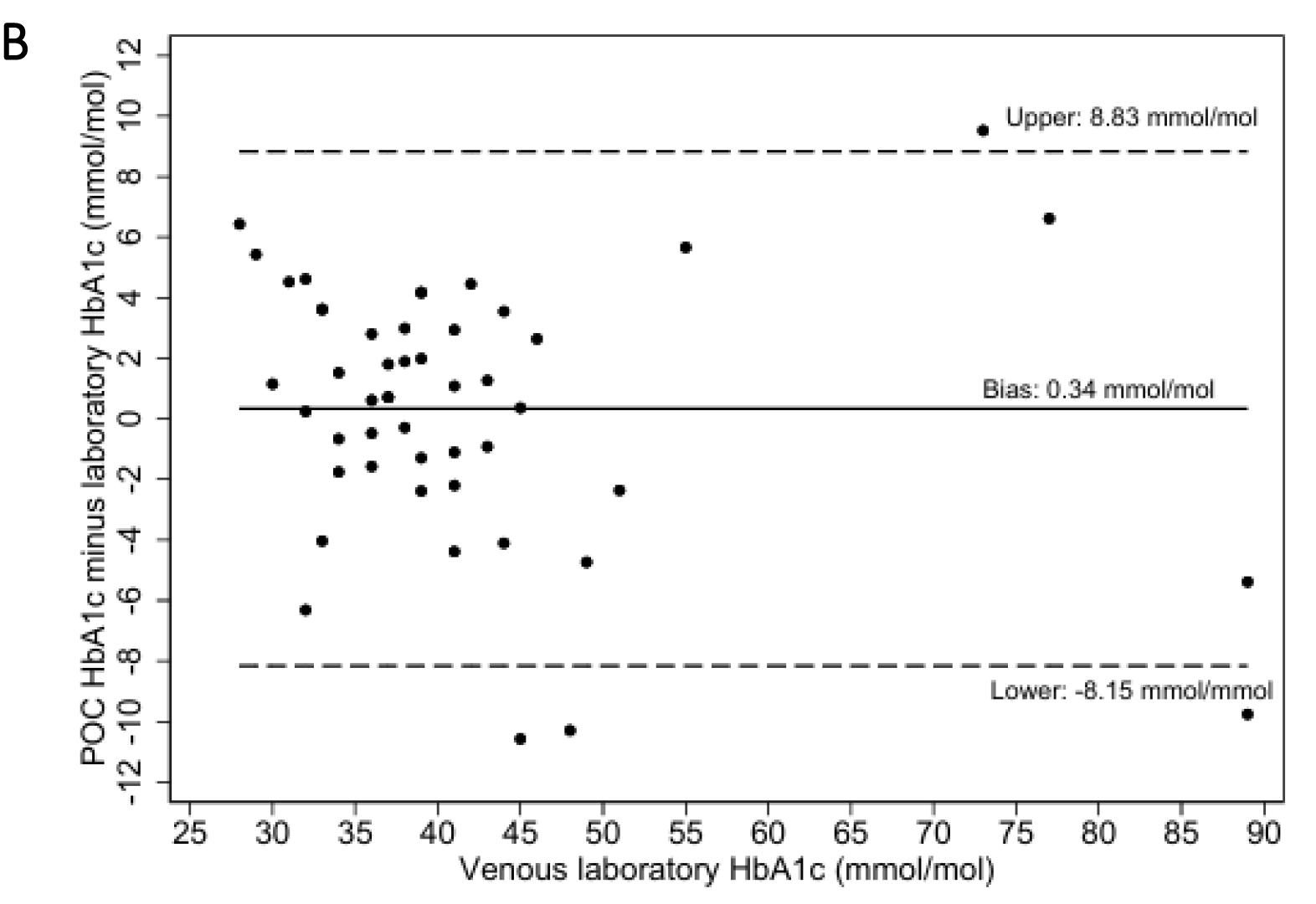
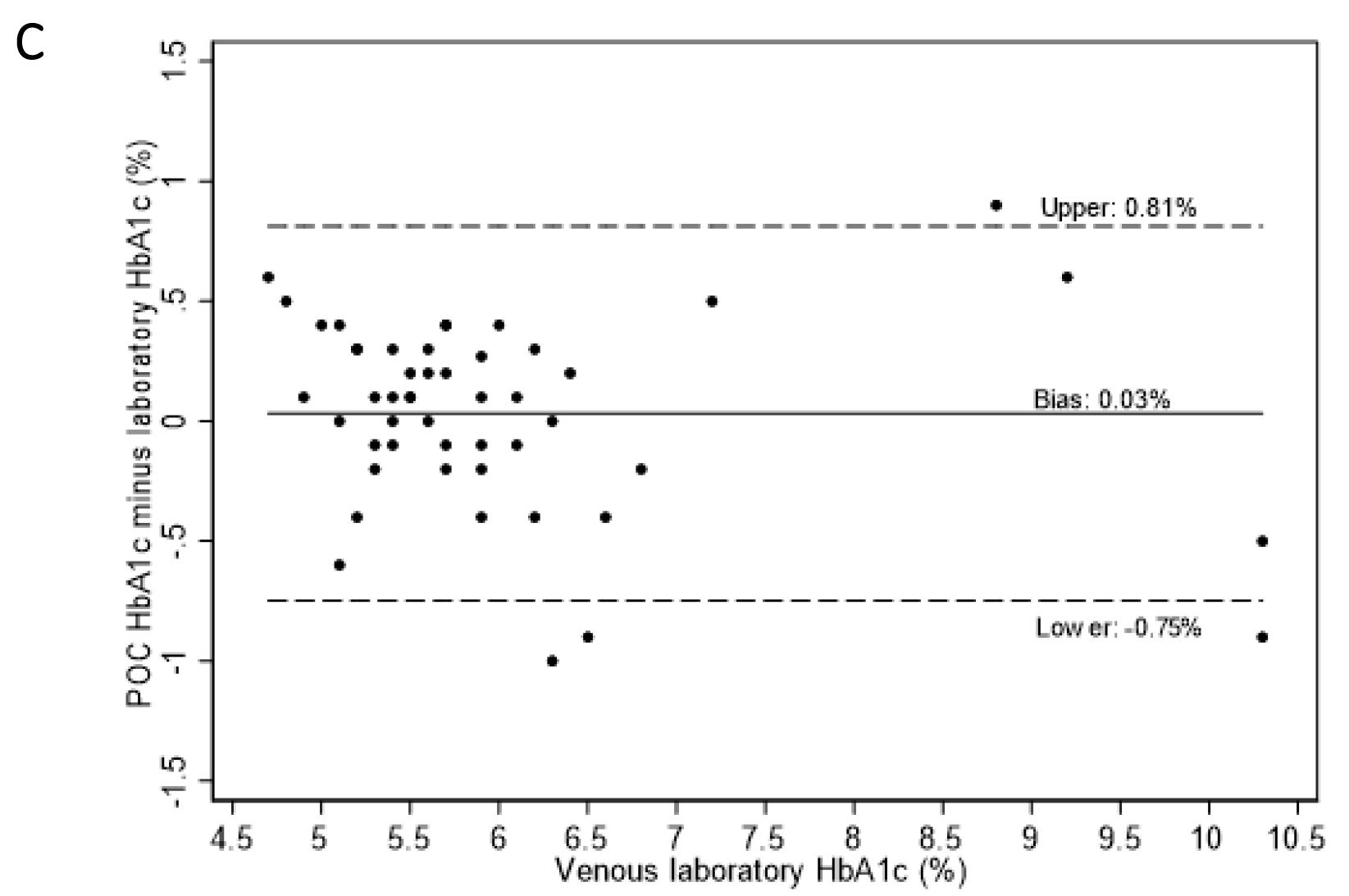 Figure 1: A. HbA1c scatter plot. B. Modified Bland–Altman plot (HbA1c units in mmol/mol). C. Modified Bland–Altman plot (HbA1c units in %). HbA1c, haemoglobin A1c. POC, point of care.
Discussion
In this study of adults living in a remote Northern Territory community, the A1CNow+ point-of-care device demonstrated good agreement with laboratory HbA1c measurement, with minimal mean bias (0.03%; 0.34 mmol/mol), acceptable limits of agreement, and moderate diagnostic agreement for type 2 diabetes (Cohen’s kappa statistic 0.70)10.
The national Quality Assurance in Aboriginal and Torres Strait Islander Medical Services Program has previously demonstrated the reliability of HbA1c POCT in Aboriginal Medical Services11. A 2014 audit of the program showed that when performed onsite in the remote health clinics, glycaemic control and timeliness of results delivery improved12. While clinic-based POCT is an important component of chronic disease care, it may not achieve population-wide reach within remote communities or adequately serve people living in surrounding homelands. Outreach models that deliver POCT in homes, community settings and homelands can complement clinic-based services by increasing access to diabetes and cardiovascular disease screening, monitoring and health education3. Portable POCT in home-based settings through outreach health services may better serve some communities, empowering family-based engagement around health and reaching younger populations. The need for family-based health care is becoming more apparent as the rate of type 2 diabetes among people aged 15–24 years increased by 97% between 2014 and 2021 in the Northern Territory13.
The implementation of portable HbA1c POCT in outreach, family-based services has exciting potential in remote Aboriginal communities. By bringing health care directly to the people in their homes or community settings, POCT can reduce barriers related to transportation, waiting times and administrative procedures14. It may also help address, linguistic, cultural or psychological barriers by providing care in familiar, culturally safe environments, with immediate access to health test results, enabling the involvement of family members. This facilitates communication in local languages, and reduces the anxiety, shame and discomfort that some individuals experience when attending a clinic15. The outreach concept is supported by previous studies, including a randomised control trial in 12 remote communities in Far North Queensland showing that a model of diabetes care for high-risk patients, led by community health workers, was effective in improving blood glucose control16. The Tulku wan Wininn mobile (‘Health to You’) clinic was developed to improve access to health care for Aboriginal people in rural Victoria, Australia. The service was highly acceptable to the community and successfully addressed key barriers to care, including transport difficulties and cultural safety concerns17. Currently there are no such mobile services across North East Arnhem18.
This study has several strengths. To our knowledge, it is one of the first studies to evaluate the agreement of the portable A1CNow+ HbA1c POCT system against laboratory testing in a remote Australian setting. The study was conducted under real-world conditions, with capillary and venous samples collected during the same clinic visit, providing a pragmatic assessment of device performance in a setting where timely access to laboratory testing is challenging. The A1CNow+ POCT system offers key advantages but has some limitations, including unknown accuracy compared to laboratory methods when HbA1c levels are greater than 55 mmol/mol. Furthermore, precision of serial point-of-care HbA1c measurements was not assessed, limiting conclusions regarding use for monitoring individual changes in HbA1c over time. Nevertheless, in resource-limited settings, the benefits may outweigh the drawbacks, especially when POCT is used as a platform for clinic referrals as well as health education in the home environment. Future studies should evaluate implementation of portable HbA1c testing within outreach services across multiple remote communities, including assessments of user acceptability, monitoring responses to treatment for type 2 diabetes, health service impact and long-term diabetes outcomes. In summary, our agreement analysis between the portable A1CNow+ POCT and routine laboratory blood HbA1c testing in a very remote North East Arnhem Land community showed very good concordance with routine testing and is a platform for developing novel models of outreach care and engagement to improve diabetes prevention and management in very remote Aboriginal Australian communities.
Acknowledgements
We acknowledge the Traditional Owners and Custodians of the land in which this research was carried out, the Yolηu people of North East Arnhem Land. The authors also acknowledge the contributions of participants, the broader community, Miwatj Health Aboriginal Corporation, especially Joan Djamalaka Dhamarrandji, and the Local Shire Authority. The non-Aboriginal and Torres Strait Islander members of the research team are most grateful for the critical input of the Aboriginal and Torres Strait Islander chief investigators and research team that facilitated the planning and implementation of this research, as well as their advice on the analysis, interpretation and dissemination of results. Thanks to Beth Hilton-Thorp and Christalla Hajisava for their administrative support, and the DSMB members, Professor Gurmeet Singh, Dr Sean Taylor, Professor Michael Skilton and Dr Grace Joshy. Also to the wider study group: Bronwyn Rossingh, Morag Dhurrkay, Evelyn Djotja, Yvonne Latati, Raylene Ralmirri, Joan Djamalaka Dhamarrandji, Naomi Hayman, Tom Hayman, Amelia Tauoqooqo, Nikki Rodriguez, Sandra Eades and Ruth Wallace.
Clan study group: Amelia Tauoqooqo, Bronwyn Clark, Bronwyn Rossingh, Emma Tonkin, Evelyn Djotja, Joan Djamalaka Dhamarrandji, J Dhurrukay, Julie Brimblecombe, Leonard C Harrison, Michael Christie, Michaela Spencer, Morag Dhurrkay, Naomi Hayman, Nikki Rodriguez, Raylene Ralmirri, Ruth Wallace, Sandra Eades, Sarah Hanieh, Thomas Hayman, Timothy Trudgen, Yvonne Latati.
Funding
This study was supported by an NHMRC Targeted Research Grant (APP1179067).
Conflicts of interest
The authors declare no conflicts of interest.
AI disclosure statement
ChatGPT was used only to help with sentence structure editing. The authors have reviewed all AI changes and take full responsibility for the final published work.